Angkor is the reason people come, and the smallest part of it
One temple city carries the whole of this country's reputation, and it deserves it. What gets missed is everything between Siem Reap and the capital, which is where Cambodians actually live.
At a glance
| Region | Mainland Southeast Asia |
| Nights we recommend | 6 to 9 |
| Gateway airports | Siem Reap–Angkor (SAI), Phnom Penh (PNH) |
| Best months | November to February, with December and January the best of them |
| Known for | Angkor, the Tonle Sap, Phnom Penh and the rice country between |
| Entry | E-visa USD 36; a free e-arrival card is compulsory for air arrivals |
| Angkor pass | USD 37, 62 or 72 for 1, 3 or 7 days, as at September 2026 |
| Currency | Riel, with United States dollars used everywhere |
What this country actually is
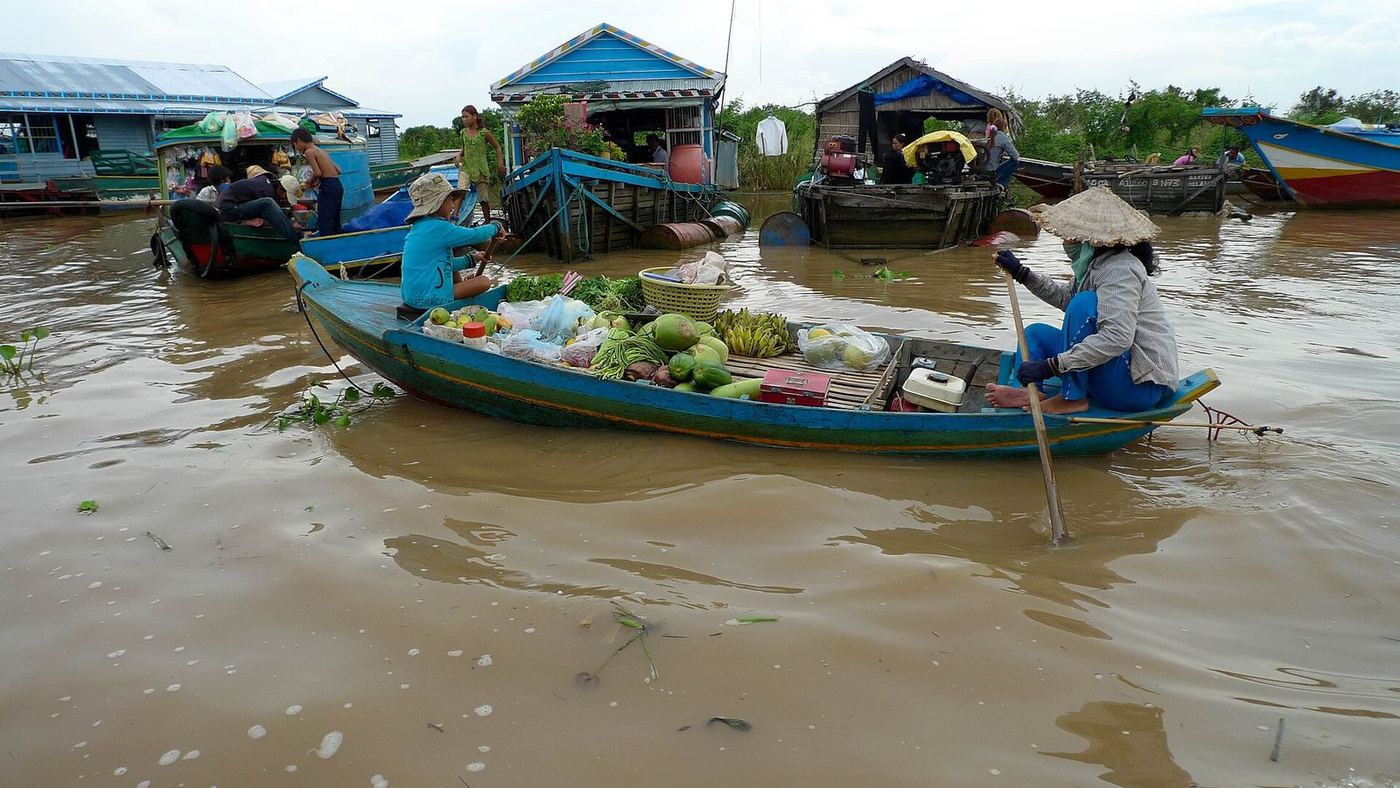
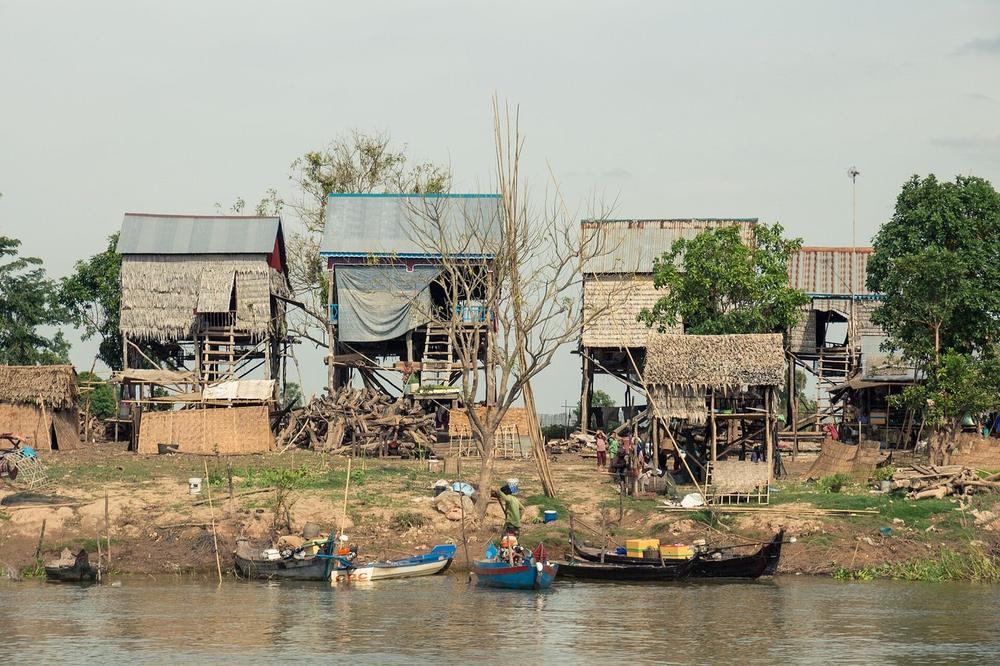
Cambodia is small, flat, hot and organised around water. The Tonle Sap lake swells and reverses its river twice a year, and the villages on its edge stand on stilts six or seven metres above dry ground for half of it. Almost everything a visitor comes to see sits within a few hours of two cities, which is why the country can be seen properly in a week when Vietnam cannot.
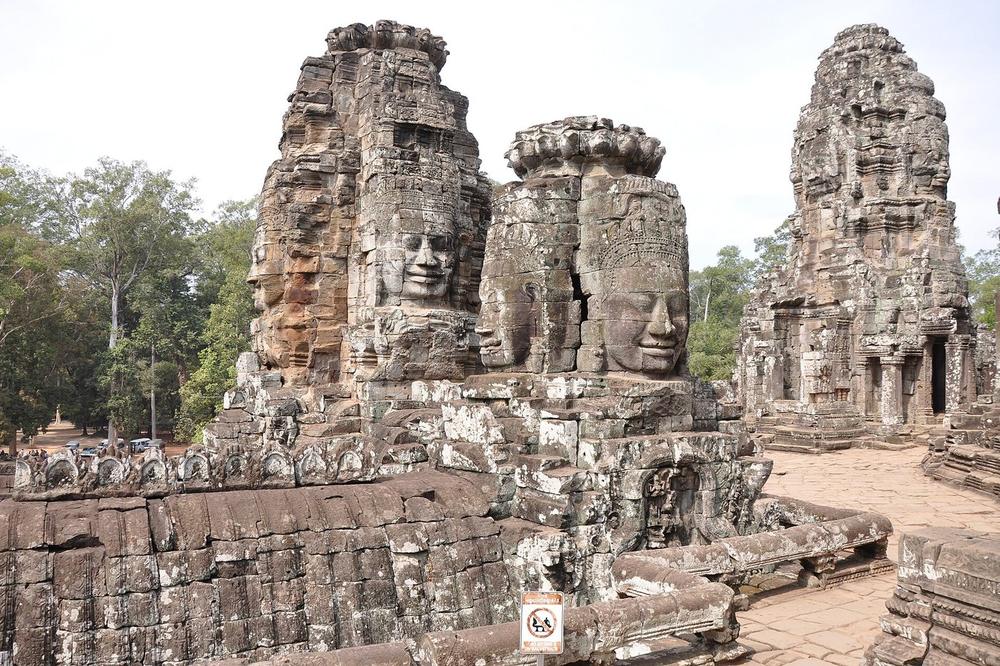
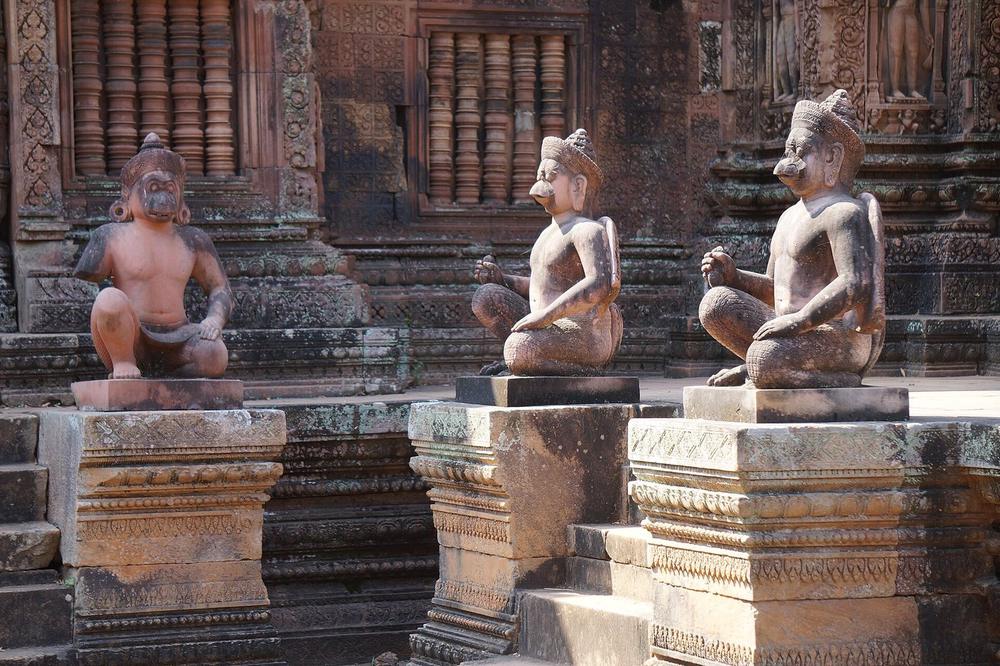
Angkor carries the reputation, and it earns it: an urban complex of stone temples built across several centuries, of which the main circuit is a fraction. It is also the most crowded thing in mainland Southeast Asia at certain hours. The sunrise crowd at Angkor Wat forms in the dark, photographs a silhouette and largely disperses by nine, which tells you when the building is worth walking into. Ta Prohm at eight in the morning is a queue; at four in the afternoon it is a temple. The western naga balustrade has been under restoration since June 2026, with the end of the year as its target, so the approach everyone photographs may still be part-fenced when you stand on it.
What gets dropped from most plans is everything between Siem Reap and Phnom Penh: 300-odd kilometres of rice, palm-sugar kilns, fish-paste yards and a second city whose colonial grid survived both the war and the rebuilding. Leave that out and the country shrinks to a set of temples with an airport at either end.
There is one more thing this country is, and no itinerary can route around it. The Khmer Rouge emptied this capital between 1975 and 1979, and two of the places where that was done — a school, and an orchard outside town — stand preserved and open. A week here that avoids them is a temple holiday. A week that treats them as a stop between lunch and shopping is worse.
How many nights, and what breaks if you take fewer
Six to nine nights. Six is a real trip: three at Angkor, two in the capital, and the transfer between them. Nine adds the middle of the country and turns the temple days from a schedule into a pace.
Below six, the arrival day is what breaks first. The airport that serves Siem Reap has sat about 50 km east of it since 2023, a road transfer of 45 to 50 minutes where the old field asked fifteen, so the day of landing does nothing else at all. Four nights consequently yields two temple days rather than three.
The pass argues the same case in money. One day costs USD 37 and three cost USD 62, spread across any three dates within ten, so a second and third day of temples work out at about USD 12 apiece. Buying the single day and hurrying is the most expensive economy available in this country.
Above nine or ten nights, the better move is to add Laos or southern Vietnam rather than to stretch the same route further. What each country holds at each length is set out under how many days.
When to go
| Months | What it is like | Why you might come anyway |
|---|---|---|
| December and January | 24 to 30 degrees, dry, and the most comfortable weeks of the year | Nothing to argue with, and the busiest and dearest weeks in consequence |
| November, February and March | Dry and warming; the whole reliable window runs November to April | Slightly quieter than the peak with the same weather |
| April | The hottest month, reaching 40 degrees on the temple road | Low rates, and shade discipline: temples at dawn, nothing at midday |
| May to October | The wet season: a shower most afternoons and slightly cooler days | Full moats, dark stone, thin crowds, and the Tonle Sap boat running |
The wet months are the ones travel agents talk down and photographers plan for. Rain here falls as an afternoon event, not a day, and the temples look better for it: the moats fill, the sandstone darkens, the grass comes back. It is also the only time the carvings in the riverbed at Kbal Spean have water running over them.
It has a practical consequence too. The Tonle Sap boat between Siem Reap and Phnom Penh needs high water and generally runs from about July to March. In April, May and June it does not sail. April is the month to think hardest about: at 40 degrees, on stone, with no shade between one temple and the car, heat decides the day whatever the itinerary says.
Getting there and getting around
A tourist e-visa is USD 36 on evisa.gov.kh, paid by card, and the fee does not come back. The e-arrival card is a separate document, compulsory since 1 July 2024 for anyone flying into Phnom Penh or Siem Reap, free of charge, and open for filing up to a week ahead. Holding an approved visa does not excuse you from it. Go through the arrival-card portal for the visa itself and a USD 6 service charge appears on top. Arrivals by land or river, and at Sihanoukville, are still handled on paper.
The airport is the fact that most outdated itineraries get wrong. The old town-adjacent field closed permanently on 15 October 2023 and has stayed closed; everything now flies into Siem Reap–Angkor International, about 50 km out along the Angkor highway. Sixteen carriers serve it, including daily connections from Bangkok and Ho Chi Minh City. If a quote you are comparing shows a temple sunset on the day you land, count the transfer and see whether it is possible.
Between the two cities
Siem Reap to Phnom Penh is 319 to 403 km depending on the route, four to six hours by car and around five and a half to six by bus, all of it in daylight and all of it flat. There is also the Tonle Sap boat: roughly seven hours, about USD 49, running only when the water is high, which is broadly July to March; through April, May and June there is not enough water under it. A fine day out, and it bypasses the middle of the country, which makes it a trade rather than an upgrade.
Arriving from Thailand
By air only. Every official Thailand–Cambodia land crossing has been closed since 2025, the Thai position in August 2026 was that reopening would be step by step with no date, and officials expect it to hold through the end of the year. The run from Bangkok to the temples has been an air sector for more than a year now. Vietnam and Laos both connect normally, by air and by road.
What it costs on the ground
Cambodia is a band D country, roughly USD 190 to 300 per person per day for a party of four, land only. What makes it unusual within that band is how much of the day is fixed cost rather than variable.
| What | Amount, as at September 2026 |
|---|---|
| Angkor pass, 1 day | USD 37 |
| Angkor pass, 3 days, taken on any 3 dates inside 10 | USD 62 |
| Angkor pass, 7 days, taken on any 7 dates inside 30 | USD 72 |
| Children under 12 at Angkor | Free, with a passport as proof of age |
| Tourist e-visa on evisa.gov.kh | USD 36, non-refundable |
| E-arrival card, air arrivals | Free |
| Routing the visa application through that same portal | Adds USD 6 |
| Tonle Sap boat, Siem Reap to Phnom Penh | About USD 49, roughly seven hours |
Nobody over twelve gets a reduction on that pass and the price is the same at every counter, so two travellers carry the identical temple bill per head as eight. The 100 km round trip out to the airport is paid whether the car holds two people or six. Fixed lines of that kind are why a small party feels the cost of Cambodia more sharply than it feels the cost of a country with cheap entrances and short transfers.
No room rate or restaurant price appears above. Nothing we found for Cambodian hotels, or for a car with a driver, held up as a current published figure, and a gap shows that honestly where a number chosen because it looks about right would not. What the components cost where they can be sourced is on prices, and the country comparison sits under cost by country.
In pictures
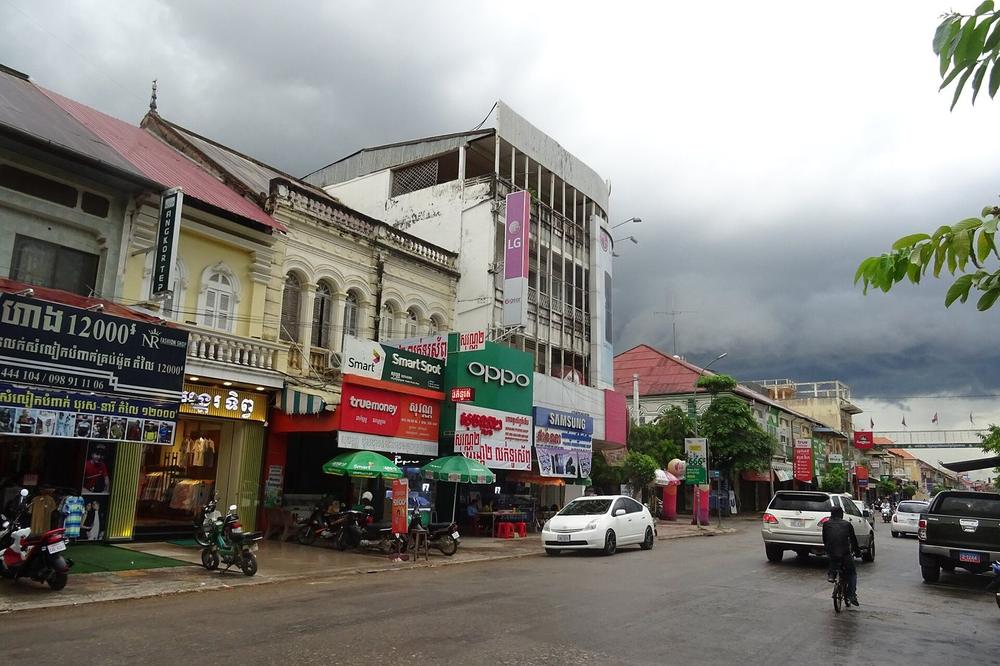
When to skip it
- You have two nights and want to have seen Angkor. Two nights buys one temple day and a 100 km round trip to the airport, and the one-day pass at USD 37 against USD 62 for three is a false economy at the moment you buy it.
- April is your only window and heat is a problem. Forty degrees on unshaded sandstone is the whole experience, whatever else is in the plan.
- You want to arrive overland from Bangkok. The border has been shut since 2025 and no reopening date exists; if an operator has quoted you that day, ask what else on the quote is out of date.
- A morning on the Khmer Rouge years is not something you want in the trip. It will not be dropped from ours to keep the week comfortable, and the argument for that sits in the section above.
- An orphanage visit or a morning of volunteering with children is on your list. Paid access to children is something we refuse outright, in this country and everywhere else; the reasoning is under responsible travel.
Journeys that go here
Our nine-day Cambodia journey is the country rather than the monument: four nights at Angkor so the temples get three unhurried days, two in Battambang for the rice country, and two in Phnom Penh. It runs one way, so no road is driven twice.
Cambodia closes the 22-day Grand Indochina, which is deliberate: Angkor flattens whatever follows it, so it goes last, after Vietnam and Laos. It also sits third in the 28-day Asia Crossing, between Vietnam and Thailand.
Angkor itself — which temples on which day, how the pass works in practice, and what lies beyond the main circuit — has its own page.
Questions travellers ask most
Which Angkor pass should we buy?
Three days at USD 62, for almost every traveller. The three dates may fall anywhere across a ten-day span, so a rest day in between costs nothing, and the second and third temple days work out near USD 12 apiece where a single day on its own costs USD 37.
A single day at USD 37 earns its place only on a genuine stopover. Seven days at USD 72, usable across a month, suits a returning visitor or serious photography. The price is the same at every counter, buying early saves nothing, and a child under twelve is admitted free on production of a passport.
How far is the airport from Siem Reap now?
About 50 km, and 45 to 50 minutes by road. The airport moved in 2023: the old field a few kilometres from town closed permanently on 15 October that year and all commercial flights now use Siem Reap–Angkor International.
It is your first and last days that pay for it. Landing no longer leaves room for a temple at dusk, and an early flight out starts earlier than the distance suggests. An itinerary drafted before 2023 and never revised will promise you both anyway.
Do we need both a visa and an arrival card?
Both, and they are separate documents. The tourist e-visa is USD 36 through evisa.gov.kh, paid by card, no refunds. The arrival card, compulsory for air arrivals into Phnom Penh and Siem Reap since 1 July 2024, costs nothing and is required whether or not the visa is already granted.
The portal is where people lose money: route the visa application through the arrival-card system and USD 6 is added, which most travellers pay without ever noticing it. Crossings by land and river run on paper and the card does not apply to them.
Is six nights enough, or do we need nine?
Six nights covers Angkor and Phnom Penh honestly: three temple days and a day and a half in the capital, with the road or the flight between them. Most travellers who have one week and want one country are well served by it.
Nine buys the part in between: the rice provinces, the second city, and the villages supplying rice paper and fermented fish to the rest of the country. That is the difference between having seen Angkor and having seen the place it stands in. Spare days are better spent there than on a fourth temple morning.
Read next
Tell us about the journey you have in mind
Dates, party size and the places you care about are enough to start. You get a draft route and an indicative price, not a brochure.