The slow country, and the two-hour train that reshaped it
Landlocked, quiet, and short of the single great monument its neighbours are sold on. The China–Laos railway has done more to change how this country is travelled than anything else in a decade.
At a glance
| Region | Mainland Southeast Asia |
| Nights we recommend | 6 to 9 |
| Gateway airports | Luang Prabang (LPQ), Vientiane (VTE) |
| Best months | November to February, with October and March workable |
| Known for | Luang Prabang, the rivers, the railway, and the quiet |
| Entry | E-visa USD 50 for United States, United Kingdom, European Union and Australian passports; visa on arrival also available |
| The railway | Vientiane to Luang Prabang in about 2 hours, against 5 to 6.5 by road |
| Currency | Lao kip |
What this country actually is
Laos has no coast, no monument at the scale of Angkor, and no city anyone would call large. That is the honest opening, and it is also why the travellers who like this country like it more than they expected to. What it has instead is two rivers that still function as roads, a town of tiled roofs on a peninsula between them, limestone country to the north where the tarmac gives out, and a rate of visitor traffic that is a fraction of its neighbours'.
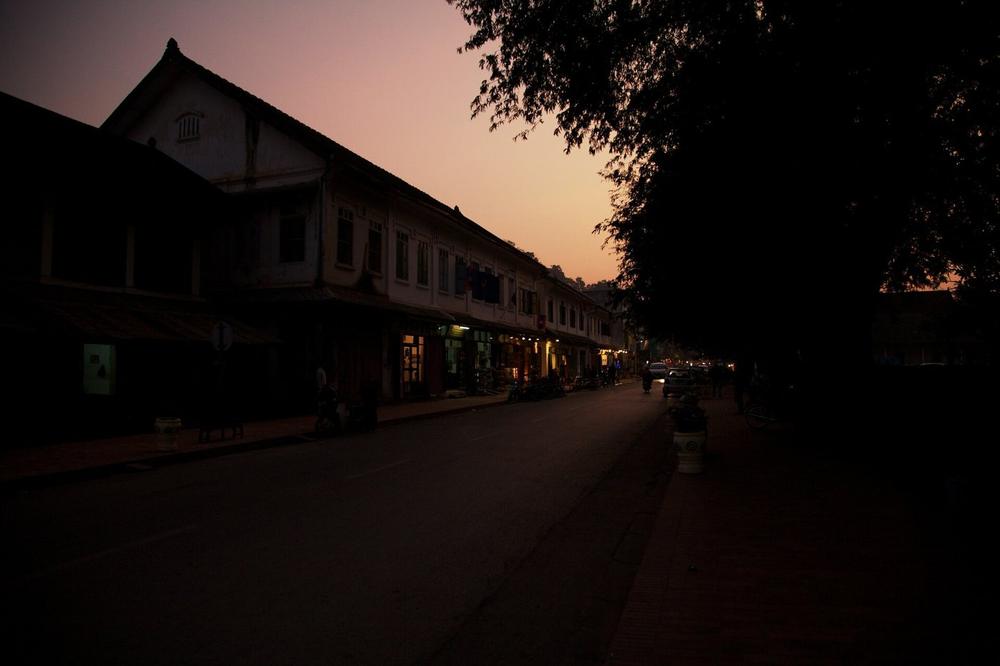
Luang Prabang is the pressure point. A small town with a protected centre and a finite number of old buildings has taken a rising number of visitors, and a proportion of the peninsula now works as hotels, cafes and shops rather than as houses. The dawn alms round, which is a monastic discipline, has in places been turned into a spectacle with a photographer's line and rice sold at the kerb that is not fit to be offered. That is not an argument against the town. It is an argument for behaving as a guest in it: below the level of the monks, on the far pavement, no flash, and no purchase.
Vientiane is low-rise, unhurried and a good deal less interesting than the town upriver, and saying so is more use to you than three nights of it would be. One full day holds what matters. Part of that day should go to the centre run by the service that rehabilitates people maimed by unexploded bombs: plain, free of sentiment, and it alters what the countryside outside the car window means for the rest of the week.
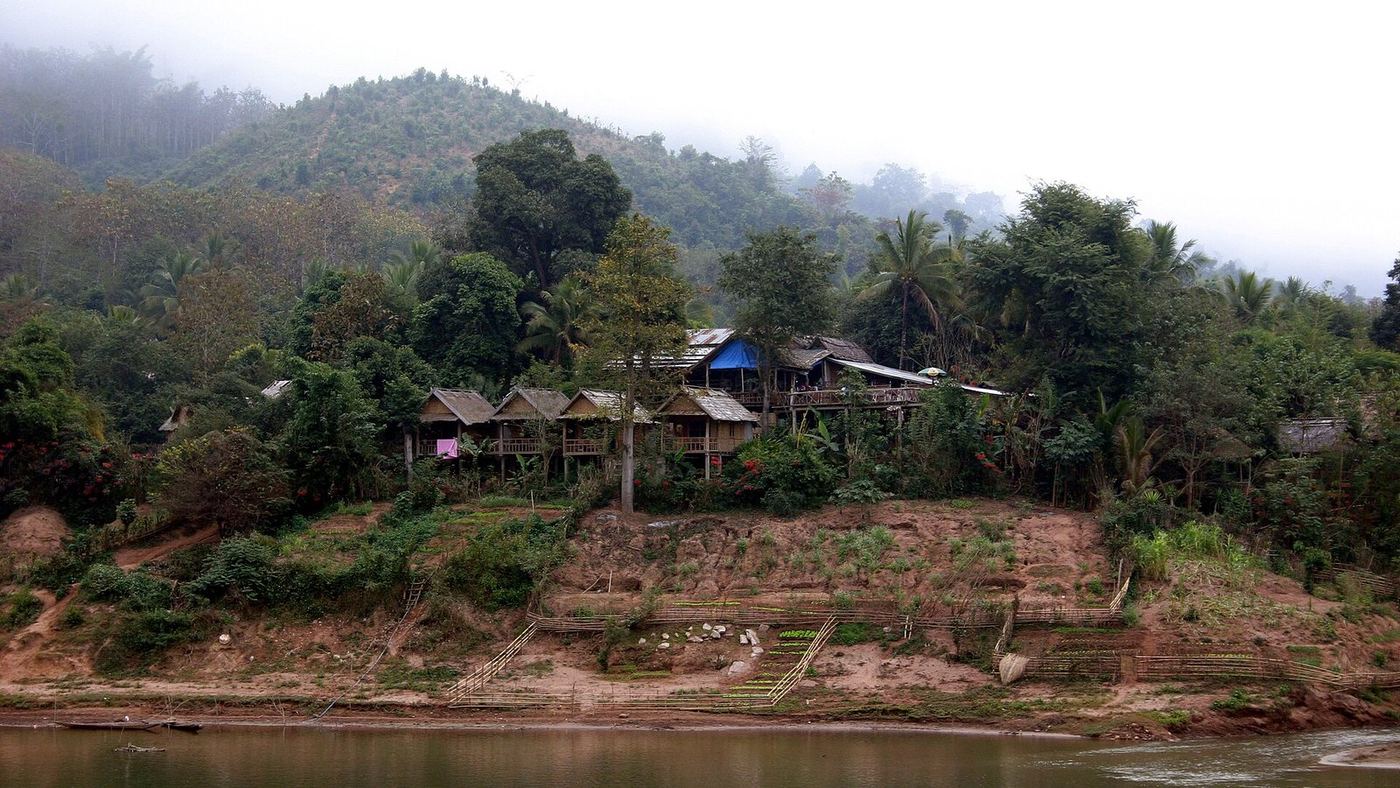
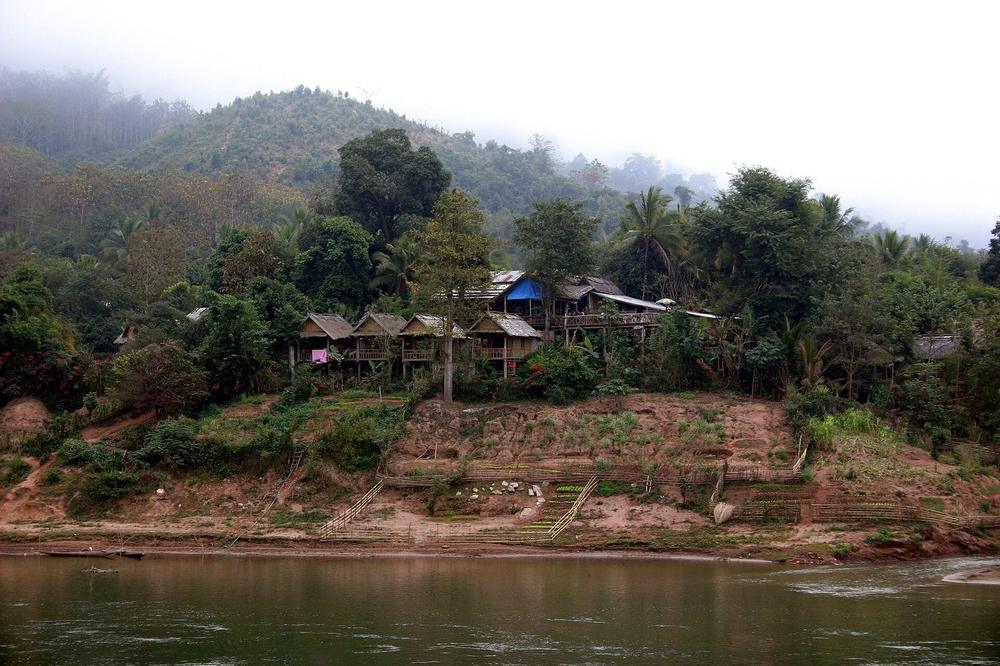
Beyond those two, the quiet is of a kind that has become rare in this region. Nong Khiaw, three hours north, amounts to a street, a bridge and a power supply that may or may not last past ten in the evening, and it is what most travellers describe first when they get home.
How many nights, and what breaks if you take fewer
Six to nine nights, and the railway is the reason those numbers have come down. Before it opened, the leg between the two towns took a whole day out of any itinerary that used it. Nine days now reach what eleven used to.
Six nights holds Luang Prabang properly and one other thing: the river north, or the capital. Nine holds all three without hurry. Below six the international flights start to dominate — Laos is reached from Bangkok, Hanoi or Ho Chi Minh City, and the arrival and departure days are real days.
At four nights it is not the sightseeing that fails. Luang Prabang can be seen in two days and is worth four, because the interesting part arrives after the list is finished: the hour when the market is trading to residents rather than visitors, the streets once the day boats have gone, the evening when nothing is scheduled. A country whose entire proposition is unhurriedness does not survive being hurried, which is the case against the two-night insert between Hanoi and Angkor that most operators sell.
When to go
| Months | What it is like | The honest verdict |
|---|---|---|
| November to February | Dry and cool; the clear window, and the reason most journeys here are built in it | The right answer for a first visit |
| October and March | Shoulder months at either end of the dry season, and both workable | Quieter, and the rivers still full in October |
| April | The hot end of the dry season across mainland Southeast Asia | Doable, and least comfortable on any walking day |
| May to September | The monsoon. Rural and trekking roads north of Luang Prabang can become impassable | Green, cheap and nearly empty, but the north cannot be promised |
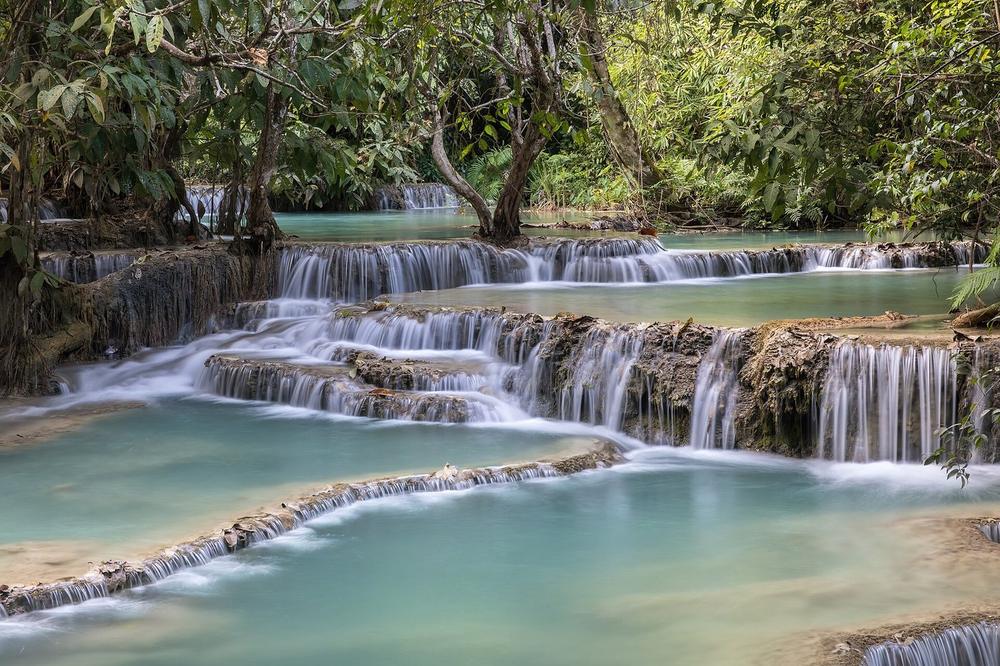
The wet months here are both attractive and risky, and the risk is not spread evenly. Rain comes in short heavy bursts, the waterfalls run at full volume, rates drop and the towns hold almost no visitors. On a route built around Luang Prabang and Vientiane, both of which are reached on sealed roads and the railway, that is a fair trade.
It is not a fair trade on a route built around the north. The road to Nong Khiaw can close, the Nam Ou runs high and brown, and the viewpoint paths above the river turn to mud. A journey sold on that river and then run without it is not worth the money, which is why we redraw June to September departures around the two towns rather than pretending the north is unaffected. Where each month in Asia sends you is set out under when to go.
Getting there and getting around
Two airports carry almost everything: Luang Prabang and Vientiane, both reached from Bangkok, Hanoi, Ho Chi Minh City and the regional hubs rather than directly from Europe or North America. Flying into one and out of the other removes a backtrack and is what we build by default.
The railway, and what it actually saves
The China–Laos railway is the single piece of infrastructure in this country that rearranges an itinerary. Fast C-series trains cover Vientiane to Luang Prabang in about two hours, at up to 160 km an hour, air-conditioned and with a dining car. The road takes five to six and a half. Second class runs about 330,000 kip, first class about 522,000 and business about 975,000 — roughly USD 16, USD 25 and USD 47. Slower K-series services cost less and take longer. The Luang Prabang to Vang Vieng leg tells the same story: five to six and a half hours by road, and well under half of that by rail.
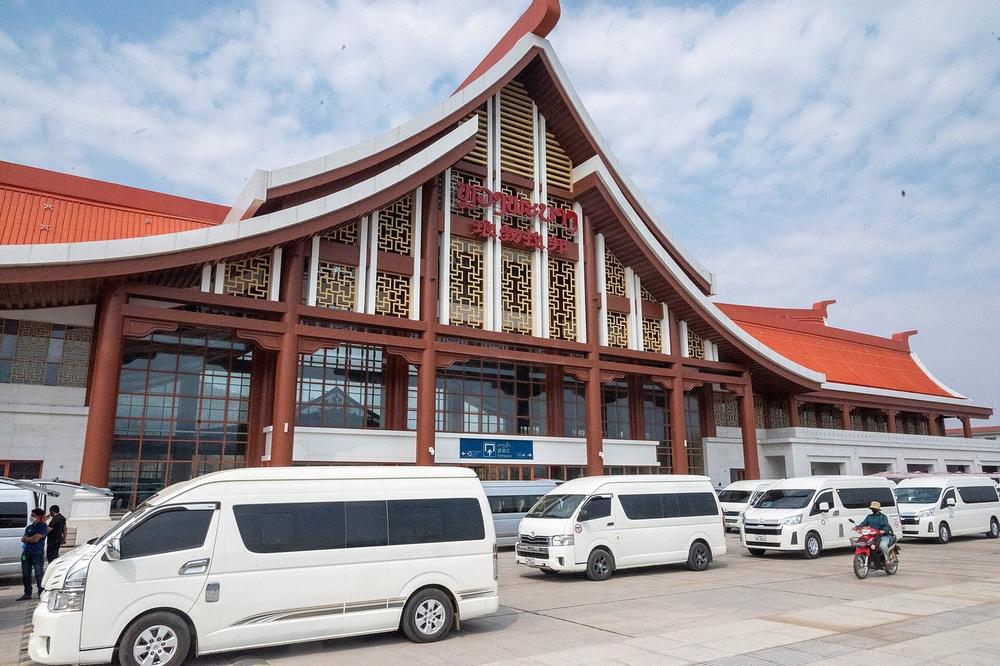
Two things qualify that, and neither is small. The stations were built outside their towns, so the timetable is only part of the day: add the road transfer at each end and the security queue, and half a day is the honest door-to-door figure. The other constraint is the seat rather than the fare. Allocation opens on a short window, Lao public holidays clear it, and booking through an agent beats queueing in person. When the seats have gone the answer is the road, and you should hear that at home rather than at the ticket counter.
Rivers, roads and the Chinese border
Rivers still work as transport here. The Mekong carries slow boats north of Luang Prabang, and the Nam Ou is how you reach villages the road has not got to. Roads elsewhere are slow rather than bad: three hours to Nong Khiaw covers a distance a European map would suggest takes ninety minutes. Through trains run from Kunming to Vientiane via Luang Prabang, and Lao e-visas are now accepted at the Boten land crossing — though there is no visa on arrival on the Chinese side, which catches people out.
What it costs on the ground
Laos sits in our band D, roughly USD 190 to 300 per person per day for a party of four, land only. Within that band it behaves differently from Vietnam or Cambodia: entrance fees are low, transfers are long, and the stock of genuinely good rooms is small enough that the hotels price against one another instead of against the calendar. The month you pick moves the total less here than almost anywhere else we sell.
| What | Amount, as at September 2026 |
|---|---|
| E-visa, United States, United Kingdom, European Union and Australian passports | USD 50, up to 30 days, four to five working days to process |
| Visa on arrival | Available, as an alternative to the e-visa |
| Train, Vientiane to Luang Prabang, second class | About 330,000 kip, roughly USD 16 |
| The same in first class | About 522,000 kip, roughly USD 25 |
| The same in business class | About 975,000 kip, roughly USD 47 |
That visa fee stays paid whether the application succeeds, fails or is pulled, which is an argument for filing it once and filing it early.
You will not find a room rate or a meal price above. As on our prices page, we print what we can source and say so where we cannot, and Laos is one of the countries where a clean published figure for hotels or for a car and driver was not available. The structural point holds regardless: a car, a driver and a guide are charged by the day, and that charge is not shared out any further by adding seats, which is why two travellers pay roughly 36% more each than five do. Ground costs are compared across the region under cost by country.
In pictures
When to skip it
- A five-star room every night is a requirement. One town in this country has them, and the best available bed on the river north of it is a wooden bungalow with a fan and a net over it. A category a place does not have is not one we will invent for you.
- Your dates fall between May and September and the north is what you came for. The roads above Luang Prabang can close and the river paths turn to mud; the trip is still worth taking, but it is a different trip and we will redraw it.
- You want a coastline, or one great building to stand in front of. Laos is landlocked and has nothing at Angkor's scale. If that reads as thin, Cambodia is the better week.
- You have four nights and want three places. The distances are longer than the map suggests and the country repays sitting still, which is the opposite of what four nights allows.
- You need a guaranteed departure time on a fixed day. Train seat allocation here is genuinely difficult, and the fallback is five to six and a half hours in a car.
Journeys that go here
Our nine-day Laos journey is built on that argument about pace. Four of its nights go to the old capital on the peninsula, two more to the river north of it where the tarmac ends, and the way south is the fast train instead of a day at the wheel.
Laos also occupies the middle of the 22-day Grand Indochina, five nights of it, between Vietnam and Cambodia. Compress a three-country route and this is usually the leg that goes, which is a pity: it is also the one people write to us about a year later.
Luang Prabang, the alms round done properly, and how the falls and the peninsula fit into a day have a page of their own.
Questions travellers ask most
Is the train genuinely better than the road?
By a wide margin. The fast service covers Vientiane to Luang Prabang in about two hours where the road takes five to six and a half, air-conditioned, at speeds up to 160 km an hour.
The ends of the journey are where the time goes back on. Both stations were built away from their towns, so a transfer and a security queue belong in the sum, and half a day is what it really costs. That is still a morning rather than a whole day given up to a road.
What paperwork does entry need?
A Lao e-visa, which for United States, United Kingdom, European Union and Australian passports costs USD 50, permits a stay of up to 30 days and comes back in four to five working days. A visa on arrival exists as well. The cheaper USD 35 rate that circulates online is for Chinese and Vietnamese citizens only.
Withdraw or fail an application and the fee stays where it is, so file once, carefully and early. Coming overland from China at Boten, the e-visa is accepted on the Lao side, but nothing is issued on arrival at the Chinese end. Current rules for every country here are under visas and entry.
How many nights does Luang Prabang itself deserve?
Three as a floor, four when the town is the reason for the trip. A two-night stay covers the temples, the palace and the waterfalls at a jog and leaves nothing over.
You can walk the peninsula end to end in about forty minutes, which is exactly why it wants time: what is worth having here is the hours, not the addresses. Prefer one of those nights on the river at Nong Khiaw and we will build it that way instead.
Can Laos be combined with Vietnam or Cambodia?
Readily, in the air, and that is how most travellers meet it first. The caution concerns length rather than logistics: a two-night stop wedged between Hanoi and Angkor buys an airport, one temple and a night market, none of which is this country.
Three weeks carries all three at a workable pace, with about five nights here. Under sixteen days, two countries beat three, and which one to drop should follow what you actually want rather than what the flight schedule makes easy. See multi-country routing.
Read next
Tell us about the journey you have in mind
Dates, party size and the places you care about are enough to start. You get a draft route and an indicative price, not a brochure.