Three countries, twenty-one nights, one party at a time
Hanoi to Angkor by way of Lan Ha Bay, the Hai Van Pass, the Mekong at Luang Prabang and the Nam Ou at Nong Khiaw. Long enough that the three countries stop blurring into one.
At a glance
- Duration
- 22 days, 21 nights
- Party
- Private, 2 to 8
- Starts
- Hanoi
- Ends
- Siem Reap
- Difficulty
- Easy to moderate
- From
- USD 6,900
This journey is for travellers with three weeks and one shot at the region. Twenty-two days is the point at which Vietnam, Laos and Cambodia stop being three versions of the same trip. Ten days gives you Vietnam and a rushed weekend in Angkor. Twenty-two gives you three nights on the Nam Ou at Nong Khiaw, where the road ends and the boats take over, and four unhurried mornings at Angkor instead of one exhausted sunrise.
It is a moving journey, not a stay. You will change bed nine times in three weeks. If that sounds like work rather than travel, the shorter eleven-day Vietnam journey is a better fit, and we would rather tell you now.
Day by day
The Thailand–Cambodia land border has been closed since mid-2025 and there is no reopening timetable. It does not touch this route, which stays inside Vietnam, Laos and Cambodia and flies the two long legs. We mention it because itineraries that still show an overland Bangkok–Siem Reap day are selling a day nobody can run.
Arrive Hanoi
Met at Noi Bai and driven into the city, about 45 minutes outside rush hour and an hour inside it. Nothing is scheduled. If you land in the morning, the walk that makes sense is the lake and the streets east of it, on foot, until the jet lag wins.
Hanoi on foot
The Old Quarter in the morning with a guide who lives in it: thirty-six streets still named for the trade that occupied them, the two-metre-wide houses that resulted from a tax on street frontage, and the train line that runs through the middle of a residential block.
The afternoon is the other Hanoi, the one built between 1888 and 1954: the French quarter, the Temple of Literature, and a long lunch somewhere with ceiling fans.
Hanoi, or out of it
A free day, and we push people to leave the city for it. The Duong Lam ancient village is 50 km west, an hour each way, and holds laterite houses that predate the French by three centuries. The alternative is the ceramic kilns at Bat Trang, twenty minutes away, which is the easier day.
Hanoi to Lan Ha Bay
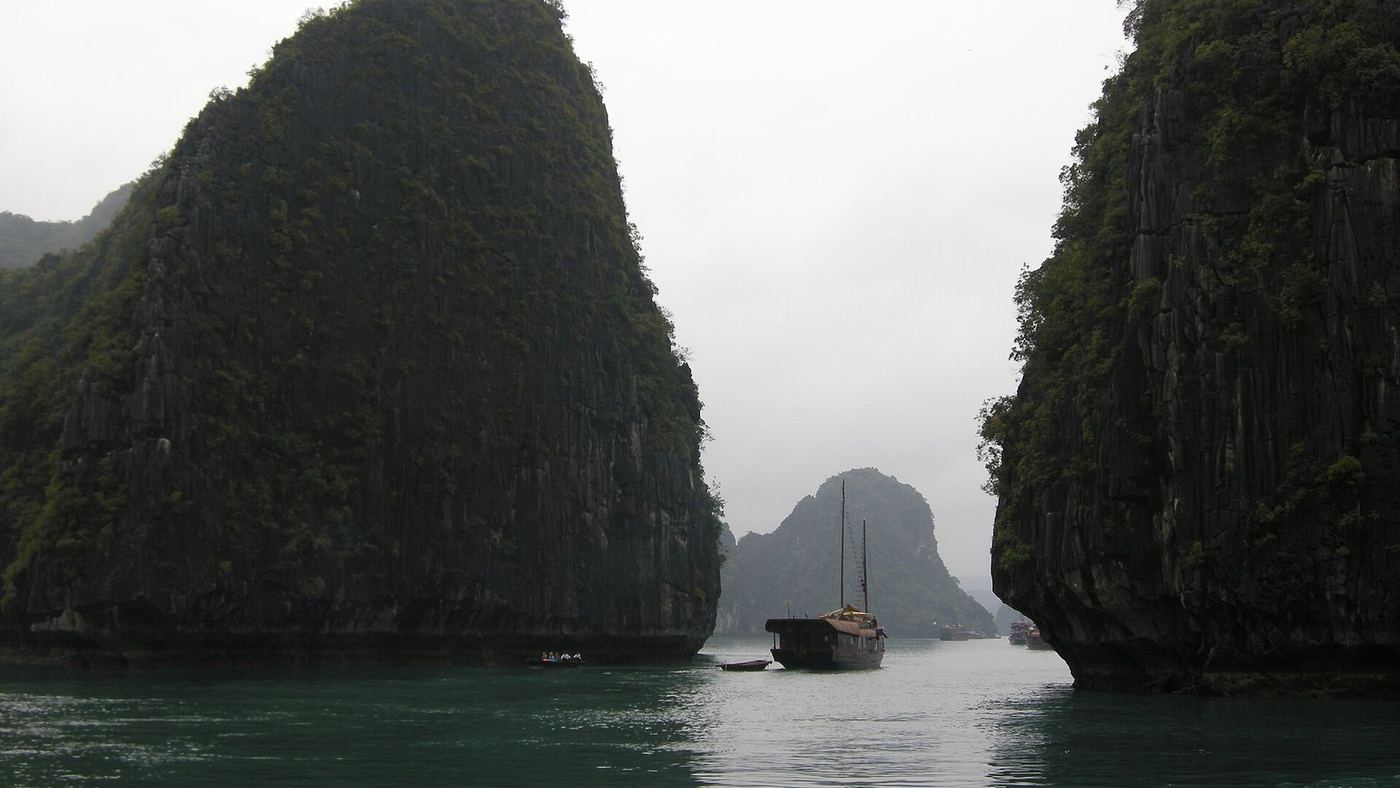
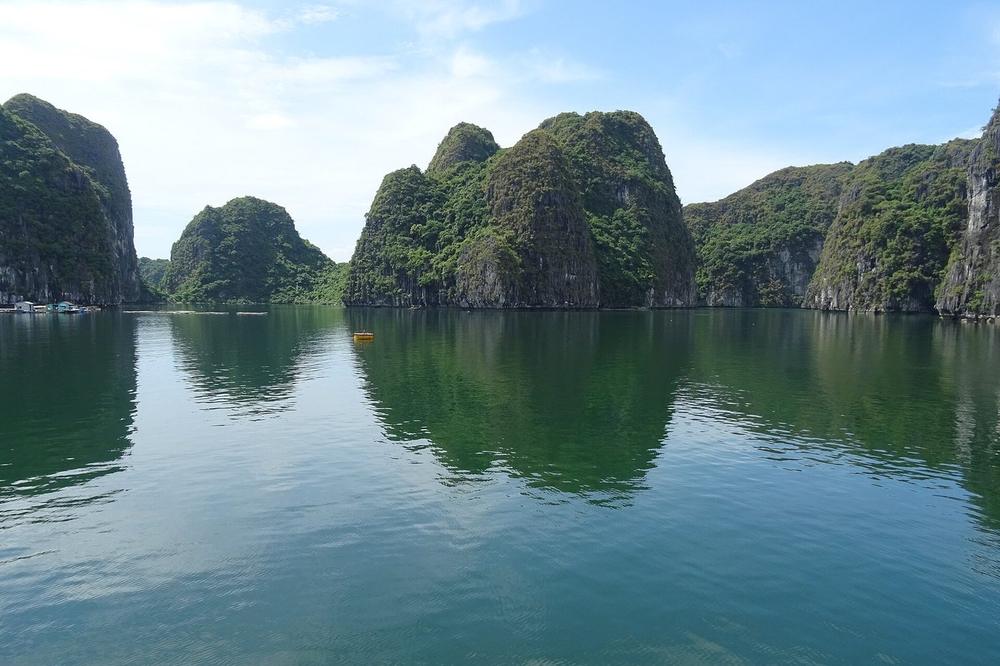
Leave at 08:00 on the Hai Phong expressway, which turned a five-hour drive into a bit over two. Board around noon at a harbour on the Cat Ba side, which is the quieter half of the same water: Lan Ha holds a fraction of the boats that work Ha Long, and the difference is audible.
The afternoon is kayaking and swimming from the boat, and a cave the tenders reach at low tide. Sunset is at anchor.
Lan Ha to Ninh Binh
Back to the pier by 11:00, then three and a half hours south to Ninh Binh, through the Red River delta. The afternoon is deliberately empty; the light here is worth waiting for.
Ninh Binh
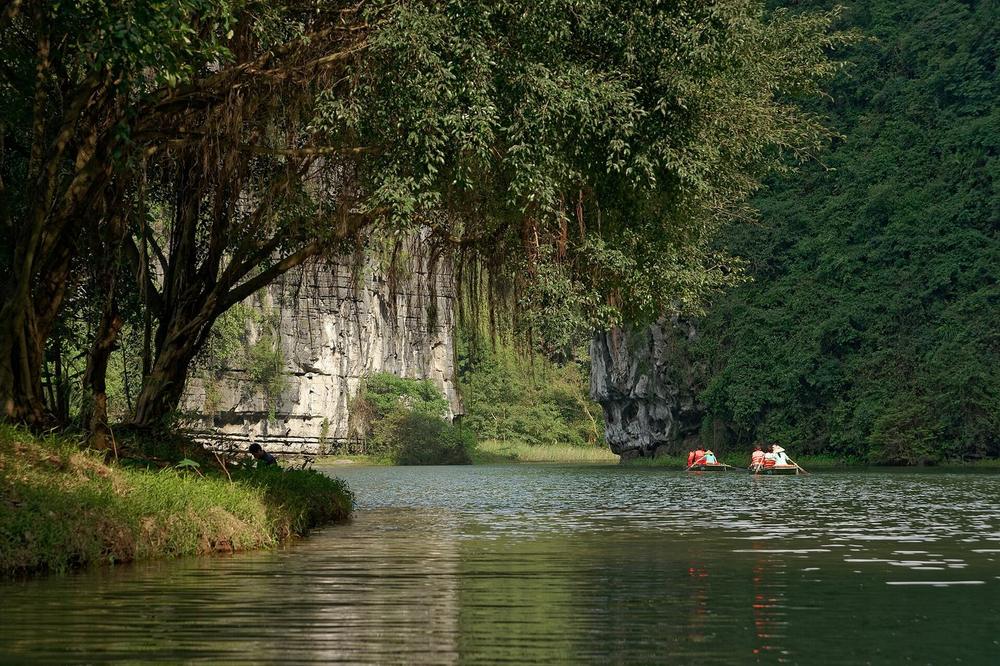
A rowed sampan at Trang An in the early morning, before the domestic groups arrive from Hanoi: three hours through nine flooded caves, rowed by a woman who does it with her feet. Afterwards, the Bich Dong pagoda cut into the cliff, and 500 steps up Hang Mua for the view along the valley if the knees agree.
Ninh Binh to Hue
A morning flight from Hanoi, or the overnight train the night before if you want the Hai Van coast at dawn. Most people fly and use the afternoon: the citadel, which is still being rebuilt from 1968, and an hour on the Perfume River.
Hue
The imperial tombs are scattered along the river south of the city and the three worth the day are Minh Mang for its symmetry, Tu Duc for its lake and its self-written epitaph, and Khai Dinh for the fact that it is concrete and unrepentant about it.
Lunch is the reason many people rate Hue above Hanoi for food. It is a court cuisine: small dishes, a great deal of them, none of them large.
Hue to Hoi An over the Hai Van Pass
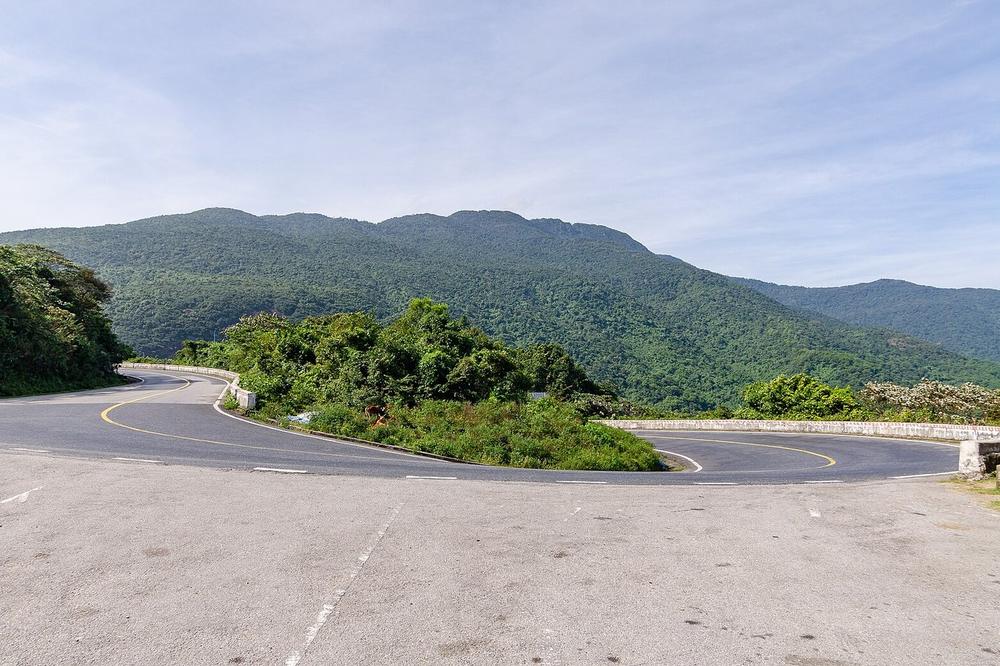
Leave at 08:30 and take the old pass road rather than the tunnel: 21 km of switchbacks above the sea, about an hour longer, and the only part of the drive anyone remembers. Stop at the top before eleven, when the coaches reach it.
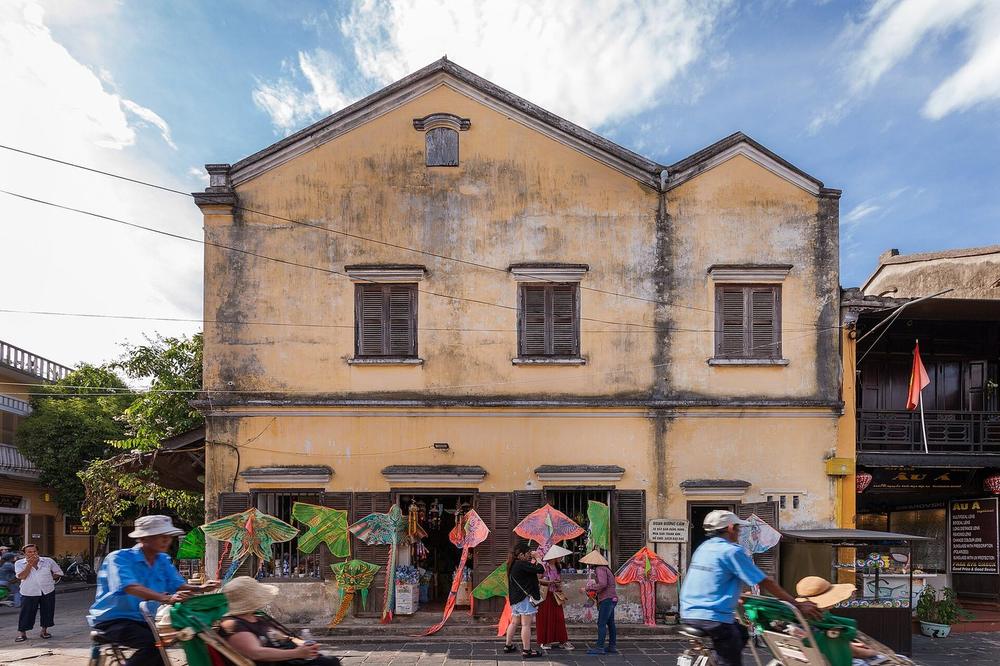
Lanterns aside, Hoi An is a trading port that silted up in the nineteenth century and was too poor to knock itself down, which is why the merchant houses are still standing. The old town closes to traffic from 09:00, and again after 18:00.
Hoi An
A morning in the old town with a guide, then the afternoon free. The tailors are real but need 48 hours to do anything worth wearing, so this is the day to start if you want a suit rather than a souvenir.
Hoi An, free
Nothing scheduled. The options we push hardest are the bicycle route through the rice to Tra Que, which is flat and takes a morning, and the boat to the Cham Islands, which only runs between March and September and only when the sea allows it.
Hoi An to Luang Prabang
A long transit day and there is no way to shorten it: 45 minutes to Da Nang, then two flights with a connection in Hanoi, landing in Luang Prabang in the late afternoon. We build the connection with two and a half hours in Hanoi rather than the ninety minutes the airline will sell you.
You arrive into a town of 55,000 people where the tallest thing is a hill with a temple on it.
Luang Prabang
The alms round happens at first light along the main street and it is a religious observance, not a display. We watch it from a distance, seated, without flash, and we do not buy the rice sold to tourists at the roadside, which is not what the monks are meant to receive. If that framing sounds like too much trouble, sleep in; the town is worth the extra hour anyway.
Later: the royal palace, Wat Xieng Thong at the tip of the peninsula, and the climb up Phou Si, which is 328 steps and best at four rather than at sunset when the summit is shoulder to shoulder.
Kuang Si and the villages
Kuang Si falls are 29 km south, an hour by road because the last stretch is slow. Go at opening and you get the turquoise pools without the crowd; the water is cold enough to hurt and everybody swims anyway. The bear sanctuary at the entrance is a genuine rescue operation, not a photo attraction.
Luang Prabang to Nong Khiaw
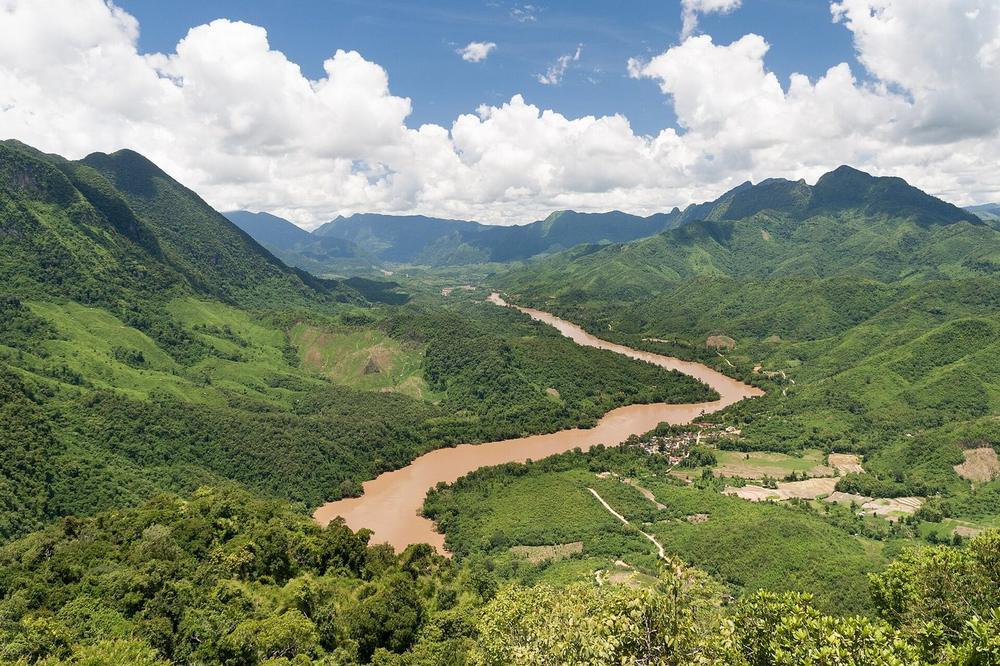
Three hours north on a road that climbs and does not stop climbing, into the limestone. Nong Khiaw sits where the Nam Ou runs between two walls of rock. There is no ATM worth relying on and the electricity is not guaranteed after ten at night.
Nong Khiaw
The viewpoint above the town is 1 hour 20 minutes up a steep, rooted path with a rope handline in two places. It is the hardest hour of this journey and the reason many people book it. Those who would rather not take a boat upriver to Muang Ngoi instead, an hour each way, to a village the road still has not reached.
Nong Khiaw to Phnom Penh
Back to Luang Prabang in the morning, then the afternoon flight to Phnom Penh via Vientiane, about five hours door to door with the connection. Evening free.
Phnom Penh
The morning is Tuol Sleng and Choeung Ek, and it is not a comfortable morning. We use a guide who lost family in it and who will answer questions rather than recite. Nobody should visit Cambodia for two weeks and skip this; equally, nobody should do it and then be handed a lunch menu at noon, so the afternoon is deliberately quiet.
Later, if you want it: the National Museum, which holds the Angkorian sculpture that is not at the temples, and is the best possible preparation for the next three days.
Phnom Penh to Siem Reap
A 45-minute flight rather than the six-hour road, then 50 minutes from the new airport into town — it opened in 2023 some 50 km out, and arrival days that still assume the old airport get this wrong. Late afternoon at Angkor Wat, which most people visit at dawn and which is emptier and better lit at five.
Angkor: the great circuit
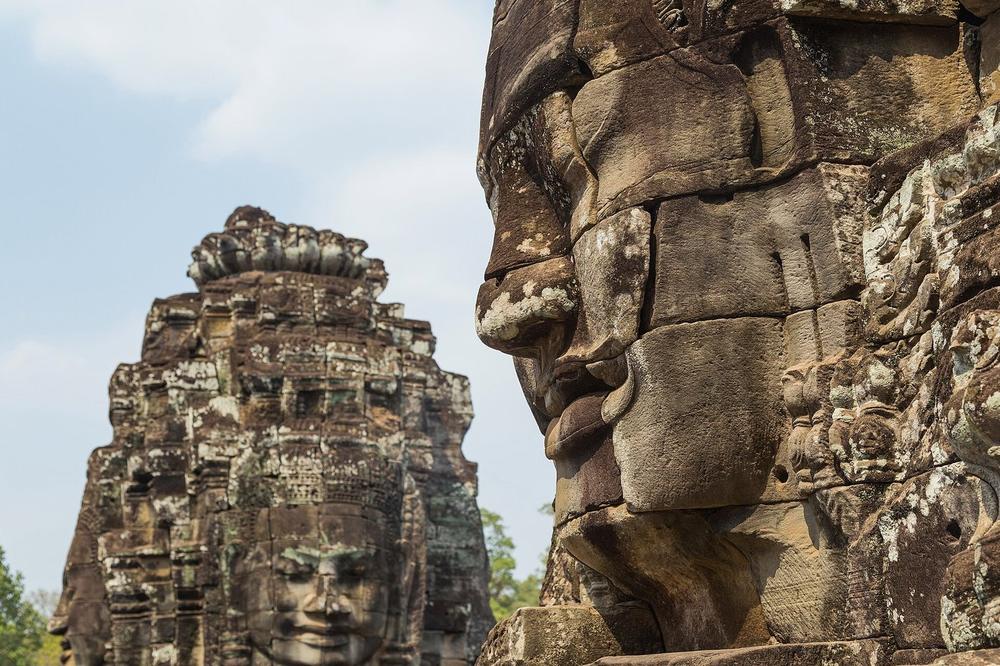
Bayon at opening, when the 200 faces still have shadow on them, then the Baphuon, the Terrace of the Elephants and Ta Prohm before the middle of the day. We break from 11:30 to 15:00, because walking sandstone at 35 degrees is how people end up hating Angkor.
Banteay Srei and the water
Banteay Srei is 37 km out, an hour each way, and it is the one temple where the carving rather than the scale is the point: pink sandstone, cut deep, still sharp after eleven centuries. Afterwards Beng Mealea if you want ruin without restoration, or the floating village at Kampong Phluk in the late afternoon, which is honest about being a working place rather than a display.
Depart Siem Reap
Breakfast, then the drive to the airport, which needs 50 minutes plus a margin. Late departures get a day room rather than a lobby.
What it costs
| Party size | Comfortable | Considered |
|---|---|---|
| 2 travellers | USD 9,400 | USD 12,800 |
| 3 – 4 | USD 7,800 | USD 10,600 |
| 5 – 8 | USD 6,900 | USD 9,400 |
Two people carry a whole car and a whole guide between them, which is why the two-traveller column is 36% higher than the same journey for five. Nothing else moves the number as much — not the season, not the hotel grade.
Comfortable is good four-star and the small owner-run places that are better than their star rating: the converted house in Luang Prabang, the garden hotel in Hoi An. Considered is five-star where five-star is genuinely better, which in this region is Hanoi, Hoi An and Siem Reap, and the same excellent small hotels everywhere else, because there is no five-star option in Nong Khiaw and we will not pretend otherwise.
The full breakdown of what a day on the ground actually costs, before any margin, is on the prices page.
What is and is not included
What the price includes
- Twenty-one nights as listed, named by property in your quote
- A private car and driver throughout, and a second vehicle where the party needs it
- A national guide in Vietnam, in Laos and in Cambodia, each with you for their own country
- Four internal flights: Hanoi–Hue, Da Nang–Hanoi–Luang Prabang, Luang Prabang–Vientiane–Phnom Penh, Phnom Penh–Siem Reap
- All entrance fees listed, including the three-day Angkor pass at USD 62
- The Lan Ha Bay boat, cabin, kayaks and permits
- Meals as listed day by day, and drinking water in the vehicle
What it does not include
- International flights into Hanoi and out of Siem Reap
- Visas: Vietnam e-visa USD 25, Cambodia e-visa, Laos visa on arrival
- Travel insurance, which we require and do not sell
- Lunches and dinners not listed above, and all drinks
- Tips, which are customary and never included in our prices
- The Hue–Hoi An overnight train, if you choose it over the flight
The journey in pictures
Who this journey is wrong for
- Anyone who wants to unpack once. You change bed nine times in twenty-one nights, and four of those days are travel days with a flight in them.
- Travellers who cannot manage 328 steps at Phou Si, 500 at Hang Mua, or the steep hour to the Nong Khiaw viewpoint. The first two have alternatives; the third does not, and Nong Khiaw is half the reason to take this route.
- Families with children under about eight. The Phnom Penh morning is not for them, and skipping it turns the Cambodian leg into temples alone.
- Anyone booking July or August. It can be done, and we have run it, but you will be wet in Laos, hot everywhere, and the Cham Islands boat will not sail.
- Anyone who wants Thailand in the same trip. Bangkok connects by air only while the land border stays shut, and adding it properly needs six more days, not two.
How this compares with our other long journeys
| Journey | Days | Countries | From |
|---|---|---|---|
| Grand Indochina | 22 | Vietnam, Laos, Cambodia | USD 6,900 |
| Asia Crossing | 28 | Japan, Vietnam, Cambodia, Thailand | USD 13,800 |
| Vietnam | 11 | Vietnam | USD 2,650 |
| Cambodia | 9 | Cambodia | USD 2,150 |
If three weeks is not available, the honest answer is two countries rather than a faster version of three. Vietnam and Cambodia in sixteen days works. Vietnam, Laos and Cambodia in sixteen days is a transit schedule with sightseeing attached.
Tell us your dates
Send the month, the number of travellers and anything fixed at either end. A first draft itinerary comes back within two working days.
Questions travellers ask most
Why does the route end in Cambodia rather than starting there?
Angkor is the loudest thing in the region and it flattens whatever follows it. Put it at the end and the quieter places — Ninh Binh, Nong Khiaw — get their own attention rather than being measured against a temple city.
The practical argument points the same way: Siem Reap connects onward to Bangkok, Singapore and Kuala Lumpur more easily than Hanoi does.
Is twenty-two days too long for three countries?
It is roughly the minimum for three, not the maximum. Seven nights in Vietnam, five in Laos, five in Cambodia and four travel days is what twenty-one nights actually holds once flights are counted.
Shorter versions exist and we sell them, but at sixteen days something has to go, and what usually goes is Laos — which is the country most people say they would go back to.
What happens if a typhoon hits central Vietnam while we are there?
Central Vietnam takes storms between September and November, worst in October. We build this journey with refundable rates on the Hue and Hoi An nights and we watch the forecast from four days out.
If a storm is confirmed, we move the Hoi An nights north to Ninh Binh or Hanoi, which stay dry, and re-book the internal flight. That is a re-plan, not a refund, and it is why we ask you to hold named-storm cover on your insurance.
Can we add Thailand or the Thai islands at the end?
Yes, by air. The Thailand–Cambodia land border has been closed since mid-2025 with no reopening timetable, so the old overland Siem Reap to Bangkok day does not exist.
Note also that from 15 September 2026 the Thai visa exemption falls from 60 days to 30 for US, UK, EU and Australian passports, which is still far more than a week on an island needs.
Read next
Tell us about the journey you have in mind
Dates, party size and the places you care about are enough to start. You get a draft route and an indicative price, not a brochure.