Angkor without the rush, and the country behind it
Four nights at Angkor because three is where people start cutting temples, two in Battambang because the road between the famous places has a city on it, and two in Phnom Penh because the twentieth century is not optional here.
At a glance
- Duration
- 9 days, 8 nights
- Party
- Private, 2 to 8
- Starts
- Siem Reap
- Ends
- Phnom Penh
- Difficulty
- Easy
- From
- USD 2,150
Cambodia is usually sold as three nights at Angkor with a night in Phnom Penh bolted on at the end. That version is not wrong so much as thin: it gives the temples one morning too few, and it leaves out the 300 km of rice country in between, which is where most Cambodians actually live.
Nine days buys three full temple days instead of two and a half, two nights in Battambang, and a Phnom Penh that is not compressed into an afternoon. It is the shortest length at which the country reads as a country rather than a monument with a capital attached.
The route runs one way, Siem Reap to Phnom Penh, so you never repeat a road. The drives are 3 hours and about 5, both in daylight, both broken.
Day by day
Cambodia wants an e-visa and, separately, an e-arrival card. The tourist e-visa costs USD 36 on evisa.gov.kh, is paid by card and is non-refundable. The e-arrival card has been compulsory for air arrivals at Phnom Penh and Siem Reap since 1 July 2024, is free, can be filed up to seven days ahead, and must be completed even when your e-visa is already approved. Applying for the visa through the arrival-card portal adds a USD 6 service charge, which is the only part of the process anyone gets wrong.
Arrive Siem Reap
Siem Reap–Angkor International Airport opened in 2023 about 50 km east of town, and the transfer is 45 to 50 minutes rather than the fifteen the old airport asked for. Itineraries written before 2023 still get this wrong and hand you a temple sunset you cannot make.
So today does nothing. Dinner near the hotel, an early night, and the first temple morning starts properly at five to six.
Angkor Thom, and Ta Prohm at the wrong time of day
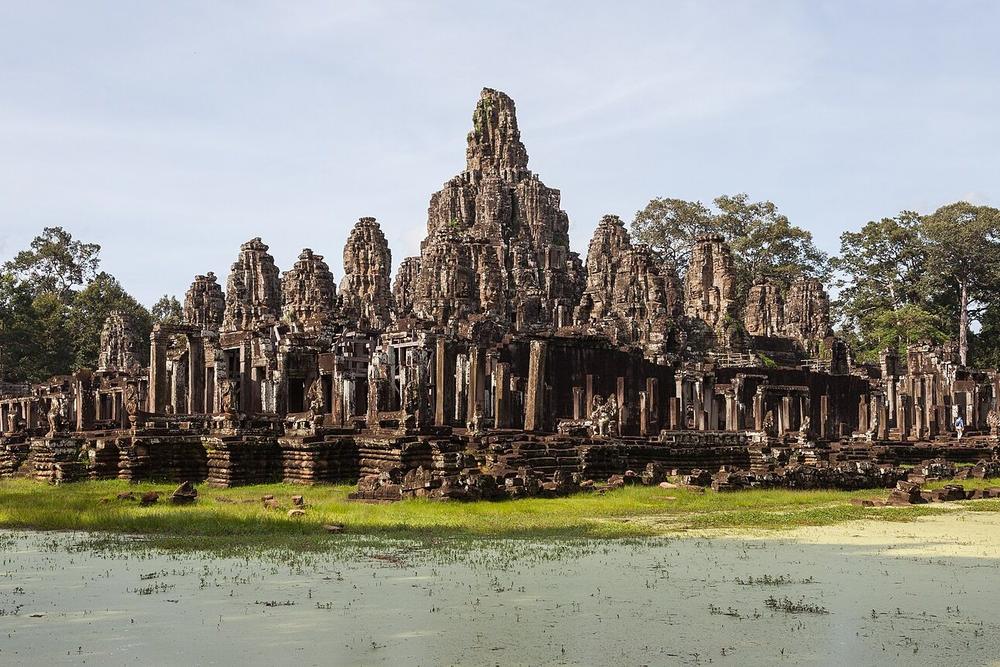
Through the south gate at opening, with the 54 gods and 54 demons hauling on the naga along the causeway, and into the Bayon while its 200-odd faces still have shadow across them. Then the Baphuon, the royal terraces, and the Phimeanakas enclosure, which most groups walk past.
We stop between 11:30 and 15:00. Walking hot sandstone through the middle of the day is how people decide they have had enough of Angkor by Wednesday.
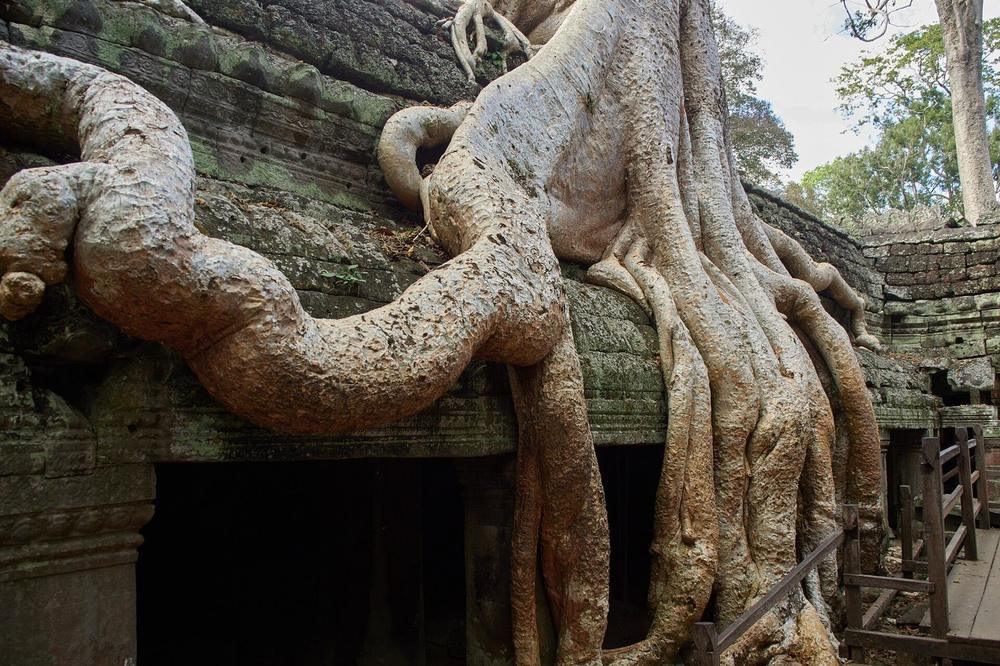
Ta Prohm in the late afternoon, when the coaches that queue there at eight have gone. The trees growing out of the galleries are the reason the temple is famous and the reason it is propped with scaffolding in a dozen places.
The northern temples, then Angkor Wat all afternoon
Preah Khan first: 800 metres of corridor on one axis, unrestored enough that you climb over stone, and quiet at eight because it is not on the sunrise circuit. Neak Pean afterwards, a pond temple reached on a boardwalk over flooded forest, and Ta Som, which takes twenty minutes and gives you the other strangler fig.
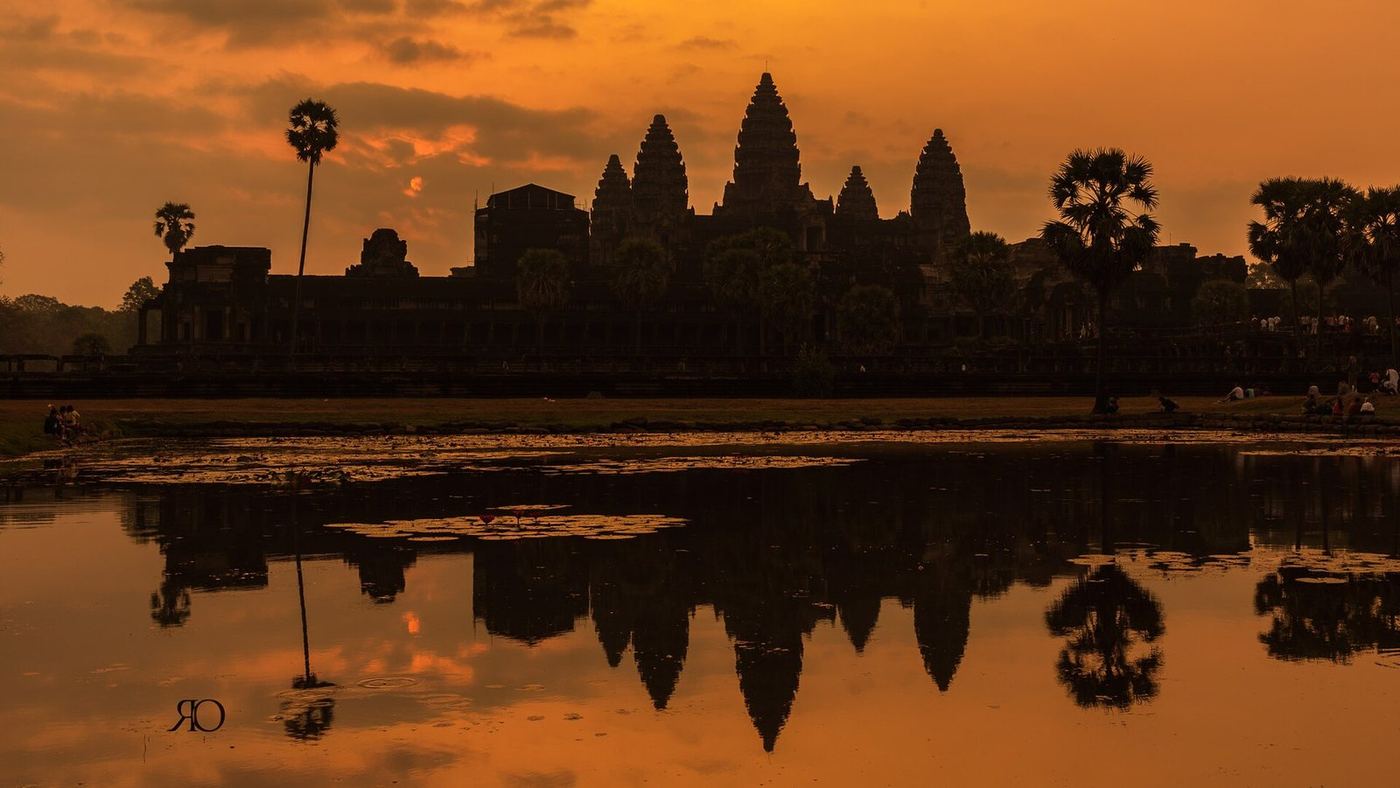
Angkor Wat from three o'clock until they close it. The crowd here arrives before dawn for a photograph of a silhouette and is gone by nine, which leaves the afternoon to the people who came for the building. The bas-relief galleries run 600 metres and hold the Churning of the Sea of Milk and a battle scene carved by two workshops of visibly different quality.
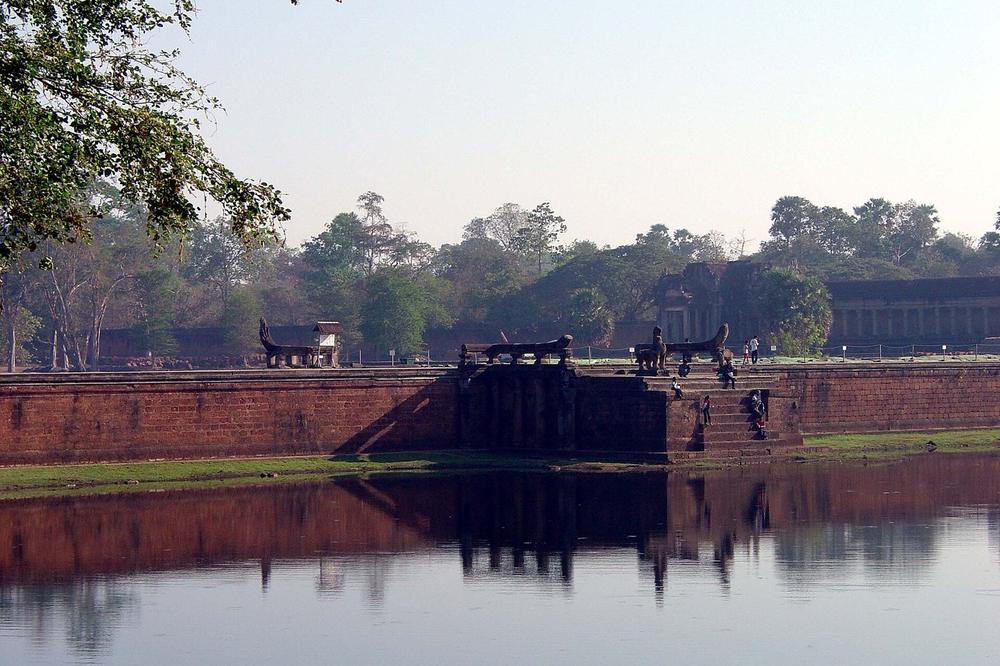
One caveat we would rather you heard now: restoration of the western naga balustrade started in June 2026 and is scheduled to finish by the end of the year, so the most photographed approach may be partly fenced.
Banteay Srei, Kbal Spean, and the water
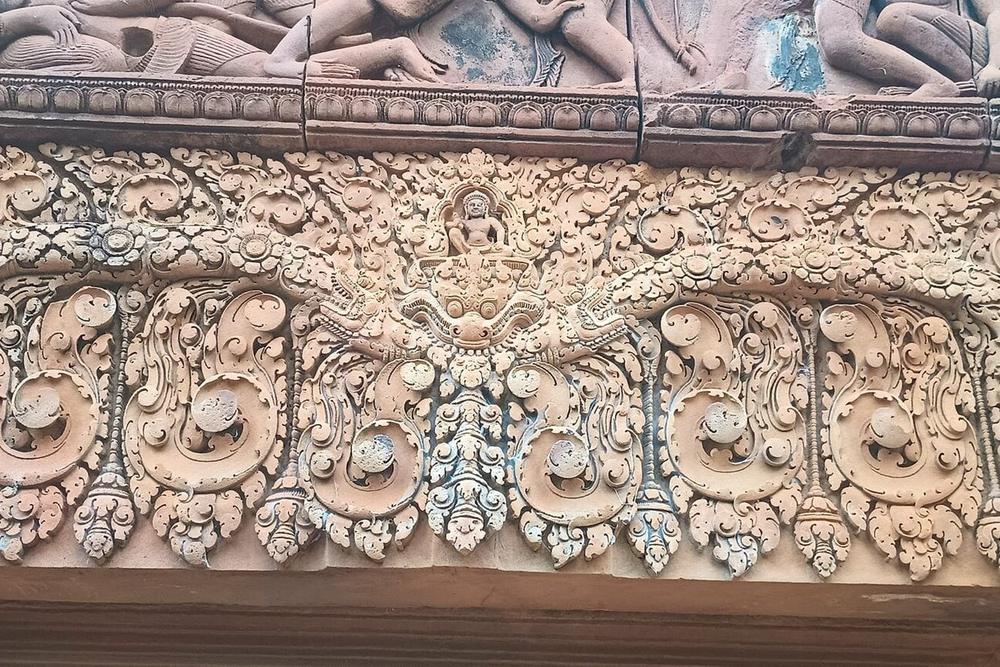
Banteay Srei is 37 km out, an hour each way, and it is the temple where the carving rather than the scale is the argument: pink sandstone, cut deep enough to hold shadow, still legible after eleven centuries. Go at opening; it is small and it fills.
Kbal Spean is another 12 km on, then a 1.5 km walk uphill through forest to a riverbed carved with lingas and Vishnu reclining, under running water. It takes about 45 minutes up and is the only real walk of the journey.
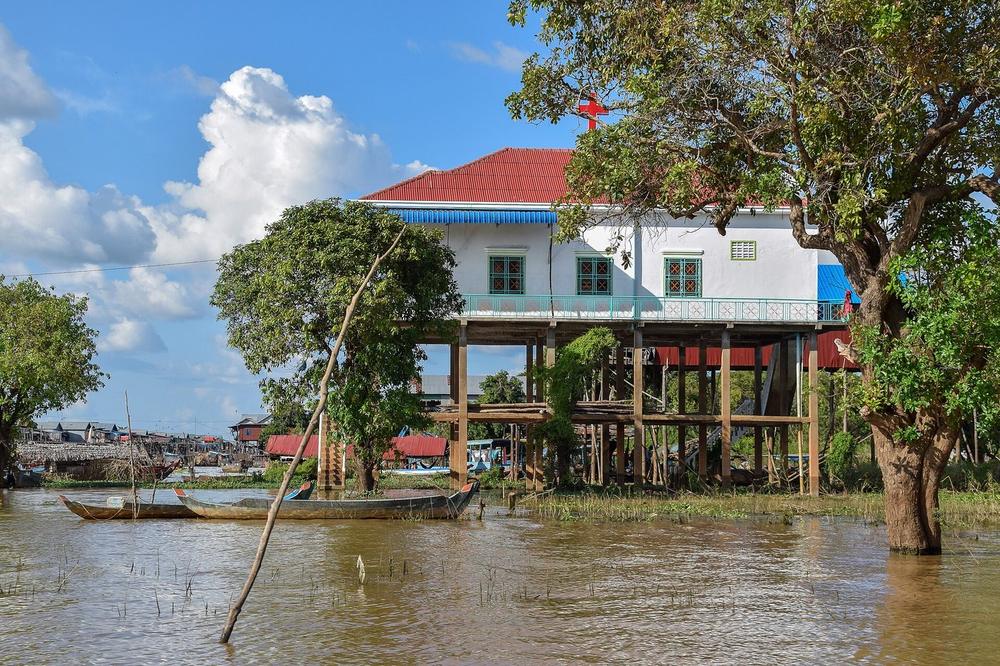
The afternoon is the Tonle Sap at Kampong Phluk, where the stilt houses stand six or seven metres above the dry-season ground and the lake comes back up to their floors in the wet. It is a working village that takes visitors, not a village built for them, and the difference is visible.
Siem Reap to Battambang
Three hours south-west through the rice, with stops: a palm-sugar kiln where the sap is boiled down in the open, a prahok yard if you can face the smell of fermenting fish, and whichever village market the day lands you next to.
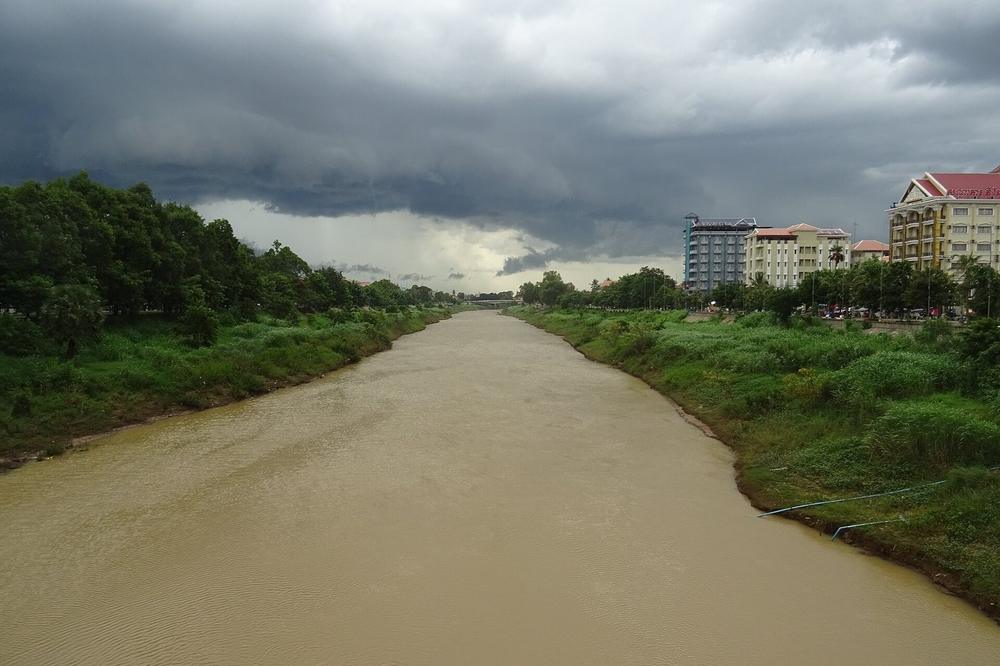
Battambang is Cambodia's second city and almost nobody stops in it. What stands along the Sangker river is a French colonial grid of shophouses that was neither bombed nor rebuilt, and the town is small enough to walk end to end in an hour. In the evening, the circus at Phare Ponleu Selpak, a school that trains children out of hard circumstances and whose graduates are the performers you may have seen in Siem Reap.
Phnom Sampeau and the rice country
The morning goes out to the villages: rice paper drying on racks, a fish-paste yard, and a family workshop that makes the bamboo sticky rice sold at every bus stop in the country. This is the part of Cambodia that the temple circuit never shows you, and it is why we hold two nights here.
Phnom Sampeau in the late afternoon. There is a hill temple at the top and, below it, the caves the Khmer Rouge used as execution sites, which are marked and open and hold what they hold. Then, at dusk, several million wrinkle-lipped bats come out of a cliff fissure in a column that takes half an hour to empty. The two things are three hundred metres apart and nobody has ever worked out how to explain that.
A note on the bamboo railway, in case you have read about it: the original line at O Dambong was taken up, and what runs now is a rebuilt version out near Wat Banan, made for visitors. We will take you if you want it. We will not tell you it is the old one.
Battambang to Phnom Penh
Five hours on National Road 5, leaving after breakfast and stopping twice, through Pursat and along the southern edge of the Tonle Sap floodplain. It is the longest drive of the journey and there is no shorter way that is not a flight from the wrong airport.
Phnom Penh by mid-afternoon. The first thing we do here is the National Museum, which holds the Angkorian sculpture that is not at the temples and which reads completely differently now you have stood in the buildings the statues came out of. Then the riverfront at six, where the whole city walks.
Phnom Penh, the morning nobody enjoys
Tuol Sleng and Choeung Ek take the morning. Between 1975 and 1979 the Khmer Rouge emptied this city and killed something close to a quarter of the country's population; the school they turned into a prison and the orchard they used as a killing field are both preserved and both quiet. Our guide here lost family in it and will answer questions rather than recite a script.
The afternoon is deliberately empty. Nobody should come to Cambodia and skip this, and nobody should be handed a shopping itinerary at two o'clock afterwards. If you want something later, the Royal Palace and the Silver Pagoda are ten minutes away and open until the late afternoon.
One thing we will not arrange, here or anywhere: a visit to an orphanage or any other paid access to children. It is an industry, it separates children from families who are alive, and no traveller has ever needed it.
Depart Phnom Penh
Breakfast and the transfer, about 40 minutes to Phnom Penh airport with the traffic. Onward connections run to Bangkok, Ho Chi Minh City, Singapore and Kuala Lumpur through the day, and late departures get a day room rather than a lobby chair.
What it costs
| Party size | Comfortable | Considered |
|---|---|---|
| 2 travellers | USD 2,900 | USD 3,950 |
| 3 – 4 | USD 2,450 | USD 3,350 |
| 5 – 8 | USD 2,150 | USD 2,900 |
Two travellers carry one car, one driver and one guide between them, which is why the two-person column sits 36% above the same nine days for a party of five. Nothing else on this page moves the number as far.
Cambodia is a band D country, USD 190 to 300 per person per day for a party of four, land only, and this journey sits in the middle of that band. Fixed costs are a larger share here than in most of Asia: the Angkor pass is USD 62 for three days and does not discount for anybody over twelve, and the airport transfer at the Siem Reap end is a 100 km round trip the operator pays for whether you are two people or eight.
Comfortable is good four-star in Siem Reap and Phnom Penh and the restored shophouse in Battambang, which is the best bed in that town by some distance. Considered is five-star in the two cities that have it and the same shophouse in Battambang, because there is no five-star there and we will not invent one. What sits underneath both columns is broken down on the prices page.
What is and is not included
What the price includes
- Eight nights as listed, each property named in your quote
- A private car and driver throughout, with a second vehicle for parties of nine and up
- One national guide for the whole journey, and a Phnom Penh specialist for the Tuol Sleng morning
- The three-day Angkor pass at USD 62, bought in your name on arrival
- All other entrance fees named in the day-by-day, including Kbal Spean and Phnom Sampeau
- The Kampong Phluk boat, and the Battambang circus tickets
- Meals as listed each day, and drinking water in the vehicle
What it does not include
- International flights into Siem Reap and out of Phnom Penh
- The Cambodian e-visa, USD 36 direct on evisa.gov.kh, and the free e-arrival card, which you file yourself
- Travel insurance, which we require of every traveller and do not sell
- Meals not listed above, and all drinks
- Tips, which are customary and never built into our prices
- Any orphanage or childcare visit, which we refuse to book at any price
The journey in pictures
Who this journey is wrong for
- Anyone who wants Angkor in a day and a half. Three temple days is the point of this route, and if what you want is Angkor Wat at sunrise and a flight out that evening, you are buying four nights you will not use.
- Anyone unwilling to spend a morning at Tuol Sleng and Choeung Ek. We will not quietly drop it to keep a week pleasant; it is the reason Phnom Penh has two nights rather than one, and a Cambodia trip that skips it is a temple holiday in a country whose recent history is still being tried in court.
- Anyone hoping to visit an orphanage, teach for a morning or otherwise pay for access to children. We refuse it, we will not sub-contract it, and we will say why at length if you ask.
- April travellers who cannot take heat. It is the hottest month in Cambodia and the thermometer reaches 40 degrees on the temple road, where there is no shade between the Bayon and the car.
- Anyone planning to arrive overland from Thailand. Every official land crossing has been shut since 2025 with no reopening timetable, so Bangkok to Siem Reap is a flight, and any itinerary still showing the Poipet road is selling a day that cannot be run.
How this compares
| Journey | Days | Countries | From |
|---|---|---|---|
| Cambodia | 9 | Cambodia | USD 2,150 |
| Laos | 9 | Laos | USD 2,300 |
| Vietnam | 11 | Vietnam | USD 2,650 |
| Grand Indochina | 22 | Vietnam, Laos, Cambodia | USD 6,900 |
Cambodia is the smallest of the three mainland countries we sell and the one most often given the least time. Six nights covers Angkor and the capital. Eight, which is what this journey holds, adds the part in between. Anything beyond about ten nights is better spent adding Laos or southern Vietnam than stretching this route further. Angkor itself, and how the pass and the crowds work, is set out on the Angkor and Siem Reap page, and the country as a whole on the Cambodia page.
Tell us your dates
Send the month, the number of travellers, and whether this is the whole trip or one leg of a longer route. A first draft comes back within two working days.
Questions travellers ask most
Which Angkor pass do we need, and who buys it?
The three-day pass, at USD 62, which is valid on any three days inside a ten-day window and therefore covers days two, three and four of this journey with room to spare. A one-day pass is USD 37 and a seven-day is USD 72; there is no advance-purchase discount and the price is identical wherever you buy it.
We buy it for you on the first temple morning, in your name and with your photograph, and it is inside the price on this page. Children under twelve enter free on production of a passport as proof of age.
Why Battambang, when most itineraries drive straight through?
Because the alternative is a five-hour transfer with lunch in it, and because Battambang is the one place on this road where you can see what Cambodia looks like when it is not selling anything. The colonial grid along the Sangker survived the war and the reconstruction; the villages around it make rice paper, prahok and bamboo sticky rice for the whole country.
It also carries the two pieces of the twentieth century that Siem Reap does not: the caves at Phnom Sampeau, and the circus school whose students come out of exactly the circumstances the caves created. Kampot and the Cardamoms are the other candidates for these two nights, and both are better on a longer route that ends at the coast rather than in the capital.
Can we take the boat from Siem Reap to Phnom Penh instead?
You can, on a different route. The Tonle Sap boat runs roughly July to March, when the water is high enough, takes about seven hours and costs around USD 49. From April to June it does not run at all, and in the shoulder weeks it runs until the day it does not.
It also skips Battambang, which is half of what these nine days are for. If the boat is the thing you want, tell us and we will build the trip the other way round: four nights at Angkor, the boat down, and three in Phnom Penh.
When is the best month, and how bad is the wet season?
December and January are the best weeks: dry, and 24 to 30 degrees on the temple road. November to February is the whole reliable window. April is the month to avoid if heat troubles you at all, since it reaches 40 degrees.
May to October brings a shower most afternoons rather than continuous rain, and it is the season the temples look best in: the moats are full, the stone is dark and the crowds are thinner. Kbal Spean only has water over its carvings in and just after the wet. It is a real option and we say so on when to go.
Read next
Tell us about the journey you have in mind
Dates, party size and the places you care about are enough to start. You get a draft route and an indicative price, not a brochure.