Two coasts, opposite monsoons, and one rule about to change
The easiest country in the region to travel and one of the easiest to travel badly. Two coastlines run on opposite seasons, the land border to Cambodia is closed, and the visa exemption halves on 15 September 2026.
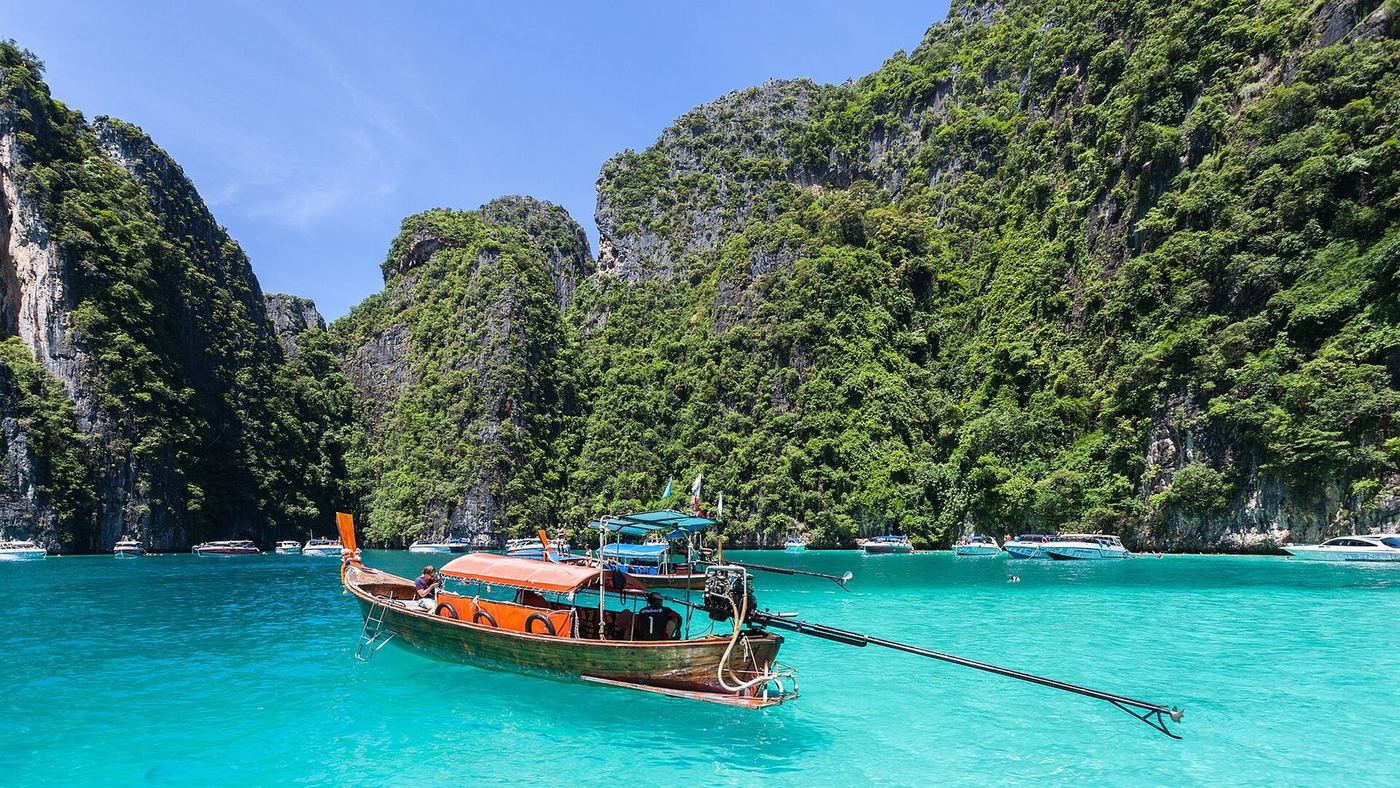
At a glance
| Region | Mainland Southeast Asia |
| Nights we recommend | 8 to 12 |
| Gateway airports | Bangkok Suvarnabhumi (BKK), with Don Mueang for domestic and low-cost sectors |
| Best months | November to February, with December and January the peak |
| Known for | Bangkok and its waterways, the ruined capitals, the Lanna north, and two counter-seasonal coasts |
| Entry | Visa exemption of 30 days from 15 September 2026, down from 60; the Thailand Digital Arrival Card is compulsory and free |
| Currency | Thai baht |
What this country actually is
Thailand is the most practised host in Asia. The roads are good, the trains run, the food is excellent at every price, and a traveller who speaks no Thai can move across the country without difficulty. That competence is also the trap: the same infrastructure delivers a very good fortnight and a very poor one at almost identical cost, and which of the two you get is decided by the choices made before you land.
The over-visited list is long and worth stating plainly. The Grand Palace and the temples beside it in Bangkok are a queue well before ten. Phi Phi and Maya Bay take day-boat traffic in volumes the reef has already paid for. Parts of Phuket and Pattaya were built for a market that is not the one reading this page. The elephant camps within an hour of Chiang Mai include a small number of genuine sanctuaries and a large number of riding and bathing operations wearing the same vocabulary; the difference is not visible from a website, which is why we choose the place rather than letting you choose it from a brochure.
Behind that runs a country most itineraries never touch. The Siamese capital stood at Ayutthaya for 417 years before it was destroyed in 1767, and the ruins are an hour from Bangkok by train. West towards the Burmese border, the river country holds what is left of a railway laid in 1942 and 1943 by Allied prisoners and, in far greater numbers, by conscripted Asian labourers who are commemorated far less often. The north is a separate kingdom in its architecture, its script and its food. Thailand rewards the traveller who treats Bangkok as a city rather than a stopover, and it punishes the one who treats it as an airport with temples attached.
How many nights, and what breaks if you take fewer
Eight to twelve nights, and the shape matters more here than the count. Thailand divides into three natural blocks: Bangkok and the central plain, the north, and a coast. Nine nights holds two of those blocks comfortably. It does not hold three.
The plan that arrives in our inbox most often is Bangkok, Chiang Mai and an island in ten days. It contains three internal flights, and each of them costs a morning at one end and an afternoon at the other; what is left is two days in each place and a fortnight of laundry. Take the north or take the coast, and give the one you choose four nights rather than two.
Below eight nights the honest advice is Bangkok and one region reachable by road or rail — the ruins at Ayutthaya, or the river west at Kanchanaburi — because a short trip that never sees an airport is longer than it looks. Where each country in Asia stops rewarding extra days is set out under how many days.
When to go
The mainland has one clear season. The coasts do not agree with it, or with each other, and that disagreement is the single most useful thing to understand before you choose a month.
| Months | Bangkok, Ayutthaya and the north | The Andaman coast | What it costs you |
|---|---|---|---|
| November to February | The window: dry, cooler, and the reason this is the season everyone names | Reliable and busy | Peak rates, and December and January the peak of the peak |
| March and April | Above 35 degrees, and the ruins have no shade at all | Hot and mostly dry before the change | Lower rates, and a real cost in comfort |
| May to October | Monsoon, which here means a violent hour most afternoons, not a grey week | Counter-seasonal, and often better than the Gulf side in these months | The cheapest and emptiest months of the year |
The season nobody advertises
May to October on the mainland is not a washout. Rain arrives late in the day, empties itself and goes, the waterfalls that are a trickle in February are full, the ruins are green rather than bleached, and the rates fall. For an inland route — Bangkok, Ayutthaya, the river, the north — it is a defensible choice, and we will say so rather than steer you into December because December is easier to sell.
The coast is where the choice bites. The two seas keep different calendars. From May to October the Andaman performs better than the Gulf side does, against the pattern of the country behind them, so a beach week in the middle of the year is a question of which sea rather than whether to travel at all. March and April are the months to think hardest about: above 35 degrees in Bangkok and Ayutthaya, on stone with nothing over it.
Getting there and getting around
United States, United Kingdom, European Union and Australian passports will be admitted for 30 days from that date, where 60 is the figure up to and including 14 September. The new framework carries no extension inside the exemption, and entries taken at a land border on it are generally limited to two in a calendar year. A fortnight in the country is unaffected. A long loop that passes through Thailand twice needs the days counted before it is booked.
Bangkok has two airports. Suvarnabhumi takes the long-haul arrivals; Don Mueang carries much of the domestic and low-cost traffic, and a connection between the two is a separate journey across the city rather than a transfer. Delays ran on at both through August 2026, in an episode that produced more than 2,300 of them across sixteen Asian hubs, and the scheduling strain underneath was described as something likely to return rather than something solved. Leave margin on any Bangkok connection, and a good deal of it on a same-day one.
The border that is closed
Clashes from June 2025 closed every official crossing into Cambodia in stages, and none had reopened by late August 2026, when the Thai government said restoration would happen step by step and named no date. Officials on that side expect it to hold to the end of the year. The overland run east from Bangkok towards Angkor is therefore not a slow option or an uncomfortable one; it is not available at all, and a published itinerary showing it has gone a year without revision. Two countries in one trip works perfectly well in the air, on ordinary scheduled services into Siem Reap and Phnom Penh. Which legs across Asia join up and which force a backtrack is set out under multi-country routing.
Trains, and where they beat the car
Bangkok to Ayutthaya is the best short rail journey in the country. Roughly an hour, 48 minutes on the fastest express, and 27 departures a day spread from 04:15 to 23:05, which is frequent enough that breakfast sets the departure time instead of the other way about. Elsewhere the state railway is slow and pleasant rather than efficient, and a car and driver covers the same ground in less time. Domestic flights carry the long legs to the north and the south, and both are short.
What it costs on the ground
Thailand is a band C country: about USD 250 to 360 for each traveller each day in a party of four, land only. That sits above Vietnam, Cambodia and Laos, and for the same money it buys a noticeably better room than any of them.
| What | Amount, as at September 2026 |
|---|---|
| Thailand Digital Arrival Card | Free, and compulsory for every non-Thai national within 72 hours of arrival |
| Tourist visa, if you need longer than the exemption | About 1,000 baht, 60 days |
| One 30-day extension at a Thai immigration office | 1,900 baht |
| Visa exemption, from 15 September 2026 | 30 days, down from 60 |
Watch the arrival card, because it costs nothing and a small industry has grown up around charging for it. One address is official: tdac.immigration.go.th. Sites asking between USD 10 and USD 90 for "processing" are reselling a form that takes about five minutes to complete. The link goes out with your documents at no charge.
Hotel rates, restaurant prices and a daily figure for a car with a driver are missing from that table, and from our prices page, for one reason: no published Thai figure survived checking, and the real number shifts with the city, the vehicle and the week. The structure is steadier than the price. A car and a guide are charged by the day and split no further, so a couple carries the same two lines that five travellers would share, and pays roughly 36% more each for an identical week. Country by country, the ground costs sit under cost by country.
In pictures
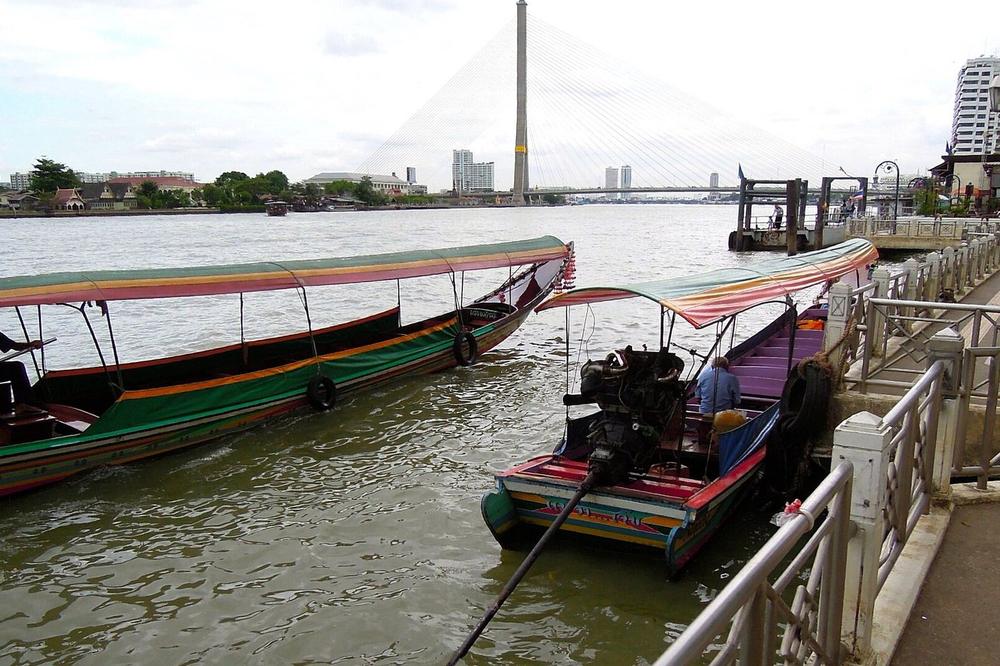
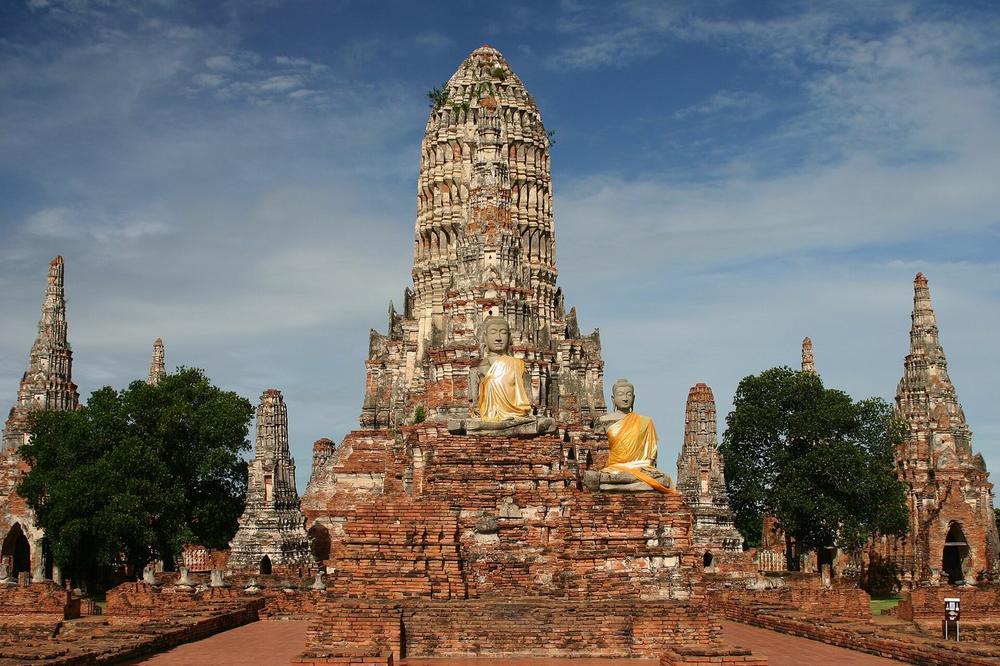
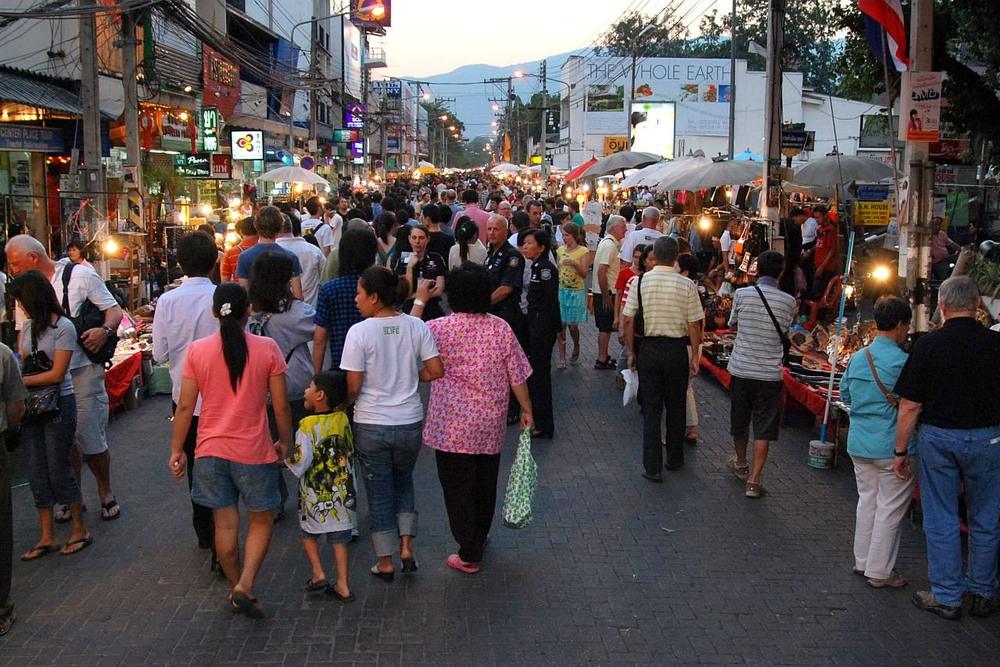
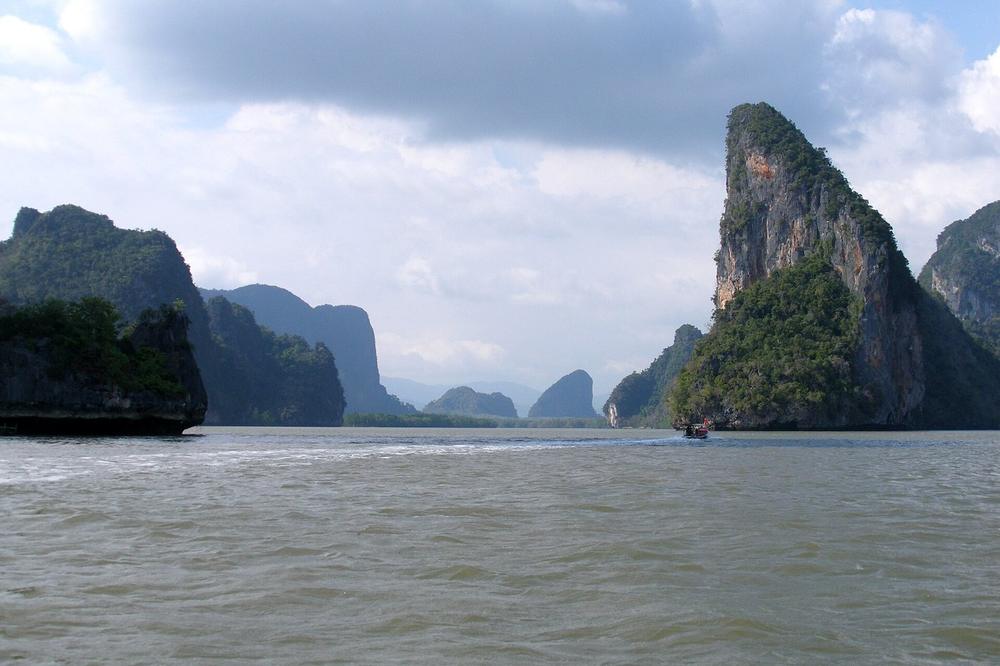
When to skip it
- You want to reach Angkor overland from Bangkok. You cannot, and you will not be able to on any timetable currently published. Fly, or build the trip from the Cambodian side.
- Your dates are locked to March or April and heat is a problem. Above 35 degrees on unshaded stone is not a detail; it is the whole day.
- You want a beach and the month is wrong for the sea you have chosen. The two coasts run on opposite seasons, and picking the sea to suit the month is free, whereas picking the month to suit the sea rarely is.
- An elephant ride, or a photograph of you bathing one, is on the list. That is not something we book, arrange through anybody else, or negotiate about; the reasoning is under responsible travel.
- You have five nights and want the north as well as Bangkok. Two of those nights become airports; take the central plain instead and travel by rail.
Journeys that go here
Our ten-day Thailand journey takes the inland country: the capital, the ruined capital north of it reached on rails, the river west towards the Burmese border, and four nights in the north, which is one more than the usual three. No island appears in it, and that is a choice rather than an omission.
Thailand also finishes the 28-day Asia Crossing, reached from Japan, Vietnam and Cambodia, and after three weeks on the road it is the country that asks least of a traveller. Set beside Cambodia alone, seventeen days is the length that works, flown rather than driven.
If what you want is the north alone, or the coast alone, say so in an enquiry rather than starting from a published route: half of what we build in this country is a redrawn version of the journey above, and how far we will move it is set out under tailor-made.
Questions travellers ask most
What changes on 15 September 2026?
The exemption halves. Thirty days becomes the figure from that date for United States, United Kingdom, European Union and Australian passports, where sixty applies up to and including 14 September, and a great deal of published advice, printed guidebooks included, has not caught up.
For a holiday it changes nothing. It matters for long regional routes: there is no extension mechanism within the exemption, so a longer stay needs the tourist visa applied for in advance, at about 1,000 baht for 60 days, or a 1,900-baht extension at an immigration office.
Can we combine Thailand and Cambodia?
In the air, yes, and it reaches us more often than any other two-country request. Scheduled flights link Bangkok with both Siem Reap and Phnom Penh, and seventeen days is enough for neither country to feel clipped.
On the ground, no. The land crossings have been shut since 2025 with nothing on the calendar. Most published two-country routings have not been rewritten for it, which makes it a useful thing to test a competing quote against.
Is the wet season a mistake?
Not on the mainland. Between May and October the rain comes down hard for an hour and then stops, the country is green, the falls are running and rates sit at their lowest. Bangkok, Ayutthaya, the river and the north all hold up in it.
It is a mistake only if you have booked the wrong coast. The Andaman side is counter-seasonal and often better in exactly those months than the Gulf side, so the sea you choose should follow the date rather than the other way round.
Is there anything to complete before we fly?
The Thailand Digital Arrival Card. Every non-Thai national has to file one within 72 hours of landing, and the form itself is short.
No money changes hands. Use tdac.immigration.go.th and ignore the imitators, which charge USD 10 to 90 for the privilege of typing your passport number into a box. Entry positions across the site are kept current under visas and entry.
Read next
Tell us about the journey you have in mind
Dates, party size and the places you care about are enough to start. You get a draft route and an indicative price, not a brochure.