Two Asias in twenty-seven nights, from Tokyo to Bangkok
Japan first, at the pace Japan demands, then the Red River delta, the Hoi An coast, Angkor and Bangkok. Four countries that share a continent and almost nothing else.
At a glance
- Duration
- 28 days, 27 nights
- Party
- Private, 2 to 8
- Starts
- Tokyo
- Ends
- Bangkok
- Countries
- Japan, Vietnam, Cambodia, Thailand
- From
- USD 13,800
Eleven nights in Japan, eight in Vietnam, four in Cambodia and four in Thailand. Five sectors are flown, because there is no sensible alternative to any of them: Kansai to Hanoi, Hanoi down the Vietnamese coast, Da Nang to Siem Reap through Ho Chi Minh City, and Siem Reap to Bangkok. Everything else moves by rail or by road with your own driver at the far end of it.
This is the longest journey we sell and it is not the one most people should buy. Read the next section before the itinerary.
Why four weeks, and when two trips are the better answer
Japan and mainland Southeast Asia are not variations on a theme. One runs on timetables measured in seconds, costs USD 480–650 per person per day at our standard, and rewards travellers who like being early. The other runs on heat, improvisation and USD 190–300 a day, and rewards travellers who can let an afternoon go. Put them end to end and each one sharpens the other. A Kyoto temple garden read differently after Angkor, and Angkor reads differently after Kyoto: both are religious architecture built to be walked in silence, and the two civilisations solved that problem in ways that have nothing to do with each other.
That is the argument for the crossing. Here is the argument against it, which we make to about a third of the people who enquire.
Twenty-seven nights in one run means nine hotels, five flight sectors and a change of climate around day twelve that no single suitcase covers neatly. If you have four weeks of leave once every three years, splitting them into a fortnight in Japan in November and a fortnight in Vietnam and Cambodia the following February gives you two arrivals, two sets of anticipation and no laundry crisis in Hanoi. It also costs less in total, because the two long-haul fares are cheaper than one long-haul plus the internal sectors and the transit days you are paying land costs on.
Take the crossing if the four weeks exist now and might not exist again, if you are travelling from Europe or the east coast of the United States and the flight is the part you dread, or if you have already done one of these two Asias and want the other one attached to it rather than sold separately. Those are real reasons. "Seeing more countries" is not one, and we will say so.
If the answer turns out to be two trips, the two we would sell you are the twelve-day Japan journey and the twenty-two-day Indochina voyage. The arithmetic of how many days each country actually holds is set out on how many days.
Day by day
The Thailand–Cambodia land border has been closed since mid-2025 after armed clashes, and the Thai government stated in August 2026 that there is no reopening timetable. Siem Reap to Bangkok is therefore a flight, not the road day that older itineraries still advertise. Separately, from 15 September 2026 the Thai visa exemption for US, UK, EU and Australian passports falls from 60 days to 30. Four nights in Bangkok sits comfortably inside 30, so this journey is unaffected — but a longer Thai extension at the end now needs checking rather than assuming.
Arrive Tokyo
Met at Haneda or Narita and driven in. Haneda is inside the city and Narita is not, which is worth knowing when you book the long-haul fare: the difference is roughly an hour of road on the day you have least appetite for it.
Nothing is scheduled. Japan asks for no visa and no pre-registration for US, UK, EU and Australian passports — the waiver is 90 days and the JESTA pre-clearance system that appears in older articles is not live and is not expected before the 2028 fiscal year. The ¥3,000 departure tax that rose on 1 July 2026 is inside your airline ticket; nobody will ask you for it at the gate.
Tokyo: the eastern half
The old low city first, because it makes the rest legible. Asakusa before the coaches, then the shopping arcades behind it, then the wholesale kitchenware street at Kappabashi where restaurant cooks buy their knives. Lunch is standing up at a counter.
The afternoon is the river and the Edo-Tokyo museum material on how a city of wood burned down every twenty years and rebuilt itself each time. Your guide is Japanese, licensed, and with you for the whole eleven nights in the country — not a series of local handovers.
Tokyo: the western half
Shibuya, Harajuku and the Meiji shrine in the morning, which sounds like a postcard list and is not once somebody explains that the shrine forest is entirely artificial, planted from donated trees in the 1920s and left to grow into a wood.
The afternoon splits by taste. Architecture people go to Omotesando and the Nezu museum garden. Everyone else goes to Shimokitazawa, which is second-hand clothes and small bars and no towers at all. If teamLab is on your list, we book it now rather than later: tickets are dynamically priced from ¥3,600 and the weekend slots go first.
Tokyo, free, or the mountain
A day with nothing in it. The options we push are Kamakura, which is temples and a beach an hour south, and Nikko, which is two hours north and holds the most heavily decorated buildings in the country. Both are day trips with your driver.
Climbing Mount Fuji is not part of this journey and we will talk you out of bolting it on. The climb now carries a ¥4,000 fee on all four trails, compulsory pre-registration, and a hard cap of 4,000 climbers a day on the Yoshida trail. It is an overnight effort in a fixed July–September window and it does not belong in the middle of a 28-day crossing.
Tokyo to Hakone
Out of the city by mid-morning and into the mountains south-west of it. Hakone is where Tokyo goes to sit in hot water, and the point of the night is the ryokan rather than the sightseeing: tatami, a private cypress bath, and a kaiseki dinner served in the room in about nine courses.
Fuji is visible from the lake on roughly half the days of an average year and more often in winter than in summer. We will not promise it. What we will do is put you on the eastern shore in the late afternoon, which is when it appears if it is going to.
Hakone to Kyoto
Back down to the Shinkansen line and west. Tokyo to Kyoto is 2 hours 13 minutes on the Nozomi at ¥14,170 reserved; from Odawara it is shorter still. We book reserved seats on the right-hand side, which is the Fuji side, and we do not sell you a Japan Rail Pass for this route — on a Tokyo–Kyoto–Hiroshima shape, point-to-point tickets come to roughly ¥39,520 against ¥50,000 for the seven-day pass.
Kyoto by early afternoon. The first evening is Gion on foot, and the rule there is simple: the main streets are open to everyone, and the private lanes behind them have been closed to tourists since May 2024 with signs threatening a fine of up to ¥10,000. Your guide knows exactly where the line is.
Kyoto: the east
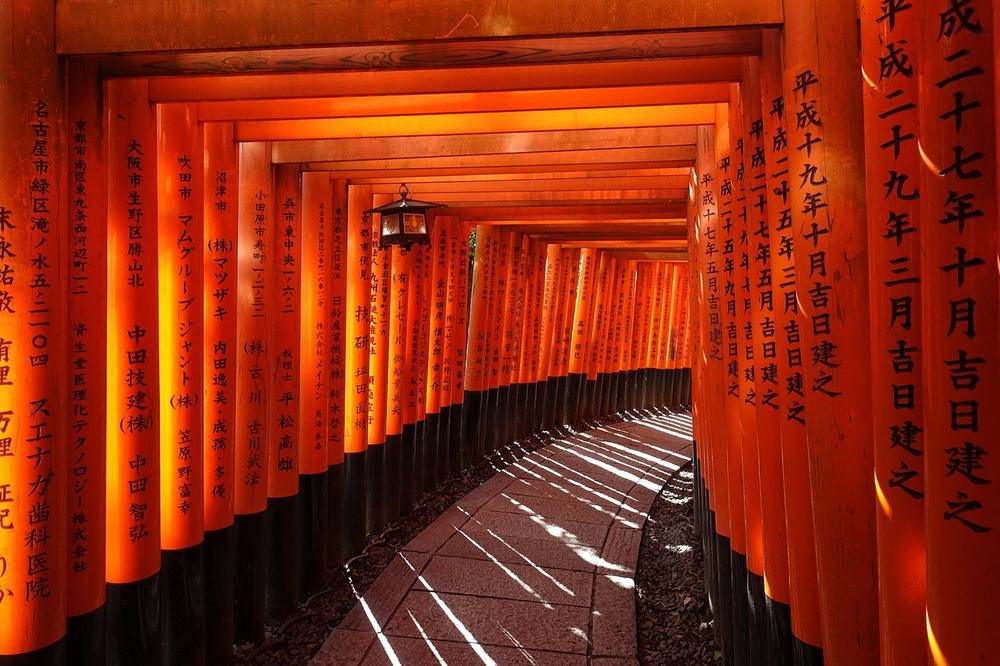
Out at 06:45 for Fushimi Inari, which is free, open at all hours and empty at that time; by ten it is a queue with torii gates around it. Back for breakfast, then Kiyomizu-dera and the slopes below it before the middle of the day.
The afternoon is deliberately indoors: the Sanjusangendo hall and its ranks of gilded carved figures, which is a room that does not photograph and has to be stood in. Kyoto is phasing in two-tier bus fares — residents with a linked IC card pay ¥200 a ride and non-residents ¥350–400 — which is one reason this journey moves by private car and on foot rather than by bus pass.
Nara, and the road back
An hour south to Nara, which was the capital before Kyoto and is a smaller, flatter, easier place to walk. The Todai-ji Great Buddha hall is the reason most people come; the reason to stay past eleven is Kasuga Taisha and the stone lanterns on the path up to it.
The deer are wild animals that have learned to bow for biscuits. They also headbutt, and they do not distinguish between a biscuit and a paper map.
Kyoto: the west, and a free afternoon
Arashiyama at opening, which means the bamboo path before eight and the Okochi Sanso garden immediately after, then the Tenryu-ji pond garden, which has been in the same layout since the fourteenth century.
The afternoon is yours. What we suggest depends on the month: the northern temples for autumn colour, which the meteorological forecast issued on 2 September 2026 puts at its Kyoto peak around 11 December, roughly six days later than the long-run average; the Philosopher's Path in spring; and in high summer, a department store basement and an air-conditioned museum, said without irony.
Kyoto to Hiroshima, by way of Himeji
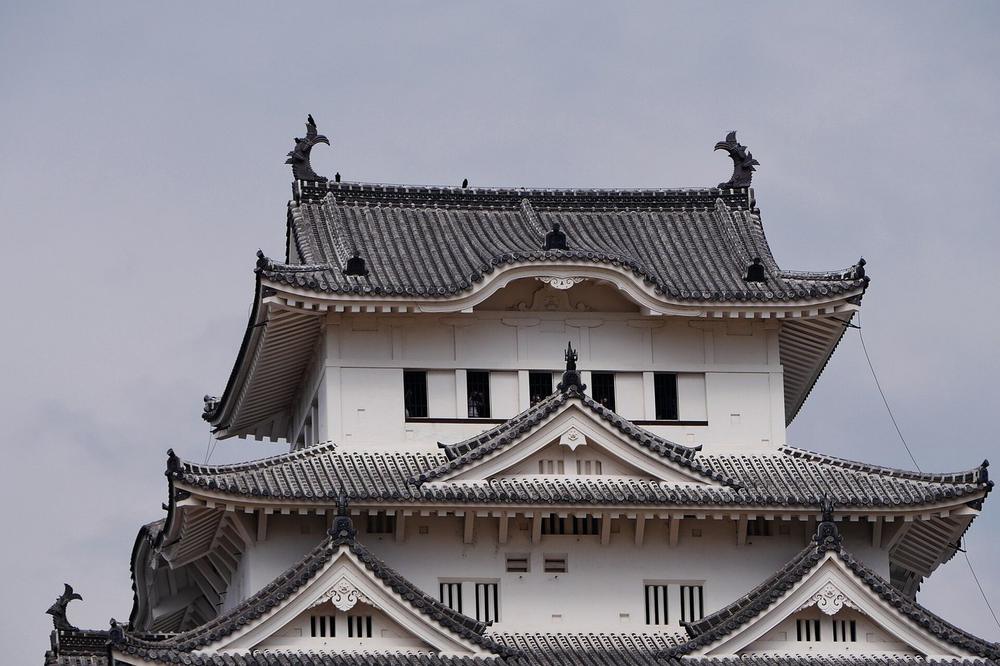
Himeji is on the line and holds the only original castle keep of its scale in the country — never burned, never bombed, and climbed on steep interior stairs in stockinged feet. Since 1 March 2026 the castle has charged non-residents ¥2,500 against ¥1,000 for Himeji residents; under-18s go free. We say the figure out loud because dual pricing is spreading across Japan and you will meet it again.
On to Hiroshima in the afternoon — Kyoto to Hiroshima is 1 hour 40 minutes on the Nozomi without the Himeji stop. The Peace Memorial Museum is open until the evening and we go on arrival rather than the following morning, so that the day afterwards is not spent recovering in a queue.
Miyajima
A short train and a ten-minute ferry to the island. The floating torii is the photograph; the thing worth the day is Mount Misen behind it, either on the ropeway or on the two-hour walk up through the primeval forest that has never been logged.
Get the tide table right and the shrine either floats or stands on mud. Both are worth seeing and only one is on the postcards. Last night in Japan: pack for a 30-degree change tomorrow.
Hiroshima to Hanoi
The crossing day, and there is no elegant version of it. Shinkansen back east along the Sanyo line in the morning, then the airport express to Kansai, then the afternoon flight to Hanoi. You leave a country where the train is early and arrive in one where the motorbikes decide.
We keep the evening completely empty and we do not book a dinner. Your Vietnamese guide meets you at Noi Bai and stays with you for the eight nights in the country. US and Australian passports need the Vietnamese e-visa in advance — USD 25 single entry, USD 50 multiple, three working days in theory and two to three weeks in practice; UK, French, German, Italian and Spanish passports hold a 45-day exemption and need nothing.
Hanoi on foot
The Old Quarter in the morning: thirty-six streets still carrying the name of the guild that worked them, houses two metres wide because frontage was taxed, and a rail line running between two rows of front doors. After eleven nights of Japanese order this is the most disorienting morning of the journey, and it is placed here on purpose.
The afternoon is the colonial city and the Temple of Literature, and then a long sit somewhere with a fan. Nobody achieves anything on their first full day in Hanoi and we plan for that.
Hanoi, and out of it
A free day. West of the city, the Duong Lam village holds laterite houses that predate the French administration by three hundred years and is an hour each way. Closer in, the ceramic workshops at Bat Trang take a morning.
Whatever you choose, the evening is the water puppet theatre or nothing, and we are honest that it is forty minutes of a folk form performed for visitors — charming, short, and not the reason you came.
Hanoi to Lan Ha Bay
Leave at eight on the Hai Phong expressway. Hanoi to the Ha Long coast is 152 km and a little over two hours on the road now; the high-speed line that broke ground in April 2026 will cut it to about 23 minutes when it opens, targeted for 2028 and therefore not yours.
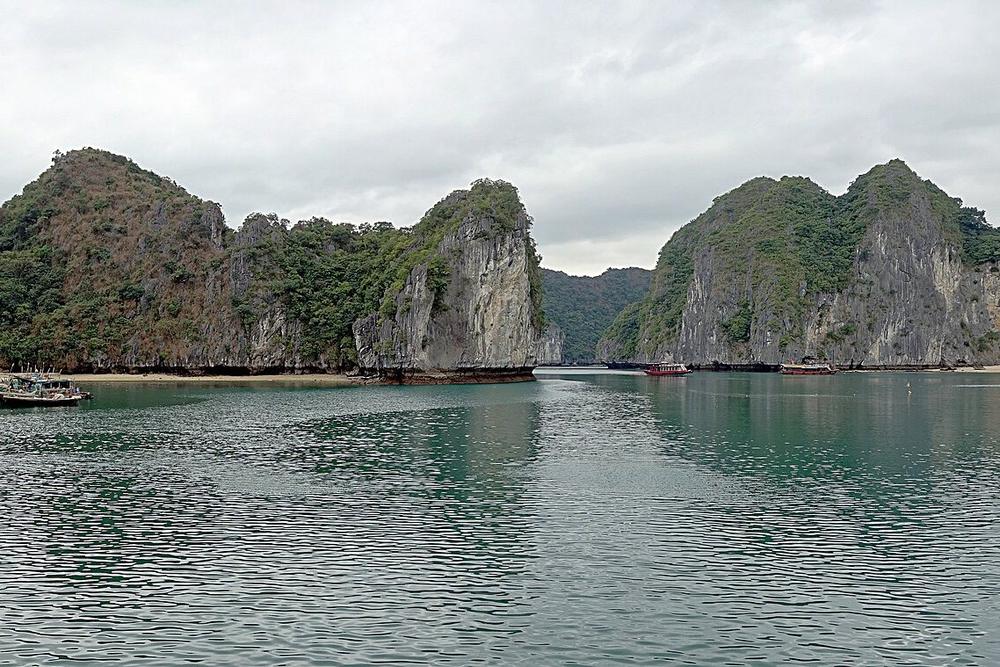
Board at midday on the Cat Ba side. Lan Ha holds the same limestone as Ha Long and a fraction of the boats, and the difference is something you hear rather than see. Kayaks in the afternoon, dinner at anchor, and the engine off.
Lan Ha to Hoi An
Off the boat by eleven, back to Hanoi, and the early-evening flight south to Da Nang. We fly Vietnam Airlines on this sector and not the cheaper alternative: Vietnam Airlines runs around 77% on time and VietJet around 55%, which on a day with a boat at one end matters more than the fare. Bamboo Airways, which some older itineraries still show, stopped scheduled flying in August 2026.
Forty-five minutes south from Da Nang airport and you are in Hoi An in time to walk into the old town after the traffic ban starts at six.
Hoi An old town
A morning walk with your guide through a port that silted up in the nineteenth century and was subsequently too poor to demolish itself, which is the entire reason the merchant houses, the Japanese bridge and the Chinese assembly halls are still standing.
The afternoon is free and this is the day to visit a tailor if you want one. Anything worth wearing needs two fittings and about 48 hours, so starting on day three of four does not work.
My Son, and the beach
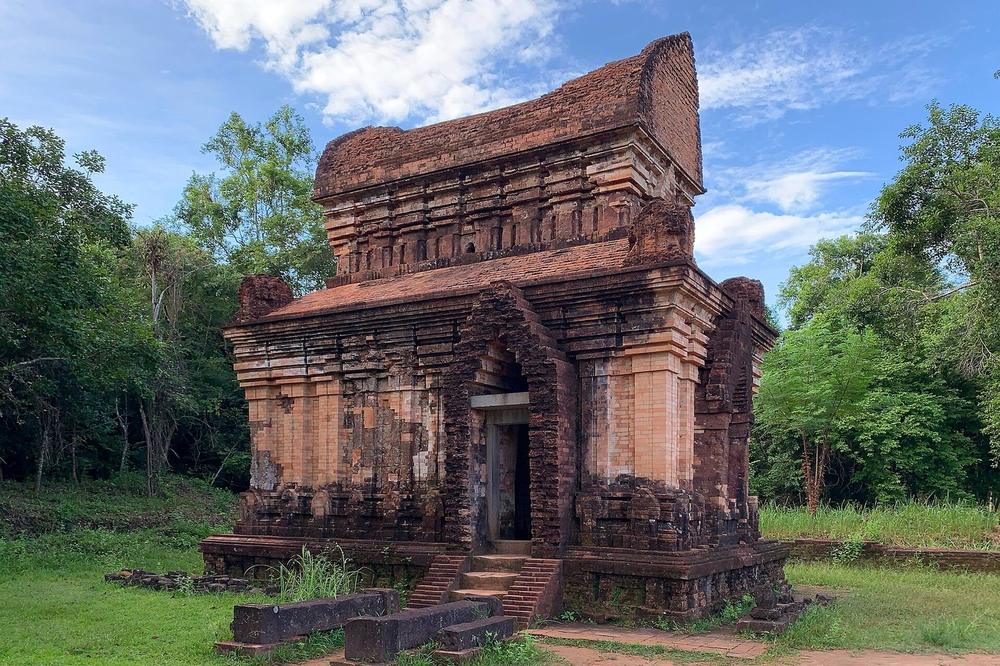
My Son is 45 minutes inland: brick towers built by the Cham between the fourth and thirteenth centuries, badly damaged by bombing in 1969, and still the best surviving Hindu architecture in Vietnam. Go at opening; the site faces east and the light is gone by mid-morning, along with the shade.
Back by one. The afternoon is An Bang beach, which between March and September is swimmable and between October and December is frequently not.
Hoi An, free
Nothing scheduled. The bicycle route out through the rice paddies to the herb village at Tra Que is flat and takes a morning. The cooking classes here are genuinely good and start at the market rather than at a worktop.
A note on timing rather than on today: central Vietnam takes typhoons between September and November, October worst of all, with 200–400 mm of rain in a day possible and the old town liable to flood. We hold refundable rates on these four nights for any departure in that window.
Hoi An to Siem Reap
North to Da Nang and the flight to Cambodia, connecting through Ho Chi Minh City. Siem Reap–Angkor airport opened in 2023 about 50 km from town and the transfer runs 45 to 50 minutes; itineraries written before that still assume the old fifteen-minute run and get the arrival day wrong.
Your Cambodian guide meets the flight. Cambodia takes an e-visa at USD 36 and also requires the separate e-arrival card, which is free and which even e-visa holders must file — it applies to air arrivals at Phnom Penh and Siem Reap. Late afternoon at Angkor Wat, which almost everyone visits at dawn and which is emptier and better lit at five.
Angkor Thom and the great circuit
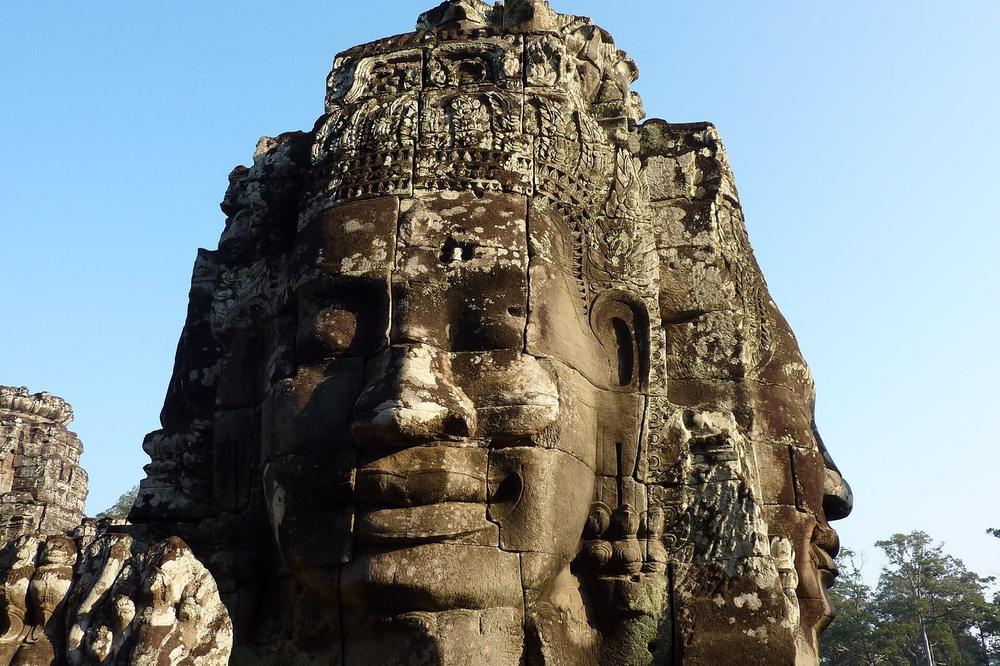
Bayon at opening, when the faces still have shadow in them, then the Baphuon, the Terrace of the Elephants and Ta Prohm. We break from 11:30 to 15:00. Walking sandstone through the middle of a Cambodian afternoon is the most reliable way there is to ruin a person's memory of Angkor.
Your three-day Angkor pass costs USD 62 and covers any three days inside a ten-day window, so it absorbs a slow morning without penalty. The one-day pass is USD 37 and the seven-day USD 72; children under twelve enter free on passport age.
Banteay Srei and Beng Mealea
Banteay Srei is 37 km out, an hour each way, and is the temple where the carving rather than the scale is the argument: pink sandstone cut deep enough to hold its edges after eleven centuries.
Beng Mealea in the afternoon for ruin without restoration — collapsed galleries, trees through the roof, timber walkways over the rubble. Note that the western naga balustrade at Angkor Wat has been under restoration since June 2026 and is scheduled to finish by the end of the year, so one much-photographed stretch may be fenced.
Angkor, one more morning, then the lake
The third pass day is deliberately unstructured. Most people go back to one temple they liked rather than adding a new one; Preah Khan and Ta Som are the usual choices, and both are quiet after ten because the circuits push people elsewhere.
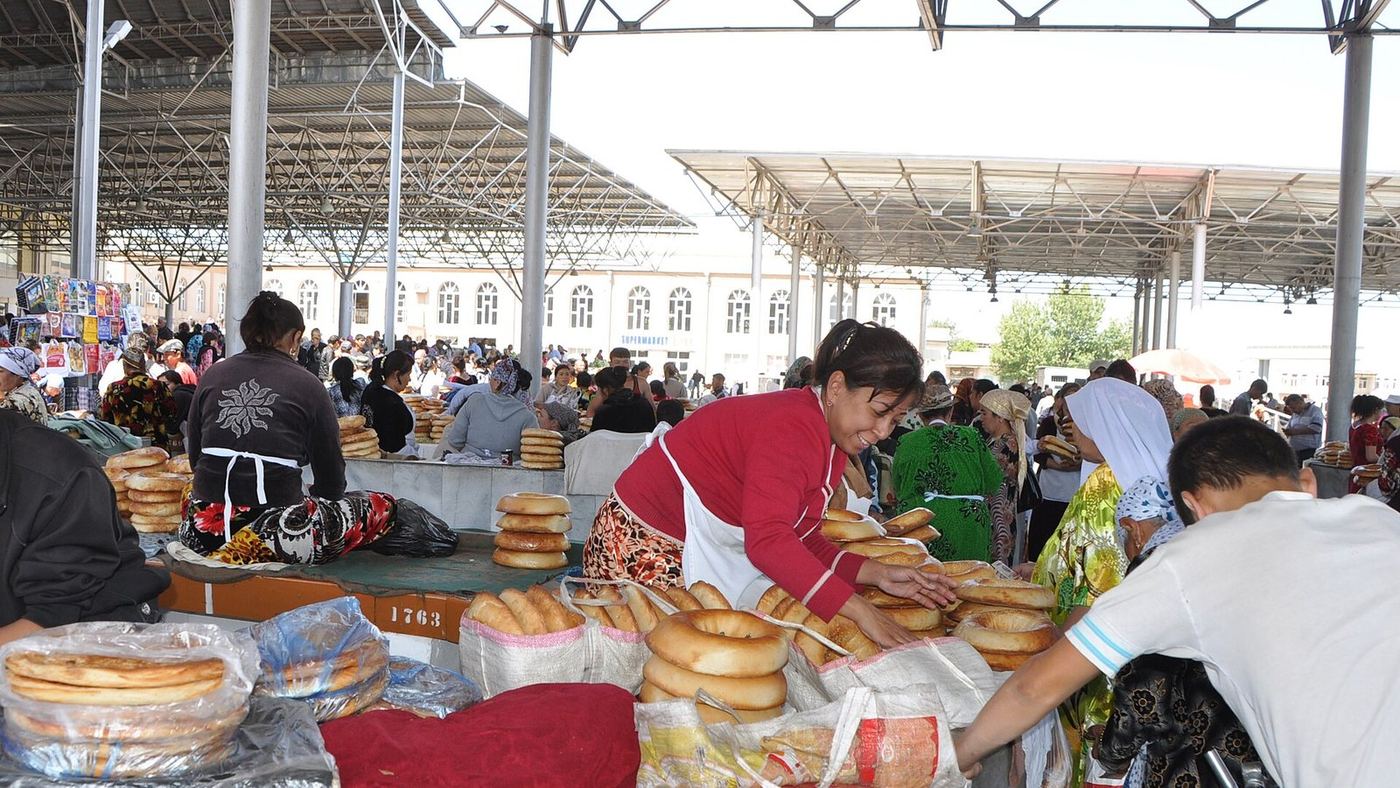
Late afternoon at Kampong Phluk on the Tonle Sap, where the houses stand on stilts well above the dry-season ground. It is a working village that has accepted visitors, not a display built for them, and the difference is visible within five minutes. We do not book the floating villages that operate as ticketed attractions.
Siem Reap to Bangkok
A short flight west across a border you cannot drive over. Bangkok's two airports had a sustained run of delays in August 2026 and the underlying scheduling strain has not been declared fixed, so we buy the mid-morning departure rather than the cheap late one and we build in a buffer.
The Thailand Digital Arrival Card is compulsory, free, filed within 72 hours of arrival at tdac.immigration.go.th, and takes about five minutes. Sites charging USD 10 to USD 90 to do it for you are not official. Afternoon free; the first evening is the river and a boat rather than a car, because Bangkok traffic at six is a decision, not a fact of nature.
Bangkok: the old city
The Grand Palace and Wat Pho at opening, in that order, both with a dress code that is enforced at the gate rather than suggested: shoulders and knees covered, for everyone. Wat Pho is the better building and gets a quarter of the visitors.
The afternoon crosses to Thonburi by ferry for Wat Arun and the canals behind it, which are still residential and still used as a road. Dinner is a market rather than a restaurant, and your Thai guide orders.
Ayutthaya by train
The old capital is an hour north by rail on a line that runs 27 departures a day from 04:15 to 23:05, the fastest express doing it in about 48 minutes. We take the train up and the car back, because the train is the better half of the day and the return in the heat is not.
Ayutthaya was a city of a million people and the largest trading port in Southeast Asia until the Burmese sacked it in 1767. What survives is brick foundations, a great many headless Buddhas, and one head held in the roots of a fig tree that everybody photographs and almost nobody looks at twice.
Bangkok, free
The last full day is empty by design after twenty-six days that were not. The suggestions, in the order we make them: the Jim Thompson house, which explains the Thai silk trade and its most famous disappearance in about ninety minutes; the Bangkok Art and Culture Centre; Chatuchak market if it is a weekend; or a hotel pool and nothing at all.
A quiet dinner, and the accounting that four weeks earns: what surprised you, what you would cut, and which of the four countries you will come back to on its own.
Depart Bangkok
Breakfast, a late check-out where the flight needs one, and the airport with the buffer that Bangkok departures currently deserve. Day rooms rather than lobbies for late departures.
What it costs, and how the number is built
| Party size | Comfortable | Considered |
|---|---|---|
| 2 travellers | USD 18,750 | USD 25,500 |
| 3 – 4 | USD 15,600 | USD 21,200 |
| 5 – 8 | USD 13,800 | USD 18,750 |
Readers who have priced a Vietnam trip look at USD 13,800 and assume a margin. It is not a margin, it is Japan, and the arithmetic is worth doing in public.
Our country day rates, land only, at the mid-range of our band for a party of four, are USD 480–650 in Japan, USD 340–460 in South Korea, USD 250–360 in Thailand and USD 190–300 in Vietnam and Cambodia. Twenty-eight days spent entirely in Japan at that standard would fall somewhere between roughly USD 13,400 and USD 18,200 of land cost. Twenty-eight days spent entirely in Vietnam and Cambodia would fall between roughly USD 5,300 and USD 8,400. This journey puts eleven of its twenty-seven nights in the first band and sixteen in the second and third, and lands where that split says it should.
On top of the nights sit five flight sectors, three national guides rather than one, and two full transit days on which you are still paying for a car, a guide and a hotel while covering ground. That is the honest reason a four-week crossing is not the same price as four weeks in one country, and it is the reason we would rather you compared this page with a Japan quote than with a Vietnam one.
Comfortable is a good four-star or the better small property where four-star is not the right instrument: a Kyoto machiya hotel, the Hakone ryokan, the garden hotel in Hoi An. Tokyo four-star rooms run about ¥18,000–30,000 a night and Kyoto about ¥20,000–35,000, which is where a large part of the Japanese leg goes. Considered is five-star in the four cities where five-star genuinely buys something — Tokyo, Kyoto, Bangkok and Siem Reap — and the same strong smaller houses elsewhere. The full breakdown of a day on the ground, before any operator margin, is on the prices page and, by country, on cost by country.
What is and is not included
What the price includes
- Twenty-seven nights as listed, each property named in your quote
- A private car and driver in all four countries, and a second vehicle where the party needs it
- A national guide in Japan, in Vietnam, in Cambodia and in Thailand, each with you for the whole of their own country
- Five flight sectors: Kansai–Hanoi, Hanoi–Da Nang, Da Nang–Ho Chi Minh City–Siem Reap, and Siem Reap–Bangkok
- Reserved Shinkansen seats on the Tokyo–Kyoto and Kyoto–Hiroshima legs, and the Bangkok–Ayutthaya train
- All entrance fees listed, including the three-day Angkor pass at USD 62 and Himeji Castle at the ¥2,500 non-resident rate
- The Lan Ha Bay boat, cabin, kayaks and bay permits
- Meals as listed day by day, and drinking water in the vehicle
What it does not include
- International flights into Tokyo and out of Bangkok
- Visas and entry filings: Vietnam e-visa USD 25 where required, Cambodia e-visa USD 36, the free Cambodian e-arrival card and the free Thai TDAC
- Travel insurance, which we require and do not sell
- Meals not listed above, and all drinks
- Tips, which are customary in all four countries and never built into our price
- A Japan Rail Pass, which this route does not need — see the day-by-day
The journey in pictures
Who this journey is wrong for
- Anyone whose four weeks are a rare and precious thing. Two separate fortnights, in the right months for each half, is a better trip and a cheaper one. We say this to about a third of the people who ask about the crossing, and we mean it.
- Travellers who need one climate. Day 11 finishes on a Japanese island in mountain air and day 13 is Hanoi in wet heat that Japan has not prepared you for. There is no gentle version of that transition and no wardrobe that covers both without compromise.
- Anyone who dislikes early starts. Fushimi Inari before seven, Bayon at opening, My Son at eight and the Grand Palace at nine are not optional flourishes — they are the difference between this itinerary and a coach tour, and there are eight of them in twenty-eight days.
- Parties travelling in July or August. Japan is hot and wet, the Kyoto rainy season ran 4 June to 8 July in 2026 and the typhoon risk peaks in August and September at both ends of the route; Vietnam and Cambodia are in the monsoon. The journey runs, and it runs worse.
- Anyone who wants Bangkok as a base for a longer Thai stay afterwards. From 15 September 2026 the visa exemption is 30 days, not 60, and a month in Thailand tacked onto a 28-day crossing now needs a tourist visa arranged before you leave home rather than an extension arranged on arrival.
How this compares with our other long journeys
| Journey | Days | Countries | From |
|---|---|---|---|
| Asia Crossing | 28 | Japan, Vietnam, Cambodia, Thailand | USD 13,800 |
| Japan and Korea | 18 | Japan, South Korea | USD 9,400 |
| Grand Indochina | 22 | Vietnam, Laos, Cambodia | USD 6,900 |
| Japan | 12 | Japan | USD 6,400 |
The crossing exists because a handful of travellers each year genuinely want both halves of Asia in one run and have the weeks to do it properly. If you want two countries that reinforce each other rather than contradict each other, the eighteen-day Japan and Korea voyage is the better shape. If the pull is the mainland, the Indochina voyage covers three countries in twenty-two days at half the price.
Which legs of Asia connect cleanly and which force a backtrack — including the Thai–Cambodian border and what it broke — is set out on multi-country routing. Country background sits on Japan and Cambodia.
Tell us the month first
The month decides more about this journey than the hotels do. Send us the window, the number of travellers and anything fixed at either end, and a first draft comes back inside two working days.
Questions travellers ask most
Why does the route run Japan first and Bangkok last, rather than the other way?
Jet lag and Japan agree with each other. Arriving from Europe or North America, you wake at five for the first four mornings whether you want to or not, and five in the morning is exactly when Fushimi Inari, Senso-ji and Arashiyama are worth walking.
The reverse order also fails on heat. Finishing four weeks in Kyoto in August means finishing in the hardest conditions of the trip. Finishing in Bangkok means finishing with a river, a pool and a free day, which is what twenty-seven nights has earned by then.
Do we need a Japan Rail Pass?
No, and we do not include one. On the shape this journey uses — Tokyo to Kyoto, a Nara day, Kyoto to Himeji and on to Hiroshima — point-to-point reserved tickets come to roughly ¥39,520 against ¥50,000 for the seven-day ordinary pass. The pass only starts paying once the route pushes further west, towards Fukuoka.
There is a second reason. The pass does not cover the Nozomi, which is the fastest service on the Tokaido line, so a pass holder trades money saved for time lost. Note also that passes bought through overseas agencies rise by ¥3,000–5,000 from 1 October 2026.
Can we go overland from Bangkok to Siem Reap instead of flying?
No. All official Thailand–Cambodia land checkpoints have been closed since clashes that began in stages from June 2025, and the Thai government said in August 2026 that reopening would be step by step with no timetable. Officials expect the closure to hold through the end of 2026.
This journey flies the sector in the other direction, Siem Reap to Bangkok, as a scheduled service. Any operator still selling you the Poipet road crossing for a 2026 or 2027 departure is selling a day that cannot be run.
What is the best month for a journey that crosses this much latitude?
Late October into early December. Japan gets its clearest air and, in 2026, a Kyoto autumn peak forecast around 11 December; Vietnam's central coast is past the worst of the typhoon season by mid-November; Cambodia and Thailand are into their dry, cool months from November.
March is the second window: Japan warms up and the cherry blossom may or may not arrive, mainland Southeast Asia is dry but heating fast. Avoid April, when Cambodia can reach 40 degrees, and avoid July and August at both ends.
Read next
Tell us about the journey you have in mind
Dates, party size and the places you care about are enough to start. You get a draft route and an indicative price, not a brochure.