Japan: how long, which months, and what it now costs
Japan is a line of cities along one rail corridor, a second country at right angles to it, and a set of prices that changed twice in the past eighteen months. This page is the country as a decision, before anybody talks about an itinerary.
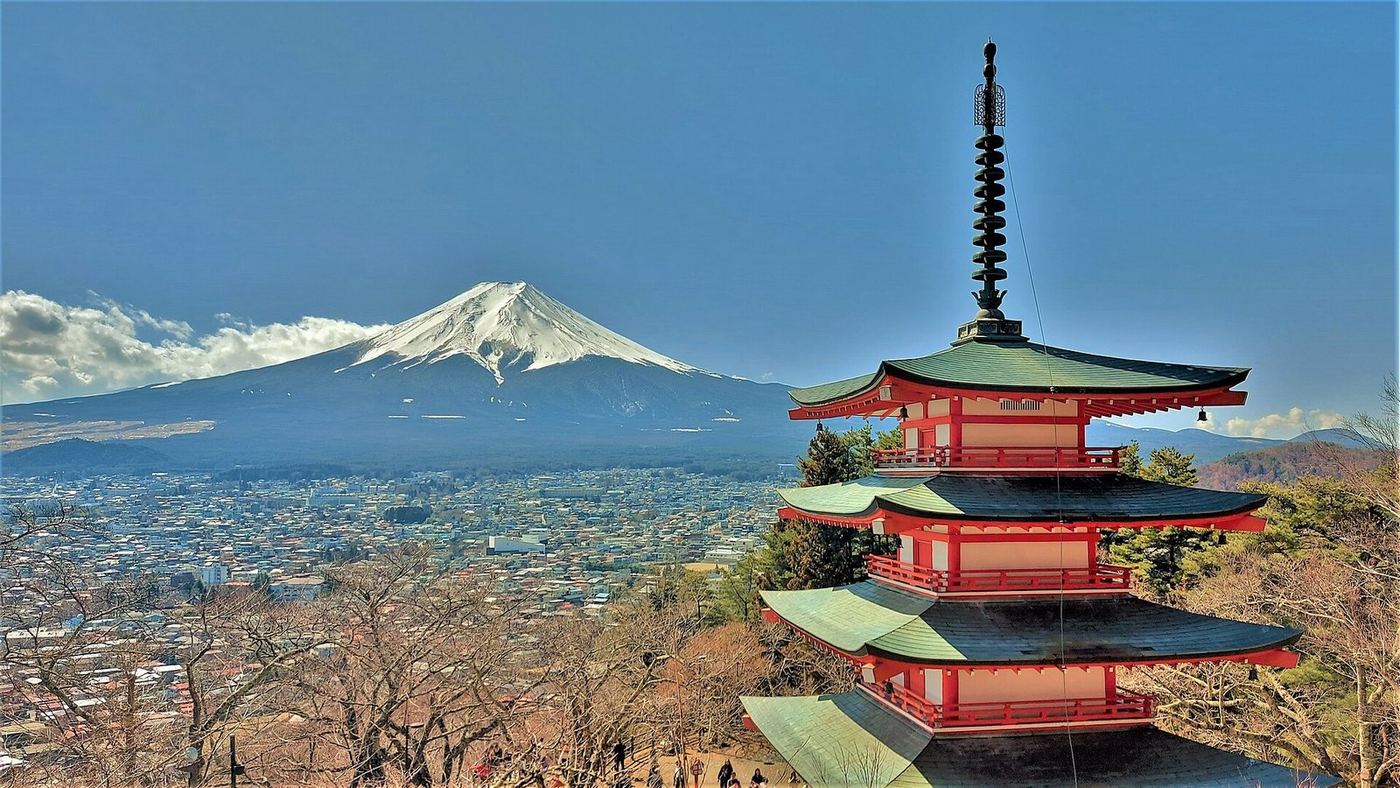
At a glance
| Region | Northeast Asia |
| Nights that work | 10 to 16 |
| Best months | March to May, October and November |
| Worst months | Mid-June to mid-July for rain, August and September for typhoons |
| Airports | Haneda (HND) and Narita (NRT) for Tokyo, Kansai (KIX) for Kyoto and Osaka |
| Entry | 90 days without a visa on American, British, EU and Australian passports |
| Departure tax | ¥3,000 a head since 1 July 2026, charged inside the air fare |
| Getting around | Fast rail between the cities, a private car and a driver inside them |
| Language | English signage is good on the rail network and thin away from it |
What this country actually is
Japan is a chain of mountainous islands with its population pressed onto the coastal plains between them, and the practical consequence for a visitor is that the country reads as a line rather than a map. Tokyo, the mountains behind it, Nagoya, Kyoto, Osaka, Hiroshima, Fukuoka: one rail corridor down the Pacific side, with almost every first visit running up and down it. The corridor is the finest piece of travel infrastructure on earth. It is also where every other visitor is.
A second Japan sits at right angles to that line. The Sea of Japan coast, Shikoku, Kyushu, the islands of the Inland Sea, the north. Same trains, same standard of food and service, a fraction of the queue. Choosing it on a second visit is not a compromise; it is simply the part that has been photographed less.
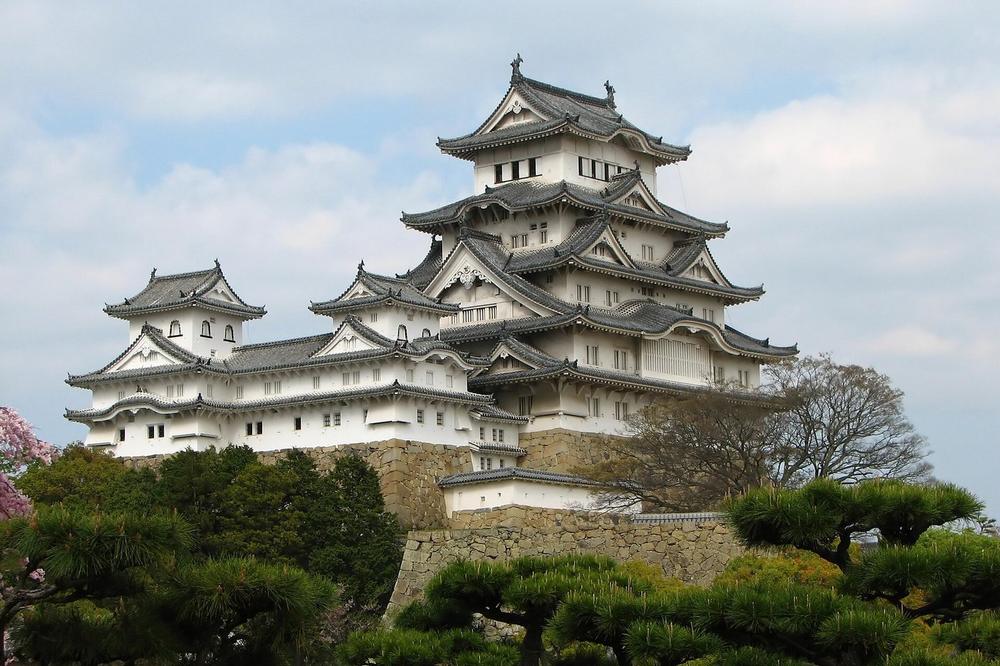
Two things about the country have shifted recently and both belong on a planning page rather than in anybody’s small print. The first is that Japan has begun charging visitors more than residents at the gate. Himeji Castle moved on 1 March 2026 to ¥2,500 for anyone who does not live in the city, where a resident still pays ¥1,000 and under-18s now get in for nothing. Guidance is being drafted at national level so that other sites can adopt the same structure during 2026. Kyoto is doing it on the buses instead: ¥200 a ride on a resident’s registered card, ¥350 to ¥400 for everybody else, across the whole city by the 2027 financial year.
The second shift is that crowd control has turned into rule-making. Certain private lanes in Kyoto’s Gion have been posted since 29 May 2024 with notices warning of penalties reaching ¥10,000 for anyone who walks into them. Climbing Mount Fuji costs ¥4,000 on each of its four sanctioned routes, cannot begin without an online registration, and is limited on the Yoshida side to 4,000 people in any twenty-four hours. None of this makes Japan harder to travel in. It does mean that advice written three years ago is now wrong in specific and expensive ways.
The honest drawback is the one nobody prints. The three or four sights everybody arrives wanting are, for most of the day, an experience of other people. That is not a reason to avoid them. It is a reason to be standing at them at seven in the morning and to be elsewhere at noon, which is a scheduling problem rather than a matter of taste, and it can be solved.
How many nights, and what breaks if you take fewer
Ten nights is the floor for a country journey in Japan and sixteen is where a first visit stops adding cities and begins adding depth. The arithmetic is not complicated. Tokyo needs three or four nights before it stops being a list of districts. Kyoto needs three or four before it stops being a list of temples. Those two alone eat eight nights, and you have not yet been anywhere with a mountain in it.
Take two nights off ten and something specific goes. At eight you lose the day out of Tokyo, which is the day that gives the trip its air: Nikko lies about two hours north, Kamakura is less than an hour away to the south and stands on the coast, and the hot spring country is ninety minutes to the south-west. At seven nights you change hotel every second morning, the fast train stops being a convenience and turns into a timetable, and Hiroshima shrinks from a night to an afternoon.
Going the other way, what sixteen nights buys is the second axis. Kanazawa is roughly 2 hours 30 minutes from Tokyo on the Hokuriku line, at about ¥14,000 for an unreserved seat. Kyushu and the Inland Sea open up beyond Hiroshima. Neither is a detour from the classic route so much as the reason to have a longer one. How that plays out against other countries is worked through under how many days.
When to go
| Window | What you get | What it costs you |
|---|---|---|
| Late March to early April | Blossom, mild days, the country at its most photographed | The dates are not knowable in advance — see below |
| Late April and May | Settled weather, long light, gardens fully out before the rain | Heavy demand on rooms in both Tokyo and Kyoto |
| 4 June to 20 July | The tsuyu rains: Kyoto and Osaka 4 June to 8 July, Tokyo 7 June to 20 July | Wet and humid, but moss and gardens are at their best and rooms are gettable |
| Late July to September | Heat, festivals, and the months when typhoons genuinely make landfall | Cancelled flights and stopped fast trains, mostly in August and September |
| October and November | The cleanest light of the year, with colour arriving | Very little, which is why it is the hardest window to book late |
| December | Kyoto’s foliage peak, forecast around 11 December 2026 where the long-run average falls on 5 December | Cold and short days; the realistic colour window is 8 to 21 December |
The blossom question is asked more often than any other and has the least satisfying answer. Early estimates for 2027 put full bloom across the three big cities somewhere between 28 March and 5 April. That is provisional. No official estimate exists before December 2026, detailed forecasts begin in February 2027, and the dates only become dependable two or three weeks out. Recent seasons have run ahead of the historical average, and 2026 was among the earliest on record.
What follows from that is practical. Book between six and twelve months out, keep two or three buffer nights, take rates you are allowed to change, and treat any operator selling a guaranteed blossom date as selling you a forecast it does not possess.
The rains deserve a fairer hearing than they get. Tsuyu does not fall all day for six weeks; it comes hard and then stops, the gardens reach their greenest of the year, the moss temples become the point of the season rather than a consolation, and rooms that are impossible in April are simply there. If your holiday is fixed to late June, Japan is still worth the fare — you plan indoors first and outdoors second, which is the reverse of the usual order. Month by month across the rest of the continent sits under when to go.
Getting there and getting around
Long-haul flights land at one of three airports. Narita has historically carried most of the traffic into Tokyo; Haneda takes a growing share of it and is far better placed for the city; Kansai serves Kyoto and Osaka from reclaimed ground offshore, about an hour by road from central Osaka. Which of the two Tokyo airports you use is worth several hours of the holiday, and that decision is weighed up on the Tokyo page.
Entry is simple, and one widespread piece of internet advice about it is false. American, British, EU and Australian passport holders come in for 90 days with no visa, unchanged as at September 2026. Holders of British, German, Irish, Swiss and Mexican passports may apply at a regional immigration bureau to extend that to six months in total, provided the application goes in before the first 90 days expire. Nothing needs registering before you fly: JESTA, the electronic authorisation the government has been designing, is not live, the target is the 2028 financial year, and design, build and testing all still lie ahead of it. A site that asks money to register you for Japan before departure is selling nothing at all. The picture for every country on this site is under visas and entry.
The departure tax tripled to ¥3,000 a head on 1 July 2026. It rides inside the airline or ferry ticket, so there is no counter to queue at, though the cost sits inside the fare.
The rail pass question, answered with numbers
Seven days of ordinary-class Japan Rail Pass costs ¥50,000, with 14-day and 21-day versions at ¥80,000 and ¥100,000. On the standard first-visit route it loses money. Buy the Tokyo, Kyoto and Hiroshima legs individually and the bill is in the region of ¥39,520 for the round trip, roughly ¥10,000 under the pass. Stretch as far as Fukuoka and separate tickets come to about ¥56,000, at which stage the pass is ahead by something like ¥6,000. It is an instrument for going west of Hiroshima, not for the standard route.
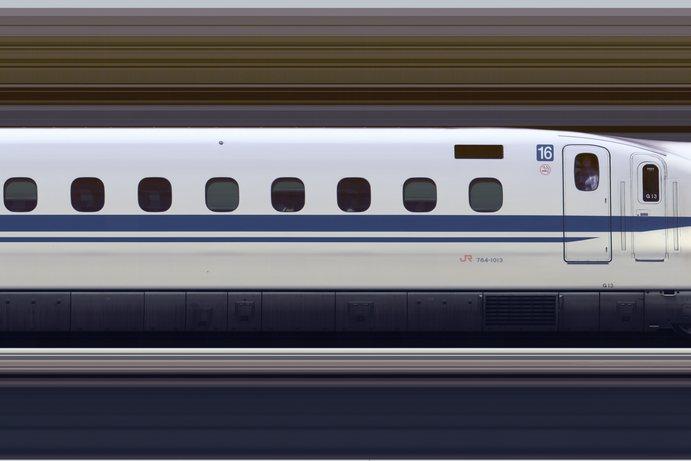
A second cost does not appear on the price list. The pass will not admit you to the Nozomi, the quickest train on the line you will be using, so pass holders travel by Hikari and hand back half an hour a leg: Tokyo to Kyoto takes 2 hours 13 minutes on a reserved Nozomi at ¥14,170, against 2 hours 40 minutes on a Hikari at ¥13,850. From 1 October 2026 passes sold through overseas agencies go up by a further ¥3,000 to ¥5,000, which takes the 7-day ordinary to around ¥53,000 through those channels.
What it costs on the ground
| What | Roughly, September 2026 | Note |
|---|---|---|
| Tokyo, four-star night | ¥18,000 to ¥30,000 | About USD 113 to 188 at current rates |
| Tokyo, five-star night | ¥50,000 upwards | The top of this band runs past ¥250,000 |
| Kyoto, four-star night | ¥20,000 to ¥35,000 | Kyoto carries a premium over Tokyo in the blossom and autumn peaks |
| Osaka, equivalent quality | 20 to 40 per cent less | Which is why last nights are so often spent there |
| Private guide, full day in Tokyo | ¥60,000 to ¥80,000 | For the party, not for each person, and entries are separate |
| Admissions | ¥2,000 to ¥5,000 a head a day | Rising, and rising faster for non-residents |
| Independent traveller | USD 100 to 150 a day | Excluding flights, at a comfortable rather than a careful standard |
The exchange rate is doing more work in those figures than most people realise. The yen stood at about 154 to the dollar on 8 September 2026, some three per cent stronger than a month earlier and still around four and a half per cent weaker than a year before. Budget with a buffer rather than a spreadsheet.
The comparison that matters is not Japan against Thailand, where Japan loses on price by a wide margin and always will. It is Japan against western Europe, where at current rates the same money buys a better room and much better food. Country-by-country ground costs across the rest of Asia are set out under what a day costs.
Budget for admissions separately, because that is where the two-tier shift shows up. Himeji at ¥2,500 for a non-resident is the visible edge of a policy the Tourism Agency is actively encouraging, and across a castle-heavy fortnight the gap between the resident number and the visitor number has become a line worth adding up before departure rather than at the ticket window.
In pictures
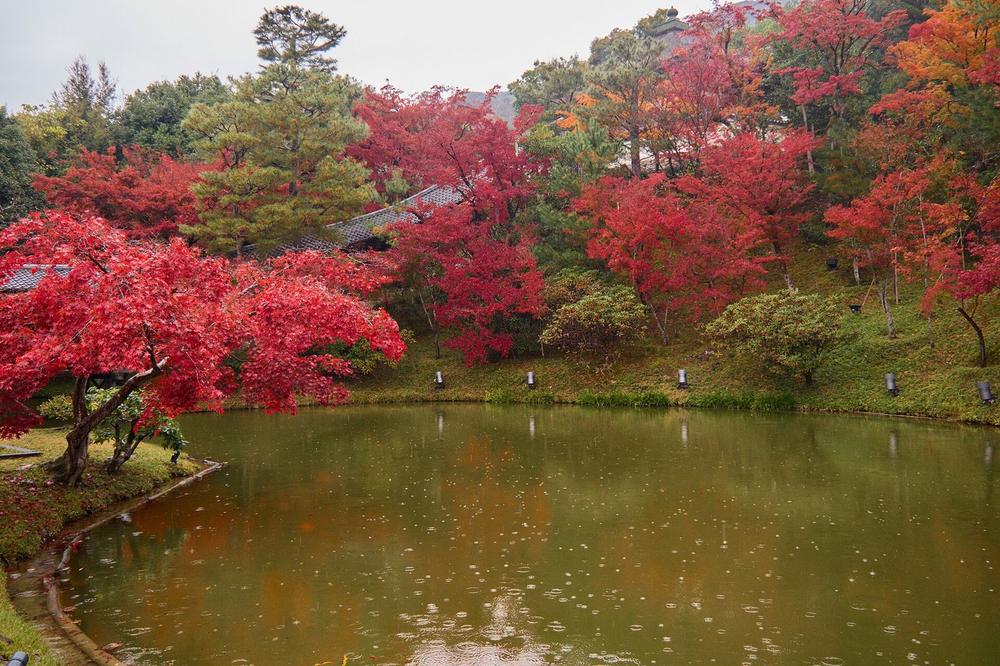
When to skip it
- Your only free window falls between mid-June and mid-July and you need dry days. In Tokyo the tsuyu occupies 7 June to 20 July; Kyoto and Osaka get off slightly lighter at 4 June to 8 July, and no operator can move either date.
- Your travel dates cannot move and blossom is the entire reason for the trip. A two-week window that shifts, and that nobody forecasts before December, is a poor thing to hang a non-refundable fare against.
- You want a beach holiday. This is a country of walking, eating and looking at things, at eight to twelve kilometres a day through cities built on hills and staircases.
- You want the number on the noticeboard to be the number you hand over. Visitor rates at Himeji and on Kyoto’s buses are the beginning of a trend rather than the end of one, and a principle that irritates you on day one will still be irritating you on day fourteen.
- You want to unpack once. Ten to sixteen nights here means three to five bases, and the whole country is built on the assumption that you will move.
Journeys that go here
Three of our journeys run in Japan and a fourth crosses it. Japan in 12 days is the first-visit route — Tokyo, a ryokan night in the mountains, four nights in Kyoto, then Hiroshima and the island of Miyajima, finishing at Osaka. Kyushu and the Setouchi in 11 days is the second-visit route, with no Kyoto on it at all and two nights in an onsen town instead.
For two countries rather than one, Japan and South Korea in 18 days gives Japan eleven nights and Korea six, with a single flight between them; the country next door is described at South Korea. If Japan is one leg of something much longer, the 28-day crossing runs from Tokyo to Bangkok through four countries. The two cities that absorb most of the nights have pages of their own: Tokyo and Kyoto.
Ask us about a month, not a package
Tell us the fortnight you have and what you would be sorry to miss, and we will tell you honestly whether those two things fit together.
Questions travellers ask most
Do we need a visa, or anything registered online, before flying to Japan?
No to both. American, British, EU and Australian passport holders get 90 days on arrival, and that has not changed. British, German, Irish, Swiss and Mexican passport holders can ask a regional immigration bureau to take that to six months in total, but the request has to be made before the initial 90 days run out.
The online registration people ask about does not exist yet. JESTA has a vendor appointed and a target of the 2028 financial year, with something like seventeen months of design and build and another eight of testing still to run, and the timetable has already moved more than once. There is nothing to apply for and nothing to pay.
Is the Japan Rail Pass worth buying?
Only if the route runs a long way west, which most first visits do not. The threshold is easy to state. A 7-day ordinary pass is ¥50,000; the standard route bought as separate tickets is around ¥39,520 for the return; carrying on to Fukuoka lifts those separate tickets to roughly ¥56,000. Short of that distance the pass loses; beyond it, it saves something like ¥6,000.
Two things make it worse than the raw numbers suggest on a short trip. It excludes the Nozomi, so every leg between Tokyo and Kyoto costs an extra half hour on a slower service. And from 1 October 2026 the overseas selling agencies add ¥3,000 to ¥5,000, taking a 7-day ordinary to about ¥53,000 through them.
How far ahead should we book Japan?
Six to twelve months for late March, April, October and November, and that is not a sales line. Kyoto rooms in the two peaks are the constraint on the whole itinerary, and the good four-star houses go first, because they are the ones that represent value.
For the rains, for August and for winter, two to three months is usually enough. If blossom is the target, book the hotels early and the forecast late: keep the rates changeable, put a spare night on each side of the estimate, and take the risk that the trees are either bare or already in leaf.
Is Japan charging foreign visitors more than residents now?
At a growing number of places, yes, and it is better to know the figure before you reach the gate. Himeji Castle has asked non-residents for ¥2,500 since 1 March 2026 while city residents still pay ¥1,000, and under-18s were made free at the same moment. Kyoto is phasing in bus fares of ¥350 to ¥400 for visitors against ¥200 for anyone holding a registered resident card, due to cover the whole city by the 2027 financial year.
The Japan Tourism Agency is drafting guidelines during 2026 that would open the same option to other sites, so assume the practice spreads rather than reverses. In absolute terms it is a small share of a Japan budget. It is worth naming in advance because being surprised by it at a ticket desk sours an afternoon.
Read next
Tell us about the journey you have in mind
Dates, party size and the places you care about are enough to start. You get a draft route and an indicative price, not a brochure.