One country, end to end, in eleven days
North, centre and south, with two internal flights and no day spent only getting somewhere. Hanoi to the Mekong Delta by way of Lan Ha Bay, the rice valleys at Ninh Binh, the Hue tombs and the Hai Van Pass.
At a glance
- Duration
- 11 days, 10 nights
- Party
- Private, 2 to 8
- Starts
- Hanoi
- Ends
- Ho Chi Minh City
- Difficulty
- Easy
- From
- USD 2,650
The railway from Hanoi to Ho Chi Minh City runs 1,726 km, and the country changes the whole way down it: northern winters that want a jumper, a central coast built by traders and later bombed flat, a southern delta that has never been cold. Eleven days is the length at which all three read as different places rather than one long drive.
Two flights carry the distance — Hanoi to Hue, and Da Nang to Ho Chi Minh City — and both leave in the morning so the afternoon still belongs to you. Nothing on this route is a day spent purely in transit.
If you have sixteen days or more and want Cambodia or Laos in the same trip, the 22-day Grand Indochina is the honest shape for that. Adding a second country to eleven days costs you the centre of Vietnam, which is the part most people come back for.
Day by day
Bamboo Airways stopped scheduled flying in August 2026 and its fleet went from 44 aircraft to three. That leaves two carriers that matter on this route. Vietnam Airlines runs at roughly 77% on-time arrivals; VietJet at about 55%, which is one flight in two arriving a quarter of an hour late or worse. Both internal legs here are booked on Vietnam Airlines, and the fare difference is inside your quote rather than a surcharge.
Arrive Hanoi
Met inside the terminal at Noi Bai and driven in over the Nhat Tan bridge, about 45 minutes at most hours and an hour in the evening crush. Nothing is planned for today. Your guide comes to the hotel at six to walk through the eleven days, answer the questions you have been saving, and leave you alone afterwards.
Arrive in daylight and the useful first hour is Hoan Kiem lake and the streets running north of it, on foot, at whatever pace the flight has left you.
Hanoi, two cities in one day
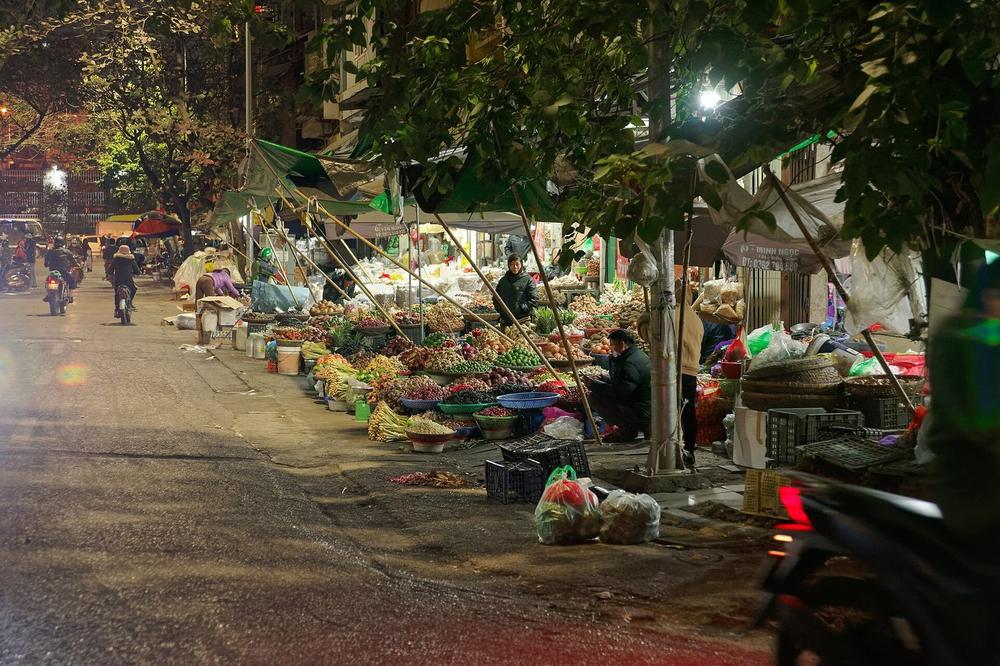
Morning in the Old Quarter, which is a thousand-year-old commercial district that never stopped trading. Dong Xuan market at half past seven is a wholesale operation rather than a sight; by nine it is selling to households. The guild streets around it still cluster by trade — tin, silk, votive paper, gravestones — and the tin street is the loud one.
After lunch, the Museum of Ethnology out at Cau Giay, twenty minutes west. It is the one museum in Vietnam that explains the other 53 official ethnic groups, and the outdoor section holds full-size houses moved from the northern uplands. Back into town for the Temple of Literature at the end of the afternoon, when the school groups have gone.
Hanoi to Lan Ha Bay
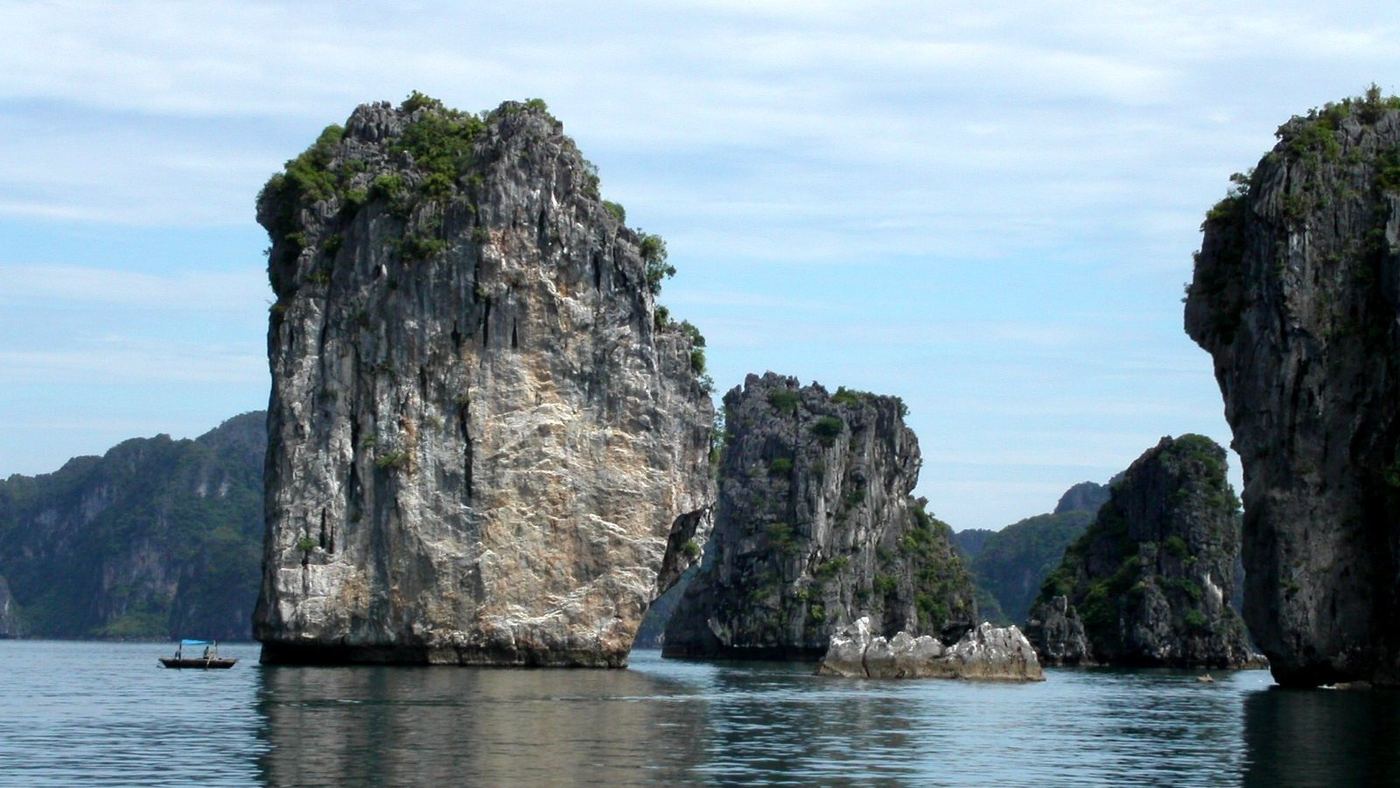
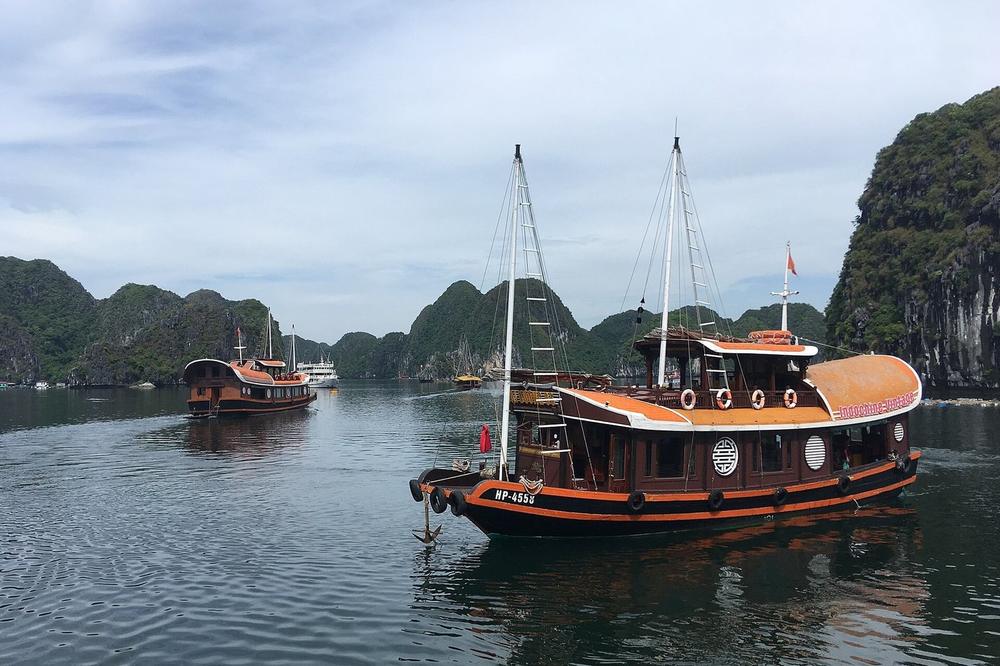
Away at 08:00 on the Hai Phong expressway, which cut a five-hour crawl to a little over two. Boarding is around midday at a harbour on the Cat Ba side. Lan Ha is the same drowned limestone as Ha Long and holds a small fraction of the boats, which you notice most in the hour before dark.
Kayaks go in after lunch, through a tidal arch into a lagoon the tenders cannot follow you into. Swimming off the back of the boat is warm from April to November and bracing the rest of the year.
Lan Ha Bay to Ninh Binh
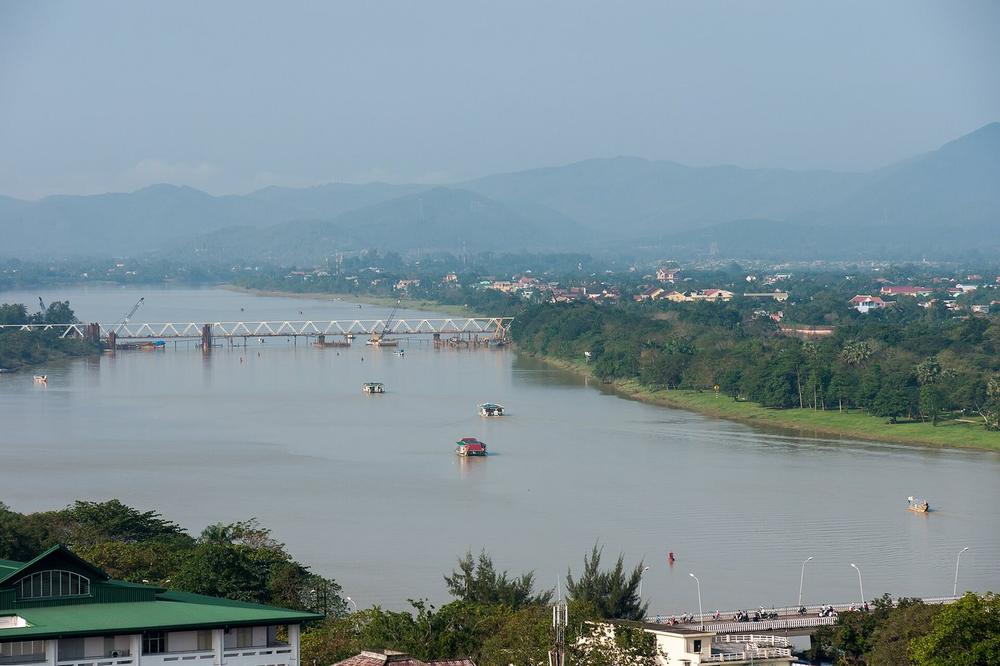
Cruising and a late breakfast, ashore around eleven, then three and a half hours south-west across the Red River delta. This is the flattest, most worked landscape in the country and it is worth watching rather than sleeping through: grave mounds standing in the middle of rice, duck herders, brick kilns.
Ninh Binh in the late afternoon. If the legs are willing there are 500 steps up Hang Mua for the view down the valley; if they are not, the Bich Dong pagoda is cut into the cliff at the bottom and asks nothing of you.
Trang An at dawn, then south to Hue
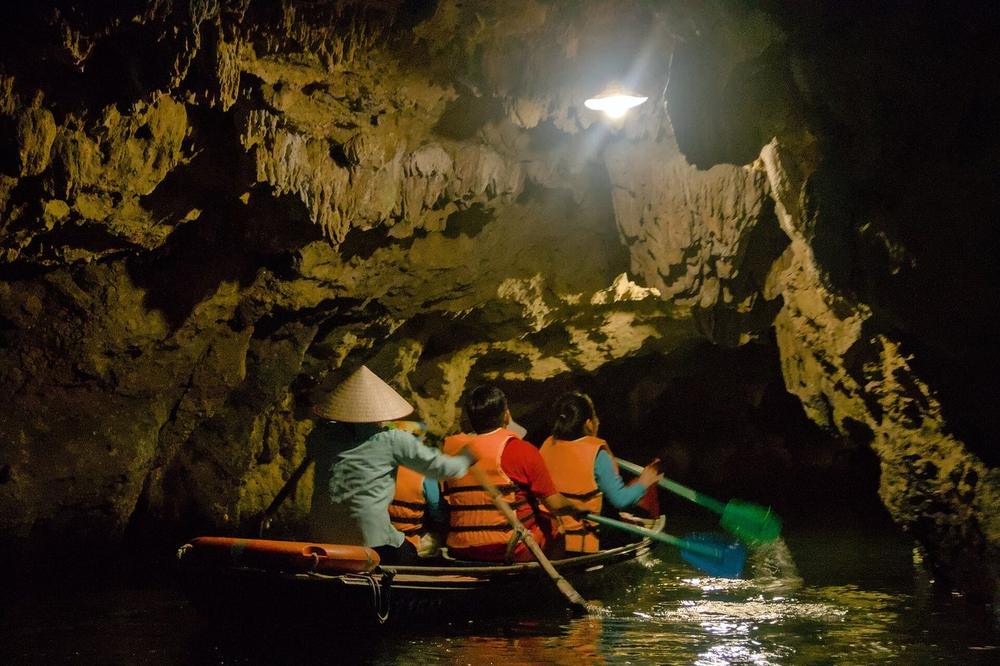
On the water at half past seven, before the day buses arrive from Hanoi. Three hours in a rowed sampan through nine flooded caves, some of them low enough that you lie back; the woman rowing does most of it with her feet, which is local technique rather than a performance.
Back to Hanoi airport in the early afternoon and the 1 hour 20 minute flight to Hue. You are on the Perfume River by six, and the first evening in the centre of the country is deliberately free.
Hue: the citadel, the tombs, the food
The citadel takes the morning. It was the seat of the Nguyen emperors from 1802, and roughly half of what stands inside it has been rebuilt since 1968, when the city was fought over for 26 days. Your guide will show you which walls are original and which are the restoration, because the difference is the point.
The imperial tombs are strung along the river to the south. Minh Mang for symmetry, Tu Duc for the lake and an epitaph the emperor wrote himself, Khai Dinh for concrete, ceramic shards and no apology at all. Two of the three is a good afternoon; three is a long one.
Hue food is court food: a dozen small dishes rather than one large one, more chilli than the north, and the reason people who rank Vietnamese cities by their lunches put Hue first.
Hue to Hoi An over the Hai Van Pass
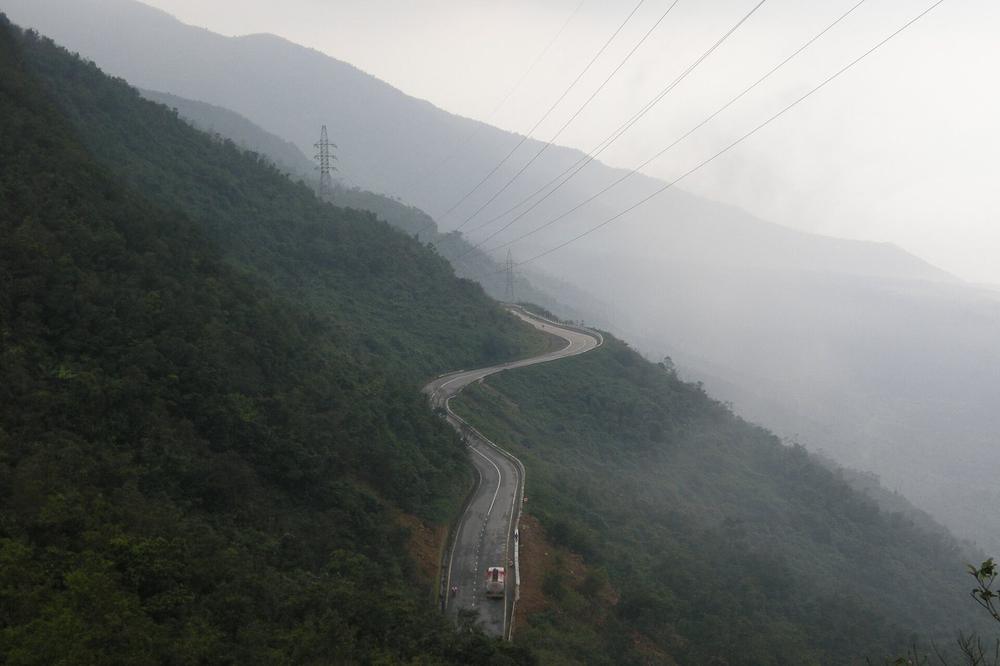
Out at 08:30 and over the pass rather than through the tunnel underneath it. The old road climbs to 500 metres with the sea on your left the whole way, costs about an hour more than the tunnel, and is the only part of this drive anybody describes afterwards. We stop at the top before eleven; the coaches reach it at about that hour.
Lang Co lagoon for lunch on the way down, then Hoi An by mid-afternoon. The town was a working port until its river silted up in the nineteenth century and it was too poor after that to demolish anything, which is why the merchant houses are still standing.
Hoi An, and as little of it as you want
A guided walk from eight through the old town: the Japanese bridge, two assembly halls built by Chinese trading families, and one merchant house still lived in by the seventh generation of the same family. The old town is closed to traffic from 09:00, and again after 18:00, which is when it is worth being in.
The rest of the day is yours. The two things we push are the flat cycle route out through the herb gardens at Tra Que, which takes a morning, and An Bang beach, which is four kilometres away and empties out by five. Tailors here are real tailors and need two days to make anything you will still wear next year, so today is the day to start if you want one.
Hoi An to Ho Chi Minh City
Forty-five minutes to Da Nang and the morning flight south, roughly an hour and twenty-five minutes. Lunch happens in Ho Chi Minh City rather than an airport, which is the reason for the early departure.
The afternoon is the Reunification Palace, left exactly as it was on 30 April 1975 down to the maps on the war-room wall, and then the War Remnants Museum, which is direct and one-sided and worth the ninety minutes it takes. Go in that order. The other way round, the palace feels like an anticlimax.
The Mekong Delta, without the coach stops
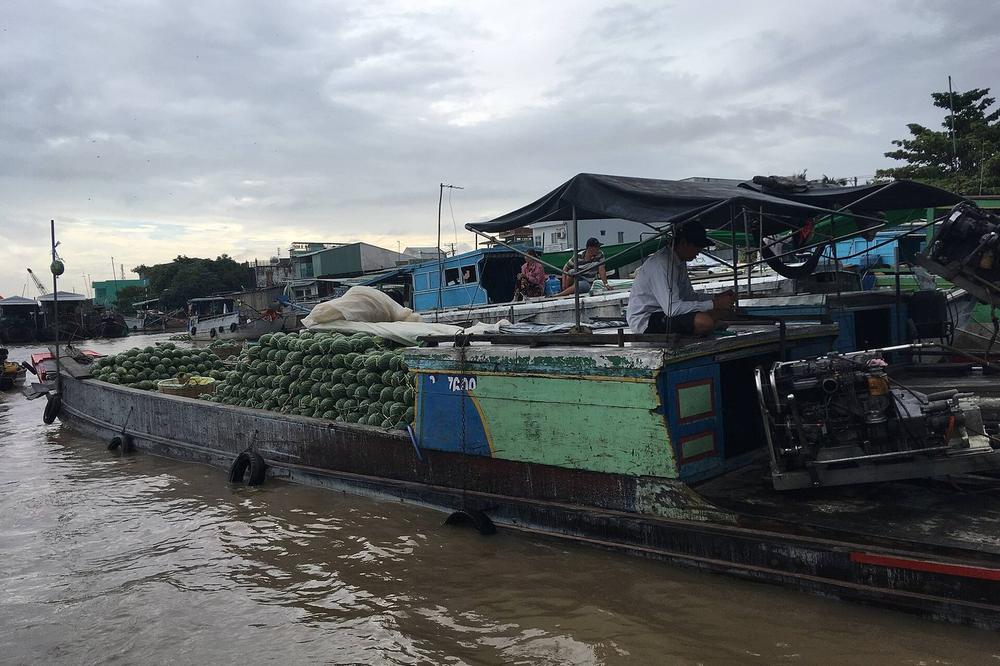
Leaving at half past seven puts you in Ben Tre in about two hours, which is far enough down to be past the day-trip belt around My Tho where four coaches share one coconut-candy workshop. A motorised boat takes you into the main channel, then a rowed sampan turns off into creeks a metre and a half wide under water coconut.
Lunch is in a family orchard. Afterwards there is a brick works that still fires with rice husk, and the option of an hour on a bicycle along the dyke paths, which is flat and shaded and the best hour of the day. Back in the city by six.
Depart Ho Chi Minh City
Breakfast, a late check-out where the room allows it, and the transfer to the airport with a margin built in — Tan Son Nhat sits inside the city and the road to it is the worst in Vietnam between four and seven in the evening. Long Thanh, the new airport 40 km east, is due to open commercially late in 2026 and the split of routes between the two has not been published, so we confirm which airport you leave from when your schedule is loaded.
What it costs
| Party size | Comfortable | Considered |
|---|---|---|
| 2 travellers | USD 3,600 | USD 4,900 |
| 3 – 4 | USD 3,000 | USD 4,100 |
| 5 – 8 | USD 2,650 | USD 3,600 |
Two people pay for a whole car, a whole driver and a whole guide between them, which is why the two-traveller column sits 36% above the same eleven days for a party of five. Group size moves this price more than anything else you can choose.
Season moves it next. Vietnamese four-star rates swing about 30% either side of the average across the year — Hanoi runs roughly USD 130 to 230 a night, Ho Chi Minh City USD 140 to 240, Hoi An USD 80 to 170 — and the top of each band is Christmas, New Year and Tet.
Comfortable is good four-star plus the small owner-run places that beat their rating, which on this route means the garden hotel in Hoi An and the boat in Lan Ha. Considered is five-star where five-star is genuinely a better night: Hanoi, Hoi An and Ho Chi Minh City have it, Ninh Binh does not, and we will not charge you for a category that is not there. The full breakdown of what a day on the ground costs before any margin is on the prices page.
What is and is not included
What the price includes
- Ten nights as listed, each property named in your quote
- A private car and driver throughout, with a second vehicle for parties of nine and up
- One national guide for the whole journey, plus local specialists in Hue and the delta
- Two internal flights on Vietnam Airlines: Hanoi–Hue and Da Nang–Ho Chi Minh City
- The Lan Ha Bay boat, cabin, kayaks and bay permits
- All entrance fees named in the day-by-day, including the Hue citadel and tombs
- Meals as listed each day, and drinking water in the vehicle
What it does not include
- International flights into Hanoi and out of Ho Chi Minh City
- The Vietnam e-visa: USD 25 single entry, USD 50 multiple, paid direct to the government portal
- Travel insurance, which we require of every traveller and do not sell
- Meals not listed above, and all drinks
- Tips, which are customary in Vietnam and never built into our prices
- The overnight Hanoi–Da Nang train, if you would rather have it than the flight
The journey in pictures
Who this journey is wrong for
- Anyone who wants to unpack once. You change bed six times in ten nights, and the longest stay anywhere is two.
- Travellers set on October in the centre. The Da Nang and Hoi An coast takes the brunt of the typhoons that reach Vietnam and October is its wettest month, with 200 to 400 mm falling in a day when a storm lands. We will run it with refundable rates and a plan to move you north, but we will not tell you it is the same trip.
- Anyone who came for a beach. There are two nights within cycling distance of An Bang and no island at all. Phu Quoc or Con Dao needs three more days and a third flight, and we would rather add them than pretend the coast is already in here.
- Families with children under about eight. The delta day is ten hours door to door and the War Remnants Museum is not a room for a small child.
- Anyone hoping to add Cambodia or Laos without adding time. Angkor alone is worth three nights; squeezing it into these eleven days means cutting either Hue or the delta, and both cuts break the shape of the route.
How this compares
| Journey | Days | Countries | From |
|---|---|---|---|
| Vietnam | 11 | Vietnam | USD 2,650 |
| Cambodia | 9 | Cambodia | USD 2,150 |
| Laos | 9 | Laos | USD 2,300 |
| Grand Indochina | 22 | Vietnam, Laos, Cambodia | USD 6,900 |
Eleven days is the shortest length at which Vietnam stops being a highlight reel. At eight you would take the north and the centre and leave the delta out; at fourteen you would add Sapa or the far north-east and slow the middle down. What the country holds at each length is set out on how many days, and the month-by-month picture is on the Vietnam page.
Tell us your dates
Send the month, the number of travellers, and anything already fixed at either end. A first draft itinerary comes back within two working days.
Questions travellers ask most
Do we need a visa for Vietnam?
It depends on the passport. British, French, German, Italian and Spanish nationals hold a unilateral exemption of 45 days and need nothing in advance. US and Australian passport holders are not on that list and must have the e-visa: USD 25 single entry, USD 50 multiple, up to 90 days, applied for on the government portal.
Processing is normally around three working days, and we ask clients to file two to three weeks out so a rejected photograph is a nuisance rather than a crisis. Vietnam has no digital arrival card, so there is nothing else to complete at the airport. The full position is on visas and entry.
Is October a mistake for this route?
Not for the north, which is at its best from October to December. It is a real risk in the centre. Typhoons reaching Vietnam usually make landfall on the central coast, and October is the wettest month of the year in Da Nang and Hoi An, with 200 to 400 mm in a day possible when a storm arrives.
What we do about it: refundable rates on the Hue and Hoi An nights, a buffer built into the flight south, and forecasts watched from four days out. If a named storm is confirmed we move those nights back north to Ninh Binh or Hanoi, which stay dry, and re-book the internal leg. That is why we ask you to carry named-storm cover on your insurance.
Why fly rather than take the train down the country?
Because the whole line is 1,726 km and takes 32 to 37 hours end to end, which is a day and a half of the eleven spent looking out of a window. Almost nobody rides it through.
The good segment is short. Hue to Da Nang runs about three hours in daylight along the Hai Van coast, and if you would rather do that on rails than in the car we will book it and send the vehicle round with your luggage. The overnight Hanoi–Da Nang sleeper is the other option: a four-berth soft sleeper is roughly USD 65 to 85 and it saves you a hotel night, not a day.
Can we add Sapa or Ha Giang to these eleven days?
Not without taking something out. Sapa is a five-hour drive from Hanoi each way and needs two nights to be worth the road; Ha Giang needs four. Adding either means dropping Hue or the delta.
The version that works is thirteen days: the same route with two nights in the northern mountains inserted after Hanoi, and it is the change we are asked for most often. Say so in your enquiry and the draft will come back that way.
Read next
Tell us about the journey you have in mind
Dates, party size and the places you care about are enough to start. You get a draft route and an indicative price, not a brochure.