Nagasaki, the onsen towns, and the art islands of the Inland Sea
Western Japan for the second visit, or for a first visit by someone who would rather not spend it queueing. Two nights in hot spring water, Nagasaki in full, and the Setouchi islands where the art is.
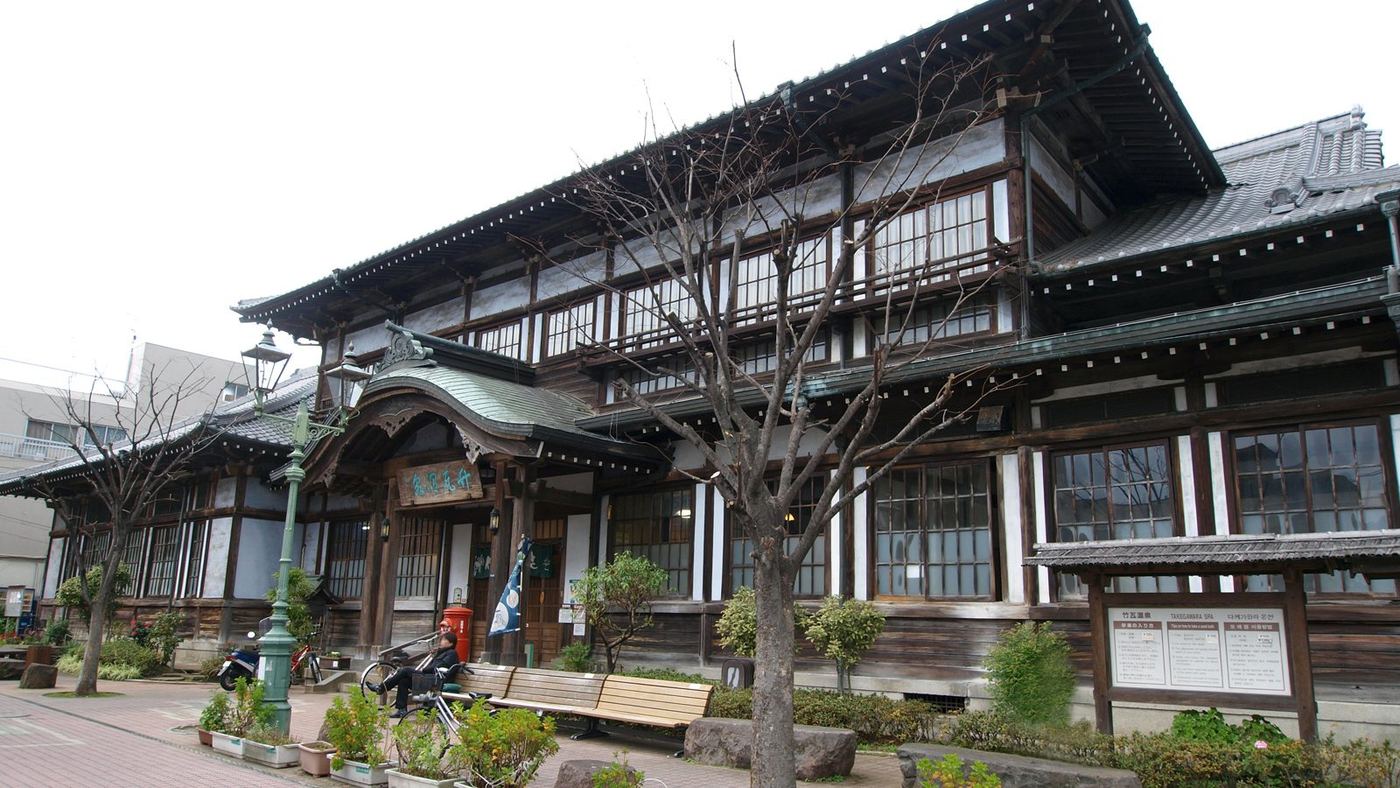
At a glance
- Duration
- 11 days, 10 nights
- Party
- Private, 2 to 8
- Starts
- Fukuoka
- Ends
- Osaka
- Difficulty
- Easy, two ferry days
- From
- USD 5,900
Start with the thing this journey does not have. There is no Kyoto on it. No Fushimi Inari, no Arashiyama, no Golden Pavilion, no Nara deer. If those are the reason you are going to Japan, close this page and take the twelve-day classic route instead; we would rather lose the booking than have you spend eleven days quietly wondering where the temples went.
What you get instead is the half of Japan that the coach circuit never reaches. Nagasaki, which was the country’s only window on the outside world for two centuries and reads unlike anywhere else in Japan. A hot spring village in the mountains where the streets are unpaved and the point of the day is water. The Inland Sea, and the islands where disused fishing settlements were turned into museums. And Hiroshima, which this route gives two nights rather than the usual rushed afternoon.
It is also, unexpectedly, easier travel. Distances in western Japan are shorter, the Shinkansen legs are brief, and outside Fukuoka and Osaka you are rarely in a crowd. Two of the ten nights are in ryokan with their own hot spring water, meals included and served in sequence, and a private bath attached to the room.
Day by day
Two days depend on boats: Miyajima and Naoshima. Sailings are suspended in heavy weather, and the window in which storms actually reach Japan runs from July with peak risk in August and September. We hold a land alternative for each of those days — the Hiroshima museums and the Okayama garden respectively — and we tell you which way it is going the evening before rather than at the pier.
Arrive Fukuoka
Fukuoka’s airport is unusually close to its own city centre, which means the transfer is a matter of minutes and the first evening survives a long flight. Nothing is scheduled.
If you can stay upright: the yatai, the open-fronted food stalls that are wheeled onto the pavements along the Naka river after dark and taken away before morning. Eight seats, a curtain, one cook. It is the single best argument for beginning a Japanese journey here rather than in Tokyo.
Fukuoka and Dazaifu
Dazaifu is half an hour out and was the seat of government for the whole of western Japan for several centuries. The shrine there is dedicated to the god of learning, so the crowd is largely students and their parents, and the approach is lined with shops selling one grilled rice cake and nothing else.
Back in the city for the afternoon: Shofuku-ji, which was the first Zen temple founded in Japan, and the merchant streets of Hakata. Then the part of Fukuoka that matters, which is dinner. This is the city that invented tonkotsu ramen and it has strong views about it.
West to Nagasaki
Most of the morning on the train, with one change. Nagasaki appears as a harbour wedged into steep hills, built up the slopes in tiers, and it does not look Japanese from the water.
The afternoon is the Atomic Bomb Museum and the Peace Park above it. Hiroshima is the name the world knows; Nagasaki was the second city and the last, and its museum is smaller, quieter and in some ways harder. We keep the rest of the day clear afterwards, because handing someone a dinner reservation an hour later is not the right way to end that afternoon.
Nagasaki: two hundred years of the only open door
Dejima in the morning: the fan-shaped artificial island in the harbour where Dutch traders were confined, and through which every foreign idea entering Japan had to pass while the country was closed. It has been reconstructed building by building and it explains more Japanese history per square metre than anywhere else in the country.
Then the hillside above the harbour: Glover Garden, Oura church, and the Chinese quarter, which is not a tourist confection but the residue of a real trading community. Evening on Mount Inasa, reached by ropeway, for the harbour in the dark.
If the sea is calm and you want it, the boat to Hashima — the abandoned coal-mining island — runs from the harbour and lands only in good conditions. It is cancelled often. We book it as a bonus, never as a plan.
Across Kyushu to Kurokawa Onsen
East across the island, with a stop at Kumamoto and its castle, still being rebuilt stone by stone after the earthquakes and open along a raised walkway that puts you at the level of the repairs. It is the rare case of a building site being more interesting than the finished thing.
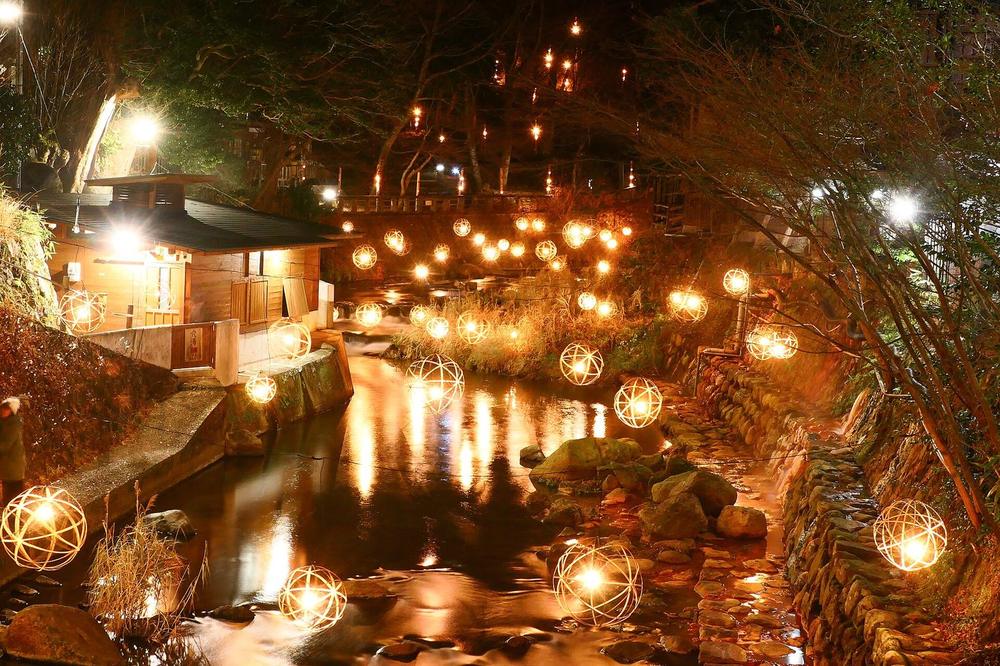
Then up into the mountains. Kurokawa is thirty-odd inns along a wooded stream, with no neon, no chain shops and a village association that has spent decades refusing them. You arrive in the afternoon, change into a yukata, and the day stops.
Aso, and the water
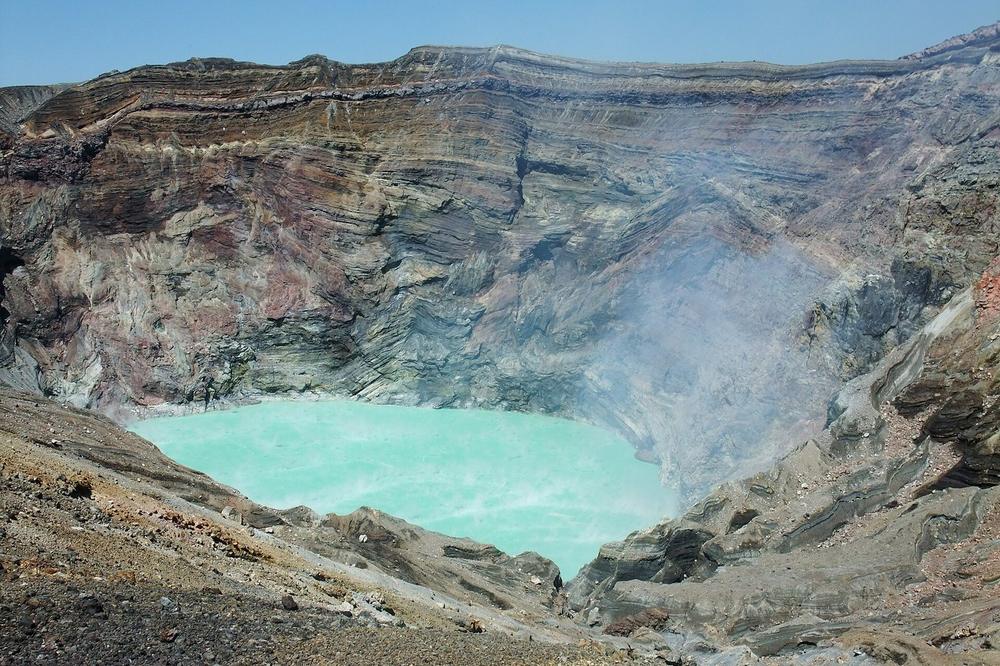
Mount Aso holds one of the largest volcanic calderas in the world and there are towns, roads and rice fields living inside it. The morning is the crater rim and the grasslands, subject to the gas readings at the summit, which are published daily and occasionally close the last stretch of road.
The afternoon is the reason to be here. Kurokawa sells a wooden tag that lets you into three of the village baths, and the baths are outdoors, on the stream, under trees. Nobody hurries. Dinner is served in your room or in a private dining room, course by course, and it is the best meal on this itinerary.
Kyushu to Hiroshima
Back down to Kumamoto and onto the Shinkansen north-east. Bags are forwarded ahead so the change at Hakata is a walk rather than a wrestle. Hiroshima by mid-afternoon.
The Peace Memorial Park takes what is left of the day: the dome left standing as it was, the cenotaph, and the museum, which was rebuilt to lead with personal objects rather than with argument. Two hours, and no dinner booked straight afterwards.
Miyajima, and a second day in Hiroshima
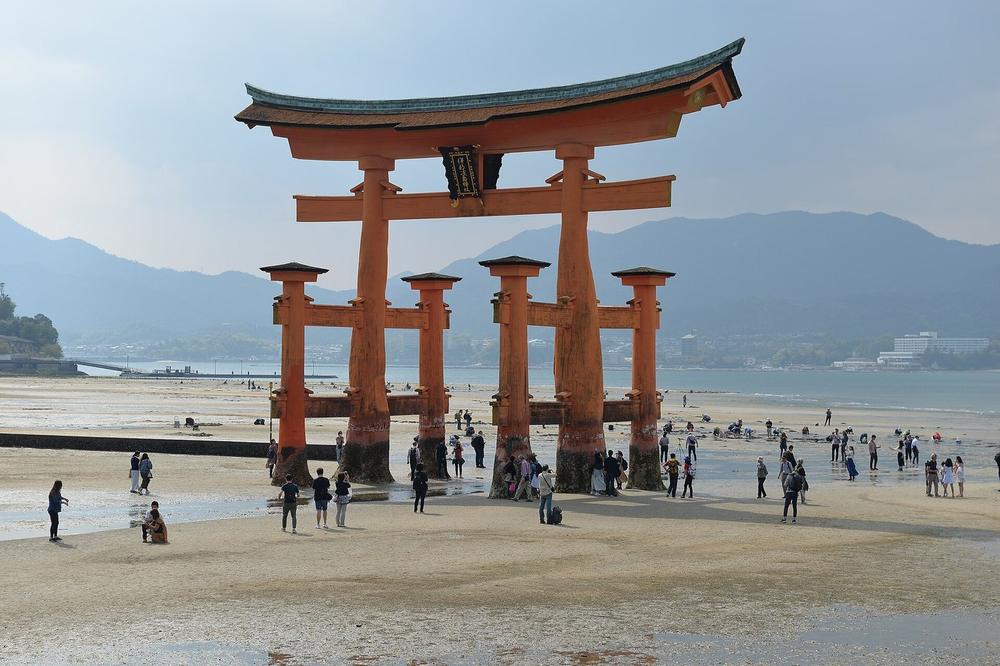
The ferry across in the morning. The torii stands in water at high tide and on wet sand at low, so we check the tide table when your dates are fixed and put you on the island for the better of the two. Above the shrine there is a ropeway and a walk to the summit of Misen, which most day-trippers never do because they are back on the two o’clock boat.
The afternoon is Hiroshima itself, which almost nobody gives a second look: the rebuilt castle, the Shukkeien garden, and okonomiyaki cooked on an iron plate in front of you, layered rather than mixed, which is the local argument with Osaka and one they are right about.
To Naoshima
Shinkansen east to Okayama, a local line down to the coast, and the ferry across the Inland Sea. The water here is flat, dotted with pine-topped islands, and looks more like a lake than a sea.
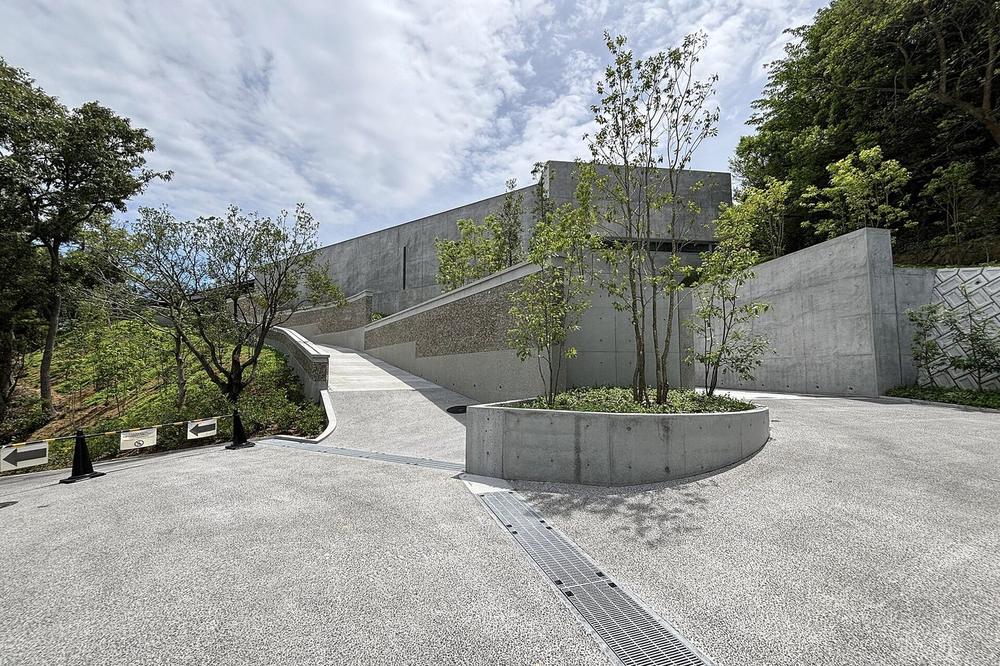
Naoshima was a fishing and smelting island in decline until a publishing house began putting museums on it. The buildings are set into the hillside and partly underground, several works are installed permanently in old village houses, and the whole island is designed to be walked or cycled between them. We plan the day around each site’s closing days, which are not the same for all of them and which catch out a great many independent visitors.
Naoshima, Himeji and Osaka
A last morning on the island — the Art House projects in the village, which are the pieces people remember longest — then the ferry back and east along the coast.
Himeji is on the line and it is the finest surviving castle in Japan: white, original, never burned, and steep inside. One thing to be ready for: since 1 March 2026 non-residents pay ¥2,500 to enter against ¥1,000 for residents of the city, with under-18s now free. That fee is inside your price, and dual pricing of this kind is being adopted at more Japanese sites, so it is worth knowing rather than discovering.
Osaka in the early evening, and the evening is for eating standing up.
Depart Osaka
Kansai airport sits on an artificial island about an hour from the centre and the road can be slow, so early departures start early. Bags forwarded from Hiroshima are waiting at the hotel.
What it costs
| Party size | Comfortable | Considered |
|---|---|---|
| 2 travellers | USD 8,000 | USD 10,900 |
| 3 – 4 | USD 6,650 | USD 9,050 |
| 5 – 8 | USD 5,900 | USD 8,000 |
Japan sits in our highest country band at USD 480 to 650 per person per day, and this route sits at the lower end of it for one reason: rooms outside Tokyo and Kyoto cost less. Osaka runs 20 to 40 per cent below Tokyo and Kyoto for equivalent quality, and Fukuoka, Nagasaki and Hiroshima are cheaper again.
The two ryokan nights are the exception and they are the most expensive beds on the journey. A ryokan is priced per person and includes a kaiseki dinner and breakfast, so it is not comparable with a hotel rate; what you are buying is a room, two meals cooked to order and unlimited access to hot spring water. Take those two nights out and the trip is materially cheaper and materially worse.
Comfortable is good four-star in the cities and a well-regarded inn at Kurokawa. Considered buys a harbour-facing room in Nagasaki, a larger ryokan suite with its own bath, and the better rooms on Naoshima, where the stock is small and books out months ahead. The country-by-country breakdown of what a day actually costs is under cost by country, and the full pricing logic on the prices page.
What is and is not included
What the price includes
- Ten nights as listed and named by property in your quote, including two ryokan nights with a private open-air bath
- A Japanese national guide throughout, and a private car and driver on Kyushu
- Reserved Shinkansen seats on every rail leg, booked in advance
- Luggage forwarding between Fukuoka, Hiroshima and Osaka, so the ferry days are made with a small bag
- All ferries: Miyajima, Naoshima, and the Hashima boat if it sails
- All entrance fees named in the itinerary, including Himeji at the ¥2,500 non-resident rate and the Naoshima museums
- Breakfast daily, both ryokan dinners, and the lunches listed day by day
What it does not include
- International flights into Fukuoka and out of Osaka. The ¥3,000 departure tax is inside your airline ticket
- A visa: US, UK, EU and Australian passports enter for 90 days without one, and there is nothing to pre-register — JESTA is not live
- Travel insurance, which we require and do not sell
- Meals not listed above, and all drinks
- A Japan Rail Pass, which does not pay for itself on a route this compact
- Tips, which are not customary in Japan and which we ask you not to leave
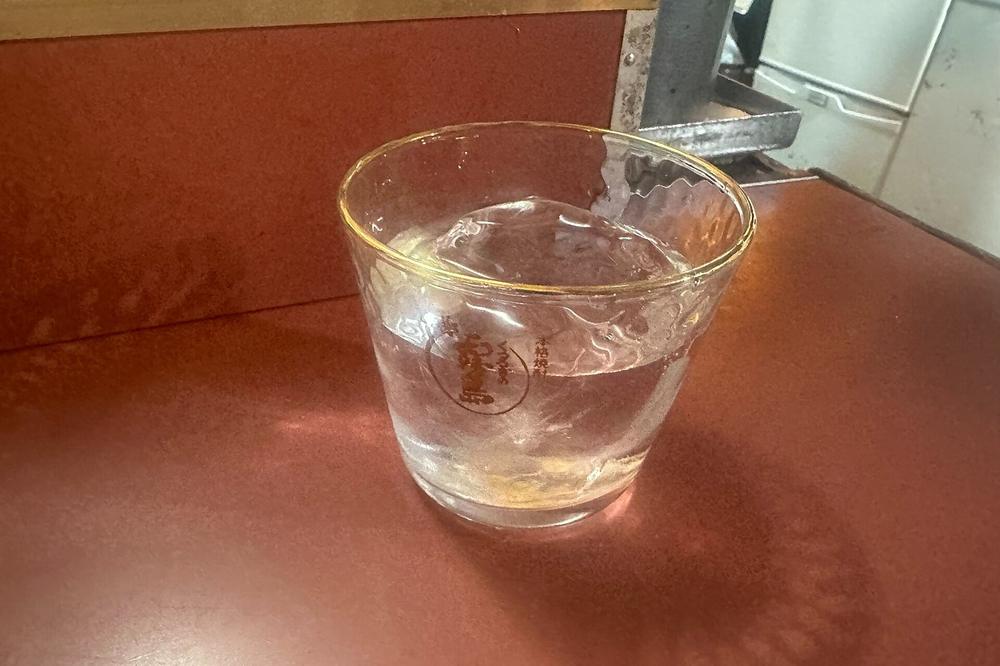
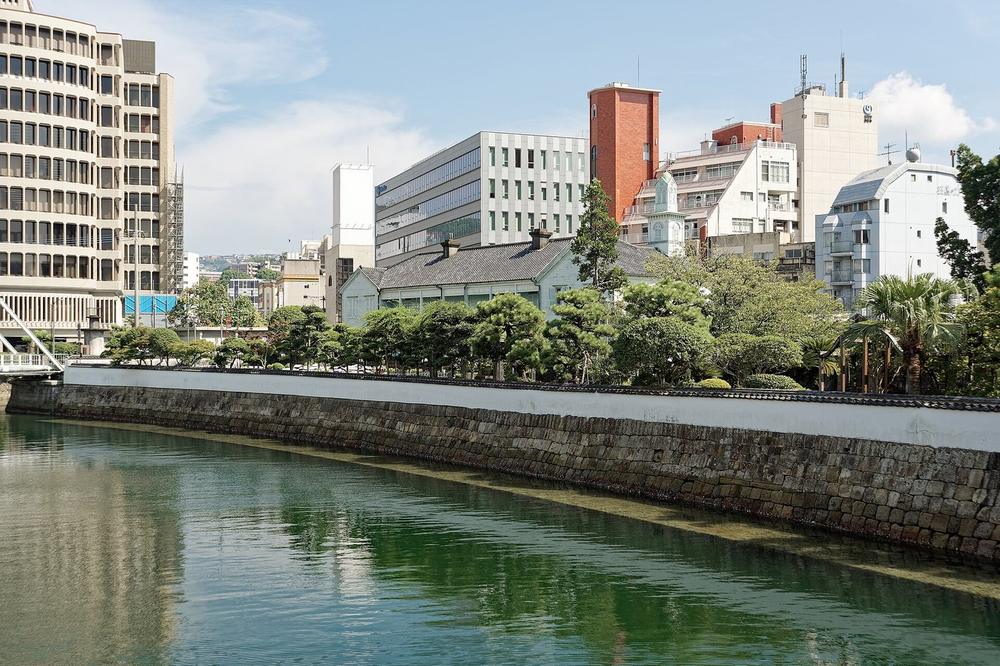
The journey in pictures
Who this journey is wrong for
- First-time visitors who want the pictures they have already seen. There is no Kyoto, no Nara, no Fushimi Inari and no Tokyo on this route. That is the trade, it is deliberate, and it is the whole reason the days are quiet.
- Anyone uncomfortable with communal bathing. Two of the ten nights are built around hot spring water, and while we book rooms with private baths and Kurokawa has mixed and single-sex options, a traveller who will not undress is paying for two nights of something they will not use.
- Travellers who need a certain itinerary. Miyajima and Naoshima both depend on ferries, and sailings stop in heavy weather — a real risk from July, worst in August and September. We hold alternatives, but the alternative is not the same day.
- Anyone who wants a city every evening. Kurokawa has no nightlife, no shops worth the name and, in places, no mobile signal. Two nights of that is the point for some people and a sentence for others.
- Parties travelling with anyone who cannot manage stairs. Nagasaki is built up a hillside on stepped lanes, the Himeji keep is climbed on steep wooden stairs with no lift and a one-way system, and the Naoshima museums are deliberately level-changing buildings.
How this compares
| Journey | Days | Where | From |
|---|---|---|---|
| Kyushu and Setouchi | 11 | Fukuoka, Nagasaki, Hiroshima, Osaka | USD 5,900 |
| Japan, the classic route | 12 | Tokyo, Kyoto, Hiroshima, Osaka | USD 6,400 |
| Japan and South Korea | 18 | Tokyo to Seoul | USD 9,400 |
| South Korea | 9 | Seoul to Busan | USD 3,900 |
The two Japan journeys are eleven and twelve days and within USD 500 of each other, so the decision is not financial. It is whether you have been before. A first visit that skips Kyoto is a decision most people regret; a second visit that repeats it is a decision most people regret in a different way.
Background on the country sits under Japan, and the month-by-month argument about crowds, rain and colour under when to go. If eleven days feels short for a long flight, the eighteen-day Japan and Korea voyage adds a second country rather than more of the same one.
Tell us your dates
Send the month, the number of travellers, and whether this is a first visit to Japan or a return. A first draft itinerary comes back within two working days.
Questions travellers ask most
Why does this journey leave out Kyoto?
Because doing both properly needs sixteen days, not eleven, and a version that squeezes Kyoto in gives you two rushed nights there and takes them from Nagasaki or the onsen — the two parts of this route nobody else is selling you.
There is also an honest crowding argument. Kyoto’s famous sites are unwalkable through the middle of the day and its buses are moving to visitor fares of ¥350 to ¥400 against ¥200 for residents. Western Japan has none of that pressure. If Kyoto matters to you, we sell it properly on the twelve-day route.
Is this a good first trip to Japan?
It can be, for a particular traveller: someone who has done a lot of first-visit sightseeing in other countries, is more interested in food and landscape than in famous buildings, and would rather not queue.
For anyone else, no, and we will say so. A first visit that comes home without Kyoto tends to feel unfinished no matter how good the eleven days were.
Do we need a Japan Rail Pass for this route?
No. The rail on this journey is a handful of short legs and one Shinkansen run, and a nationwide pass is the wrong instrument for it. The arithmetic is the same as on our other Japan route, where a ¥50,000 seven-day pass loses against roughly ¥39,520 of point-to-point tickets.
We book reserved seats leg by leg and hand you the tickets. Passes bought through overseas agencies also rise by ¥3,000 to ¥5,000 from 1 October 2026, which makes the case weaker still.
What actually happens on a ryokan night?
You arrive in the middle of the afternoon, change into a yukata, and bathe before dinner. Dinner is kaiseki: eight or more small courses served in order, in your room or a private dining room, at a fixed early hour. While you eat, the futon is laid on the tatami. Breakfast is Japanese, substantial, and served early.
The bath is the whole point and it is taken without clothing. We book rooms with their own open-air bath so that this is a choice rather than a condition, which also settles the question for anyone with tattoos.
Read next
Tell us about the journey you have in mind
Dates, party size and the places you care about are enough to start. You get a draft route and an indicative price, not a brochure.