A country you travel as a circle, not a line
Mountains two hours inland, dunes three hours beyond them, and a coast that brings you back to where you started. No one celebrated object waits at the end of the driving, which is either the reason to come or the reason not to.
At a glance
The United States placed Oman at Level 3, Reconsider Travel, in an update dated 30 August 2026. Three reasons are listed: the conflict that opened in the region on 28 February 2026, the missile and drone threat that came out of it, and terrorism risk attached to the places visitors gather. A single area is graded higher still, at Level 4, Do Not Travel, and that is the border strip facing Yemen in the far south-west. Nothing in the country's visitor geography approaches it — Muscat, the Hajar mountains, Nizwa, the Sharqiya sands, the Sur coast and Salalah all lie well outside.
That is the document as written. Softening it is not our business and neither is arguing with it, and telling a reader which risks are worth taking is nobody's job but their own. Two practical consequences are worth stating, though. Insurers have begun pricing and wording cover differently where elevated official advice is in force, so read the policy itself rather than its summary page. And Gulf airspace has shut without warning more than once since February, which is an argument for keeping a night in hand ahead of any long-haul departure.
Our own position, and how we read these documents across every country on this site, is set out on safety and advisories. Jordan, the country Oman is most often paired with, sits at the same level for the same reason; the comparison is on the Jordan page.
| Region | West Asia |
| Nights we suggest | 8 to 11 |
| Best months | October to March |
| Airport | Muscat (MCT) |
| Entry | 14 days visa-free for most Western passports; e-visa beyond that |
| Shape | A loop out of Muscat and back — no internal flight needed |
| US advisory | Level 3, Reconsider Travel, as at September 2026 |
What this country actually is
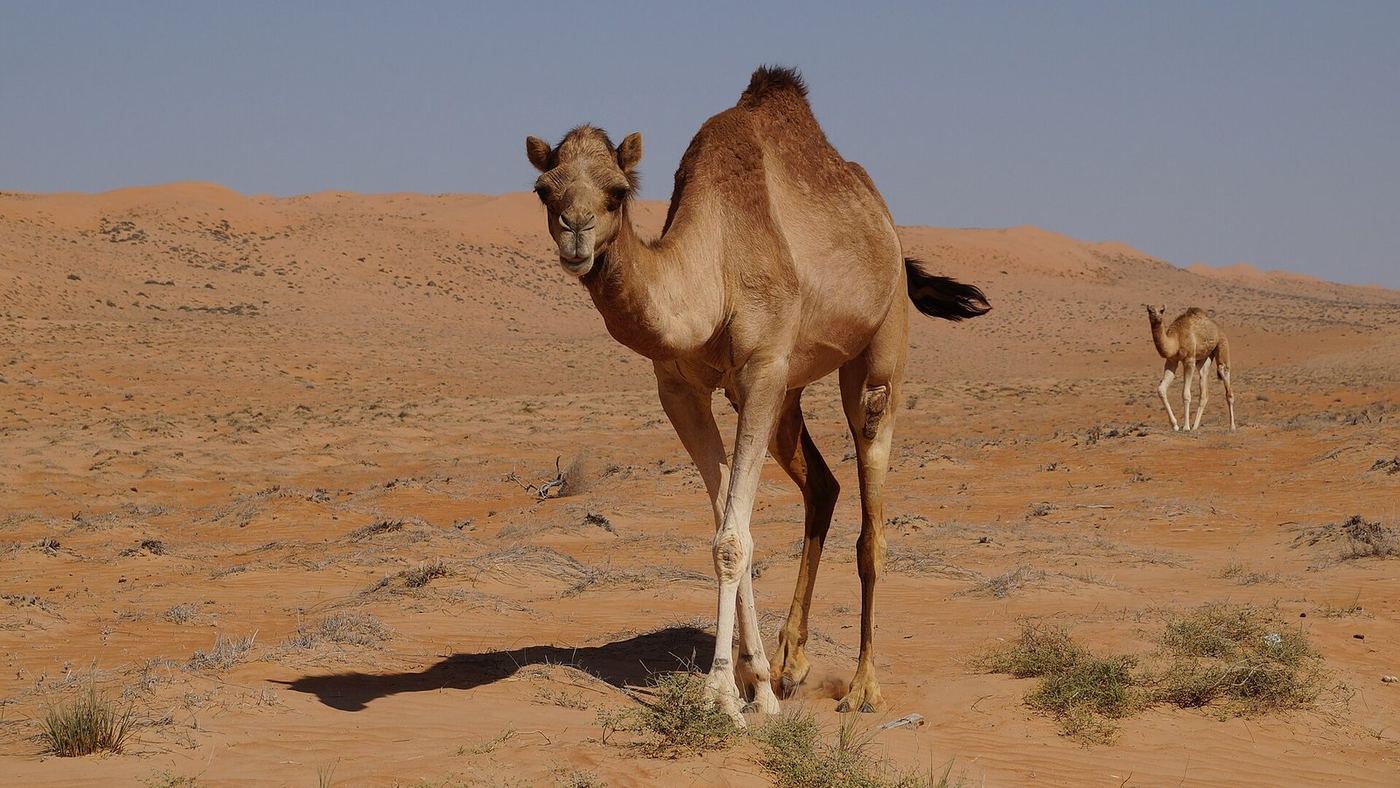
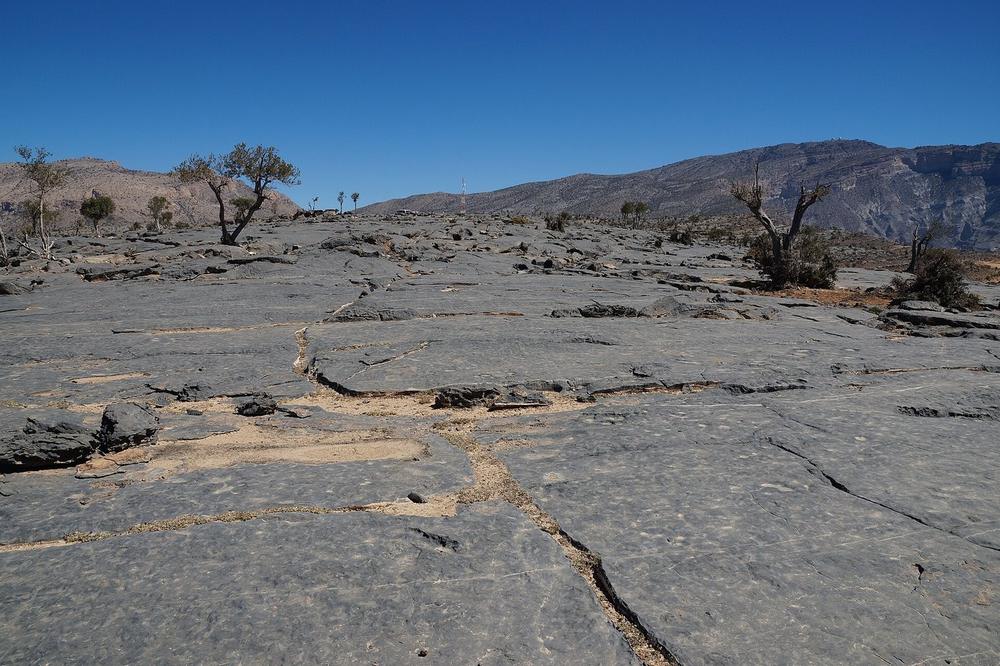
Oman is a landscape country. There is no Petra here, no Angkor, no single building that justifies the flight on its own, and an itinerary sold on the promise of one will disappoint. What there is instead is geology at a scale that takes a few days to register: a limestone range rising straight off a coastal plain, a canyon deep enough to have its own weather, sand seas, and dry riverbeds with green pools in the bottom of them.
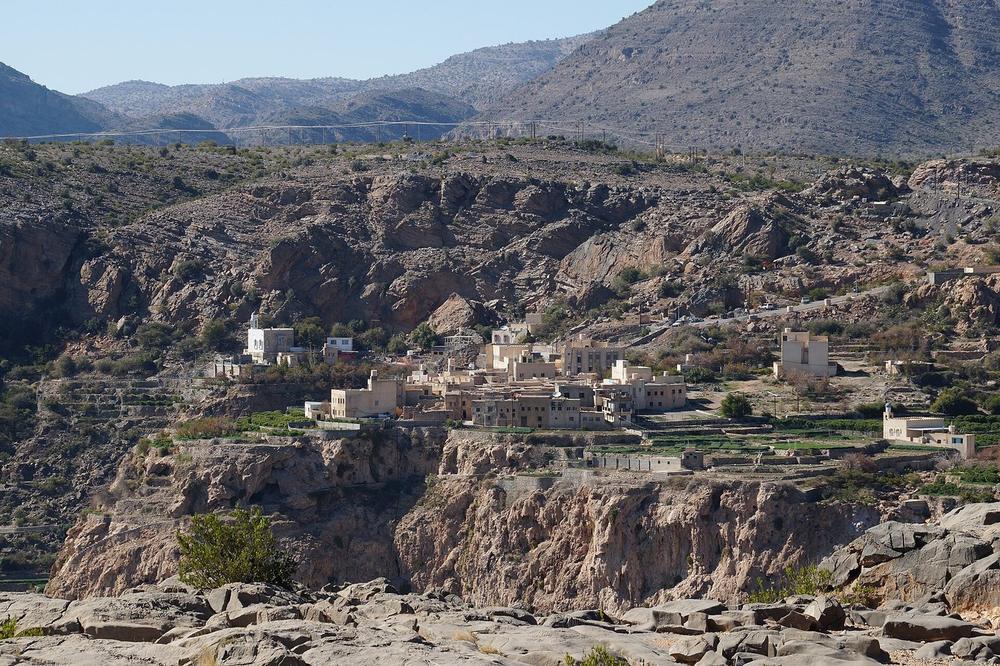
The Hajar mountains do most of the work. The Jebel Akhdar — the Saiq plateau — sits high enough to hold between about 18 and 26 degrees when the interior below is far hotter, which is why it has been farmed in stone terraces for as long as the irrigation channels can be dated. Jebel Shams, further west, gives the canyon rim and the level ledge path along it, with a 2 OMR parking charge at the summit viewpoint, a via ferrata for about 25 OMR a person if you want one, and a final ascent that genuinely needs four-wheel drive.
Below the mountains the country turns to sand and then to coast. The Sharqiya, or Wahiba, dunes have no gate and no entrance fee; access runs through the camps, which meet you at the road and drive you in. East of them the coast gives the dhow yards at Sur, the wadis behind it, and the turtle reserve at Ras al Jinz, where the adult ticket is 12 OMR and children between six and twelve pay 6, with under-sixes free. The night viewing starts at nine in the evening with arrival by 8.30, the dawn viewing at five with arrival by 4.45, and both need booking ahead.
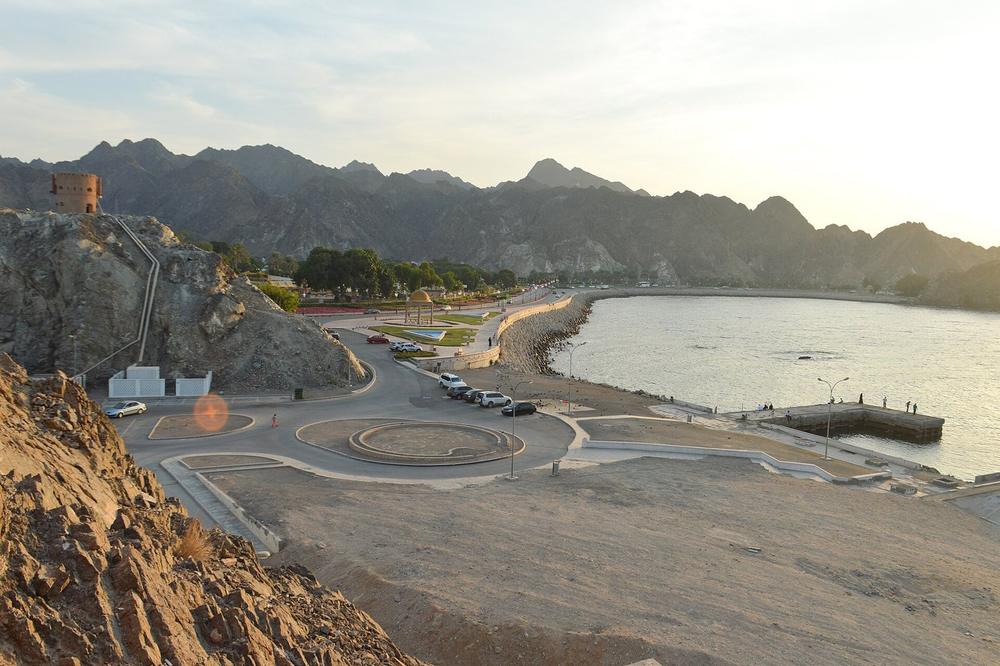
Muscat itself is built long and low along the water rather than upward, and it is quieter than any other capital in the region. Two things about the culture are worth saying plainly before anyone books. Dress is conservative and mosques that admit non-Muslim visitors do so within a set morning window and expect arms, legs and hair covered. And alcohol is served in hotels and licensed restaurants and essentially nowhere else, which includes desert camps and the turtle reserve.
How many nights, and what breaks if you take fewer
Eight nights covers the loop and eleven covers it without hurrying or adds the south. The country's great planning advantage is that everything worth a first visit sits inside a circle drawn around Muscat, so nobody needs a domestic flight and nobody retraces a road.
The driving times are the thing to plan against, and they are honest ones. Muscat to Nizwa runs about 160 km, an hour and a half, on good tarmac through the break in the range. Nizwa across to the edge of the Sharqiya sands at Bidiyah is about 230 km and three hours. The sands to Sur are about 174 km and two and a half. Add the climbs up to the Saiq plateau and out to Jebel Shams and the loop comes to five driving legs, none of them a full day.
At eight nights the shape is two in Muscat, two on the Jebel Akhdar, one in the dunes, two on the coast between Ras al Jinz and Sur, and one back in Muscat before the flight. Take a night out and Jebel Shams goes, which removes the canyon and with it the best walking in the country. Take two out and the turtles go as well, and what is left is a mountain and a dune trip that could have been done in a long weekend from a Gulf hub.
Eleven nights buys either a slower version of the same loop with two nights on the coast, or Salalah in the far south, which is a flight rather than a drive and which is a different country in climate and vegetation. Adding beach days at the end works better than trying to blend a beach into the loop, because this is an itinerary that sleeps at altitude, in a tent and beside a turtle beach inside the same week.
When to go
| Months | Conditions | What that means for a trip |
|---|---|---|
| October to March | Roughly 25 to 35 degrees by day, cool nights, little rain | The window the whole itinerary is built for. December and January are the coolest and the busiest. |
| April | Heat building in the interior | Still workable, particularly at altitude, and prices have not yet risen for the following season. |
| May to August | Above 38 degrees inland, June the hottest | We do not sell the loop in these months. A wadi at that temperature is warm water in hot rock, and the dunes are out of the question between sunrise and sunset. |
| July to September | The khareef in the far south | Salalah's monsoon turns the southern hills green and the region goes there on holiday. It is a genuine reason to travel in summer — to one place, not to this loop. |
The summer has one other exception worth knowing, and it is the mountain. The Jebel Akhdar holds roughly 18 to 26 degrees through the hot months while the interior below is above 38, which makes a three or four night mountain stay a reasonable July trip. What it is not is a substitute for the ten-day circuit, and we would rather describe it as a short mountain holiday than dress it up as Oman in summer.
The 2027 Ramadan is calculated to open on or near 8 February, with Eid al-Fitr in the first week of March. Hotel and visitor dining carries on; what alters is the etiquette around eating outdoors in daylight, a handful of opening times, and the volume of domestic travel over Eid. The month-by-month picture for the whole region is on when to go.
Getting there and getting around
Muscat International (MCT) is the single gateway, reached through the Gulf hubs from Europe, Australia and North America. Because the country is a loop, arrival and departure use the same airport and there is no internal flight on a standard itinerary — the exception is Salalah, which is a two-hour hop rather than a day on the road.
Road quality is high and the tarmac reaches almost everywhere a visitor goes. An ordinary saloon copes with the Muscat, Nizwa, Sharqiya and Sur circuit. Two places, and only two, actually need four-wheel drive: the final pitch onto the Jebel Shams plateau, where the slope and the loose surface defeat a saloon, and anything off the tarmac in the dunes, which the camps cover with their own vehicles from a meeting point at the roadside.
Self-drive is a real and common choice here, and it is one of the few countries in Asia where we would tell a capable traveller it is a reasonable alternative to what we sell. What you give up is the person beside you: the one who can explain how a falaj apportions water between households, who gets you through the gate of a working boatyard at Sur, and who can move a reserve booking by telephone when the flight comes in late. The comparison in general terms is on private or group.
What it costs on the ground
Oman is the most expensive country in West Asia on this site: our second tier, at roughly USD 340 to 460 a person a day at a party of four, land only. Jordan, in the tier below, runs about a hundred dollars a day cheaper for a comparable standard. The gap is hotels and vehicles rather than fees, because the fees here are unusually small.
| Charge | OMR | Note |
|---|---|---|
| Entry visa | Nil to 14 days | Most Western passports; longer stays need the e-visa issued by the Royal Oman Police |
| Ras al Jinz turtle reserve | 12 adult, 6 child 6–12 | Under six free; night and dawn viewings are separate tickets |
| Jebel Shams summit viewpoint | 2 | Parking; the balcony path itself has no fee |
| Jebel Shams via ferrata | about 25 | Per person, equipment included, if you add it |
| Sharqiya (Wahiba) sands | No gate fee | Access is through the camps and their own transfer vehicles |
What that table shows is where the money actually goes in Oman, which is not the gate. It is the hotel on the plateau edge, the four-wheel drive and the driver, and the fact that the good properties in the mountains and on the coast are few enough not to compete on price. We publish no nightly averages for Muscat or the Jebel Akhdar; a quote from us names the property instead. Two places have a low ceiling that no budget can raise: the desert camps, and the single option beside the turtle beach. The regional comparison sits on cost by country.
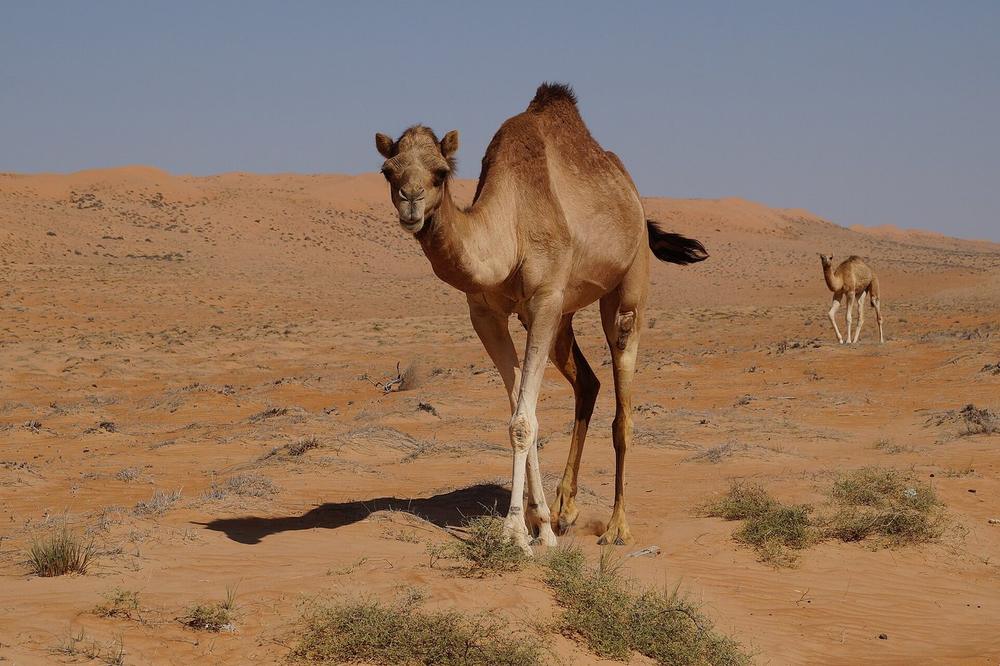
In pictures
When to skip it
- The trip has to happen between May and August. Above 38 degrees inland is not a question of tolerance; it removes the wadis, the dunes and the canyon path from the itinerary and leaves the drives. We do not sell the loop in those months at any price.
- You need a headline monument to point at. Oman rewards patience with rock, forts and irrigation channels rather than with a single monument, and travellers who want the object rather than the country are better served by Jordan.
- The advisory is a deciding factor. Oman is at US Level 3 as at September 2026, some insurers are now wording cover differently in the region, and if reading that has already settled the question, it has settled it.
- You will not walk an unfenced ledge. The balcony path at Jebel Shams barely climbs, but it traces an unfenced rim with a very long drop beside it, and a day at the rim without walking it amounts to a viewpoint and a car park.
- Wine with dinner every night matters. Alcohol is confined to hotels and licensed restaurants, and there is none at the desert camp, at Ras al Jinz or in most of the interior.
Journeys that go here
The ten-day Oman journey runs the loop in the order this page argues for — up into the mountains while you are fresh, out to the sands afterwards, home along the coast — and it carries the four-wheel drive throughout rather than swapping vehicles halfway.
The sixteen-day Jordan and Oman voyage puts the two countries together, and the argument for it is contrast rather than volume: one country is what people built, the other is what the ground did, and a Gulf hub joins the two in a single afternoon of flying. For the other half of that pairing, and its own advisory position, see the Jordan page; for whether the region belongs in a first trip to Asia at all, first time in Asia makes the case both ways.
Tell us the month first
Oman is the one country on this site where the wrong month cancels the trip rather than dampening it. Send your dates and we will say straight away whether the loop works or whether you are looking at the mountain instead.
Questions travellers ask most
Oman is at Level 3. What does that mean for a visit?
It means the American government, in an update dated 30 August 2026, asks its citizens to reconsider travel to Oman, The grounds it gives are the conflict that opened on 28 February 2026, the missile and drone threat that came with it, and terrorism risk at the places visitors gather. Only one part of the country is graded Level 4, Do Not Travel, and that is the border strip facing Yemen, which no visitor route goes near.
Characterising that document as overblown is not something we will do, and neither is advising you on what level of risk suits your household. What we will do is state it here, restate it in writing at the time you book with whatever has changed since, and hold flexible terms on departures.
Two consequences are practical rather than philosophical. Check the wording of your insurance policy rather than its summary, because cover behaves differently in some policies where elevated official advice is in force. And leave a spare night ahead of any long-haul connection, because airspace in the Gulf has shut at short notice more than once since February 2026.
Does the 14-day visa-free allowance constrain an itinerary?
Not for a journey of eight to eleven nights, which is what this country needs. Fourteen days, free of charge, is what most Western passports get, with nothing to apply for and nothing to pay.
It starts to matter when Oman is one half of a longer trip, or when someone adds a week on the coast at the end. Past 14 days the Royal Oman Police e-visa applies, and it wants a passport with six months left on it, an onward or return ticket, a booked hotel, cover in force and some evidence of funds. Say at the enquiry stage if you are extending; it changes the paperwork rather than the price, but not if it is discovered late.
Is there any reason to come in the summer?
Two, and neither of them is the loop described on this page. The first is Salalah, in the far south, where the khareef runs from roughly July into September, the monsoon cloud turns the hills green and the Gulf comes on holiday. It is a genuinely unusual thing to see and it is a destination in itself rather than a stop.
The second is altitude. The Jebel Akhdar stays around 18 to 26 degrees through the summer while the interior runs above 38, so three or four nights on the plateau is comfortable when nothing below it is. What neither option does is rescue a full itinerary: between May and August the wadis, the dunes and the canyon walk are off the table, and we would rather move your dates than sell you a diminished version.
How is Oman different from the UAE next door?
Almost entirely. The UAE is a city-state economy with the tallest buildings and the biggest airline hubs in the region; Oman is low-rise, thinly populated and organised around mountains, wadis and a long coast. Travellers who enjoy one do not reliably enjoy the other, and combining them in a fortnight tends to produce two short trips rather than one good one.
On paperwork and advisories they are closer than they look. The UAE also sits at US Level 3 as at September 2026, for the same regional reasons. Its visa-on-arrival list and the length of stay it grants change periodically, so we will not print a day count for it here — if a Dubai stopover is part of your plan, that is a detail to confirm immediately before booking rather than to assume.
Read next
Tell us about the journey you have in mind
Dates, party size and the places you care about are enough to start. You get a draft route and an indicative price, not a brochure.