Ubud, and the transfer times the map does not show you
Bali is small, and its roads deliver about thirty-five kilometres in an hour. Every disappointing week on this island is built by somebody who read the distances off a map and assumed they were hours.
At a glance
| Country | Indonesia, island Southeast Asia |
| Nights that work | 3 as a floor, 5 if Ubud is the base for the island |
| Best months | April to October, driest and least humid June to September |
| Wettest | November to March, heaviest December to February |
| Airport | Denpasar (DPS), in the far south |
| Entry | E-VOA at IDR 500,000 for 30 days, extendable once for the same again |
| Bali levy | IDR 150,000 per person, once per visit, cashless only |
| Car and driver | USD 35 to 100 for a working day, fuel and parking usually included |
| The road that matters | Ubud to Amed is 87 km and takes two and a half hours or more |
What this place actually is, and what has been spoiled
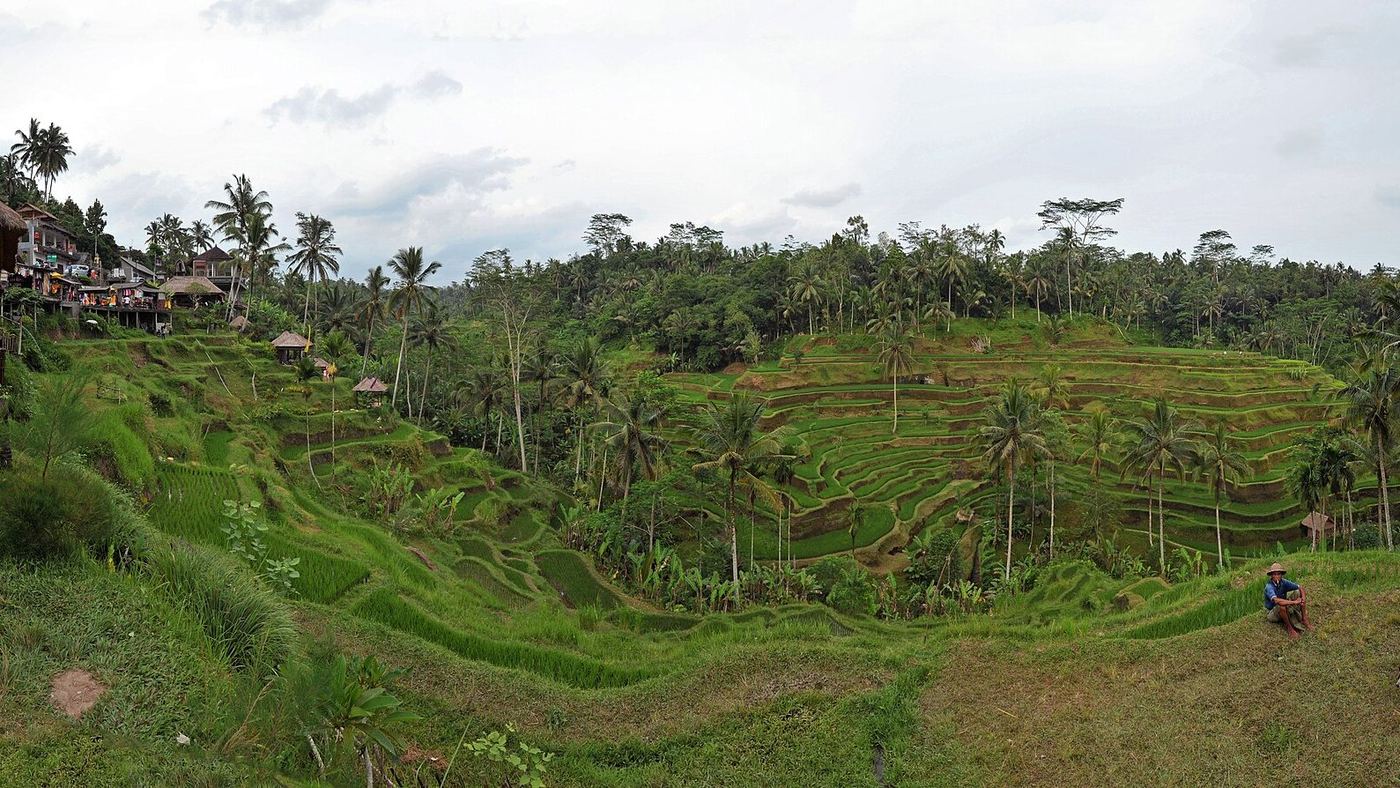
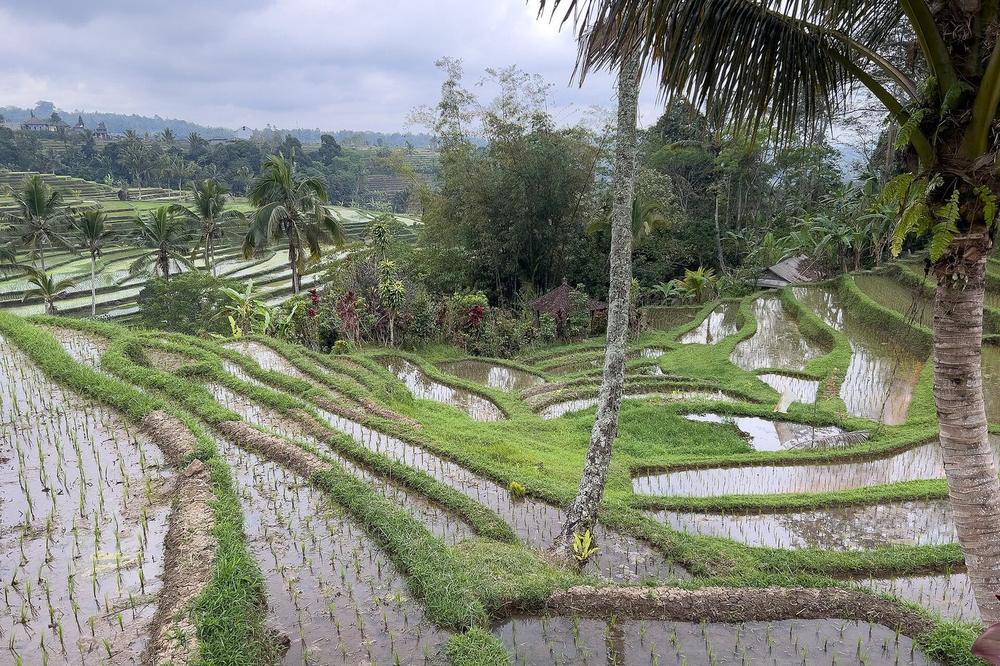
Ubud sits inland and uphill from the beach strip, in country cut into steep valleys by rivers running south. It was a royal town and a centre of carving and painting long before anybody arrived to look at it, and the villages around it still specialise: stone here, silver there, masks somewhere else. The landscape is the reason to come. Rice terraces, ravines with fast water at the bottom, footpaths along the ridges between them, and temples at the springs.
What has happened to the middle of the town is not a secret. The central streets have become the island's wellness and yoga market, congested with traffic that the lanes were never built for, and lined with shops selling much the same things. The terraces that appear in every photograph are managed viewpoints with an entrance, a car park and a queue for the same picture. None of that is a scandal — it is what happens to a beautiful small place that becomes famous — but you should know it before you book five nights in the centre.
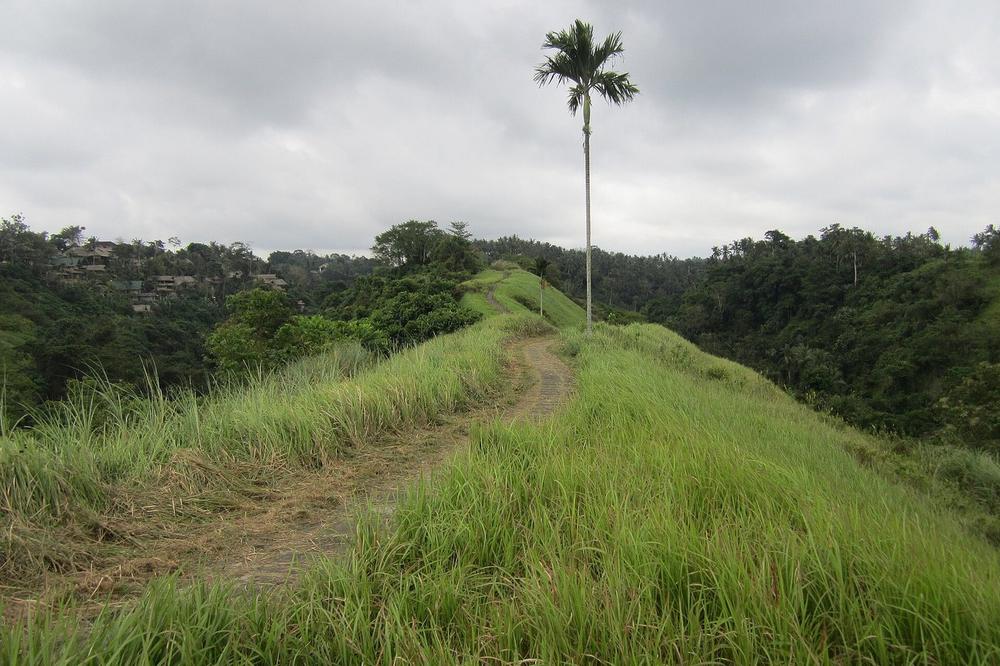
The distinction that saves the stay is a short one. The town centre is crowded; the valleys are not. A footpath along a ridge twenty minutes from your room, at seven in the morning, is empty. The craft villages on the road north are working places. The water temples early in the day are used by people who came to use them. Stay on the edge rather than in the middle, walk in the first two hours of daylight, and Ubud is still what people say it is.
Where the rest of Bali is
North of the airport the southern strip has been developed to its limits, and traffic there is the first thing islanders complain about. The parts that still feel like the Bali of the brochures are the east coast under the volcano, the north, the terraces in the valleys inland, and the west. They are not far away in kilometres. They are far away in hours, which is the subject of the next two sections and the reason this page exists.
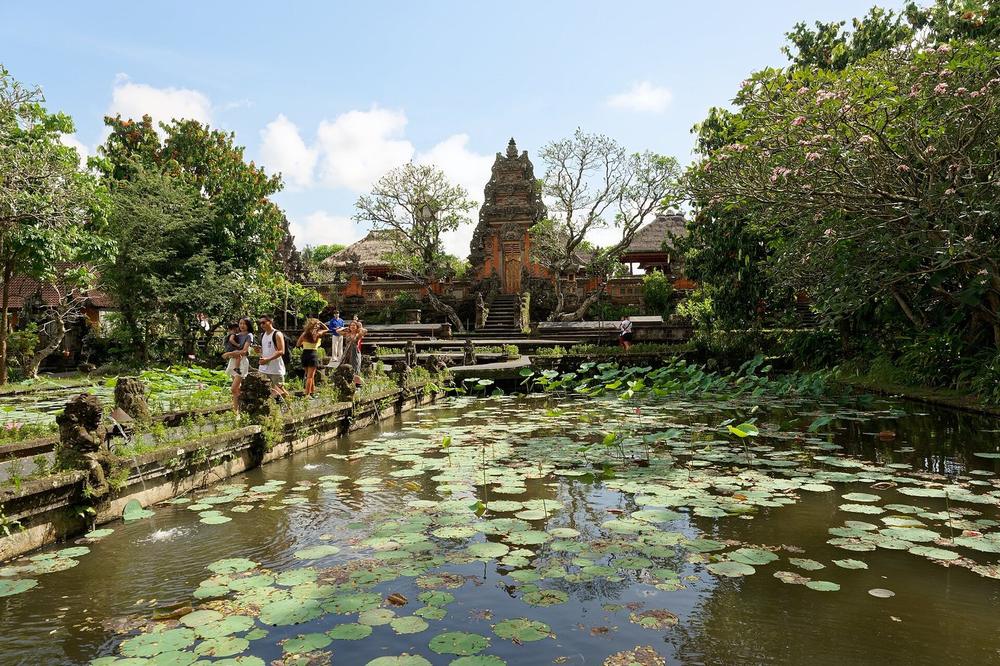
The provincial government publishes an official guide to conduct for visitors — dress at temples, behaviour at places of worship, what not to climb on. The UK Foreign Office directs travellers to read it and warns that breaching local custom here can end in criminal penalties or deportation, which is not the case in most places this site covers. A sarong at any temple, no bare shoulders, and nobody stands on anything sacred for a photograph.
How many nights, and what breaks if you take fewer
Three nights is the floor if Ubud is one base among two on the island. Five is right if it is the only base and the days out are radiating from it. What decides the number is not the list of things to see. It is the road.
The arithmetic the map hides
Reckon the run from Ubud out to Amed on the east coast at 87 kilometres, and at two and a half hours of driving on a good morning, closer to two and three-quarters on most, and longer again once the roads thicken after ten. A room in one of the smaller villages past Amed adds another fifteen to thirty minutes on the end. Leave between eight and ten and you get the short version.
Divide it out and the island runs at about thirty-five kilometres an hour. Apply that rate to whatever distance you have read off a map and the whole plan changes shape: the run down to the southern peninsula, the road north over the mountains and the trip to the west coast are all half-day movements rather than hops. Two of those inside a week is a day of the holiday spent watching the same shopfronts go by, and nobody, ourselves included, has a quicker way through it.
So the rule for a week on Bali is two bases, not three. Ubud and the east coast, or Ubud and the north. Any itinerary offering Ubud, the southern beaches, the east and the west inside seven nights is quietly selling you that road. Add Java or Flores and you are into a different length of trip altogether, which is set out on Indonesia and under how many days.
When to go
| Months | On Bali | The trade |
|---|---|---|
| April to June | The dry season opens: walkable terraces and clear mornings more often than not | The best value of the year, before the peak rates arrive |
| June to September | Driest and least humid, and the most reliable conditions on the island | The busiest roads of the year, and driver rates rise through this stretch |
| October and November | Crossover, with Bali turning wet while parts of eastern Indonesia hold on | The window that most needs checking island by island rather than as a country |
| December to March | Wet, heaviest from December to February, usually as an afternoon event | Green terraces, quiet sites, lower rates, and a dawn view that is a lottery |
The wet months get written off too easily. Rain here mostly arrives late in the day and clears, the valleys are at their greenest, the walking paths are empty and the rates fall away from the July-to-September peak. Give a December week to the valleys, the water temples and the east coast, and let a sunrise over any crater be a bonus instead of the reason for coming, and you have a good week at a considerably better price.
What the wet season will not reliably give you is a clear sky at five in the morning. If the entire trip is arranged around a sunrise off a caldera rim, the months stop being negotiable. Which months suit which corner of Asia is worked out on when to go.
Getting there and getting around
Denpasar takes the long-haul traffic and sits in the far south of the island, which means the arrival transfer is one of the longer drives you will make here and it lands in the busiest part of the road network. Treat the arrival day as an arrival day. Onward flights to Labuan Bajo for the Komodo islands run to roughly an hour and a quarter, on any of several domestic carriers.
Ground transport means a car and a driver, priced at something like USD 35 to 100 for a ten-hour day, fuel and parking usually counted in, and higher from July to September when everybody wants one. The driver is not just a driver: he is the person who knows which road a temple anniversary has closed this morning, and there is no app for that.
This country counts over seventy volcanoes as active, and what they threaten is your flight rather than your safety. Take the first week of September 2026. Ash out of Anak Krakatau, in the strait between Java and Sumatra and nowhere near this island, scrubbed 108 flights connected with Bali across the 6th and the 7th, and both of Jakarta’s airports stayed shut until 08:59 on the second of those days. Denpasar never closed. None of that argues for staying away. It argues for keeping a spare night at the end of a trip, which buys more in Indonesia than any further temple.
What it costs on the ground
Indonesia is a third-band country here: somewhere between USD 250 and 360 for each traveller for each day on the ground, four in the party, with the room, the vehicle, the guiding and the entries inside that figure and no flights. Two charges fall outside it, you settle both yourself rather than through us, and neither takes cash.
| Charge | Amount | Note |
|---|---|---|
| E-VOA on entry | IDR 500,000 | 30 days, extendable once for the same amount to 60 in total |
| Bali tourist levy | IDR 150,000 | Per person, once for the whole visit, not per attraction |
| Car with driver, full day | USD 35 to 100 | Around ten hours, fuel and parking usually included; dearer July to September |
| Flight to Labuan Bajo | Varies | About an hour and a quarter from Denpasar, several carriers |
The levy is worth two more sentences because it is the charge people arrive without having paid. One payment of IDR 150,000 a head clears your whole time on Bali, and no part of the system will take a banknote: QRIS, a virtual account, a transfer or a card. Settle it on the provincial site before you fly, or at a counter once you land. Never buy either one through a page that adds a handling charge on top — both have official channels, and the price is the price.
No hotel rate appears above. Bali's market moves faster than any published average can follow, so a figure here would be out of date before you read it and any quote we send names the property instead. The day-rate comparison for every country here, with margin stripped out, is on cost by country.
In pictures
When to skip it
- You want beaches and nightlife. Ubud is inland, uphill and quiet after ten, and the strip that sells the other thing is an hour and a half away through the worst traffic on the island. Base yourself in the south and accept what comes with it.
- You have seven nights and want three bases. At about thirty-five kilometres an hour, the third move costs most of a day. Two bases and a longer stay in each is the version of that week that works.
- The centre of your trip is a sunrise off a volcano rim in December, January or February. Those months rarely supply the clear sky at five in the morning that the whole plan depends on.
- The wellness market is not for you. The centre of the town is organised around it now, and while the valleys and the villages are not, you will be walking through the middle of it several times a day if your room is in the middle of it.
- You cannot manage steps and slopes. This is a town built on the sides of ravines: the walks are lovely and almost none of them are level, and the temple compounds have thresholds and stairs.
Journeys that come here
Our ten-day Bali and Java journey gives Ubud three nights and the east coast two, with exactly one long drive between them, and spends the first half on the Yogyakarta plain and the Tengger caldera. It is built on the arithmetic in the section above rather than on a list of places.
The seventeen-day archipelago voyage holds four nights here at the end, after Flores and the Komodo boat days, which is when a base that asks nothing of you is worth the most. For how the islands fit together and what the volcanoes mean for a route, read Indonesia.
Two bases, and which two?
Send us your dates and how long you have on the island. If the shape you have in mind spends its days on the road, our first reply will say so.
Questions travellers ask most
What is the Bali levy and when do we pay it?
It is a one-off charge of IDR 150,000 per person, made by the provincial government, and it is charged for being on Bali at all rather than for any particular attraction. Nothing in the process accepts cash: QRIS, a virtual account, a transfer, UnionPay or a card.
Settle it ahead of time on the official provincial system, or at a counter once you are through immigration. It is separate from the e-VOA at IDR 500,000, which is the visa itself and covers 30 days with one extension possible for the same amount again. Any site charging a service fee on top of either is not the official channel.
How long does it really take to get from Ubud to the east coast?
Two and a half hours at best for 87 kilometres, nearer three once the roads thicken after ten, and a further fifteen to thirty minutes on top if the hotel sits past Amed in one of the smaller villages. An eight or nine o’clock departure buys the quicker version.
Carry that rate across the whole island: about thirty-five kilometres to the hour, whatever the map implies. No other figure does as much work when you are planning a week here, and it is why a Bali week gets two bases from us and never three.
Has Ubud been ruined?
The centre is crowded and commercial, and the famous terraces are managed viewpoints with a car park and a queue. Anyone who tells you otherwise is selling something. If you spend five nights in the middle of the town and walk the same three streets, you will come home disappointed.
The valleys immediately around it are a different matter. Ridge paths at seven in the morning are empty, the craft villages to the north are still working, and the water temples early in the day are in use rather than on display. Stay on the edge, start early, and the town does what it is supposed to do.
Is the wet season worth considering?
For a stay built around the valleys, the temples and the east coast, yes. The rain from December to March usually comes as an afternoon event rather than an all-day one, the terraces are at their greenest, the sites are quiet and rates fall a long way from the July-to-September peak.
For a trip whose centrepiece is a sunrise from a caldera rim, no. Those mornings need a clear sky at five, and between December and March the sky at five is rarely obliging. Choose the wet months for the island itself rather than for its summits, and hold on to that spare night before the flight home whatever the season.
Read next
Tell us about the journey you have in mind
Dates, party size and the places you care about are enough to start. You get a draft route and an indicative price, not a brochure.