A country two hours wide and eight thousand metres tall
Nepal is not only a trekking country, and that is the first thing worth saying on a page like this. It is a medieval valley, a lake, a lowland forest with rhinoceros in it, and a wall of mountains behind all three — and the rules for walking into that wall changed in 2023 and tightened again this year.
At a glance
| Region | The Himalaya |
| Nights that work | 8 to 12 without a long trek |
| Best months | October and November; then March and April |
| Worst months | May to August, the monsoon |
| Main airport | KTM Kathmandu |
| Entry | Visa on arrival, USD 30 to USD 125 by duration, cash |
| Ground cost | USD 190 to 300 per person per day, land only |
| Pairs with | Bhutan, north India |
What this country actually is
Nepal is three landscapes stacked on top of one another in about 200 km of north–south depth. At the bottom is the Terai, flat, hot and forested, which looks and feels like northern India and holds the rhinoceros, the sloth bear and the tigers. In the middle are the hills, terraced to the top of every ridge, where most Nepalis live and where the walking that visitors actually do takes place. At the top is the Himalaya proper, which is not a place most travellers go to so much as a thing they arrange to be able to see.
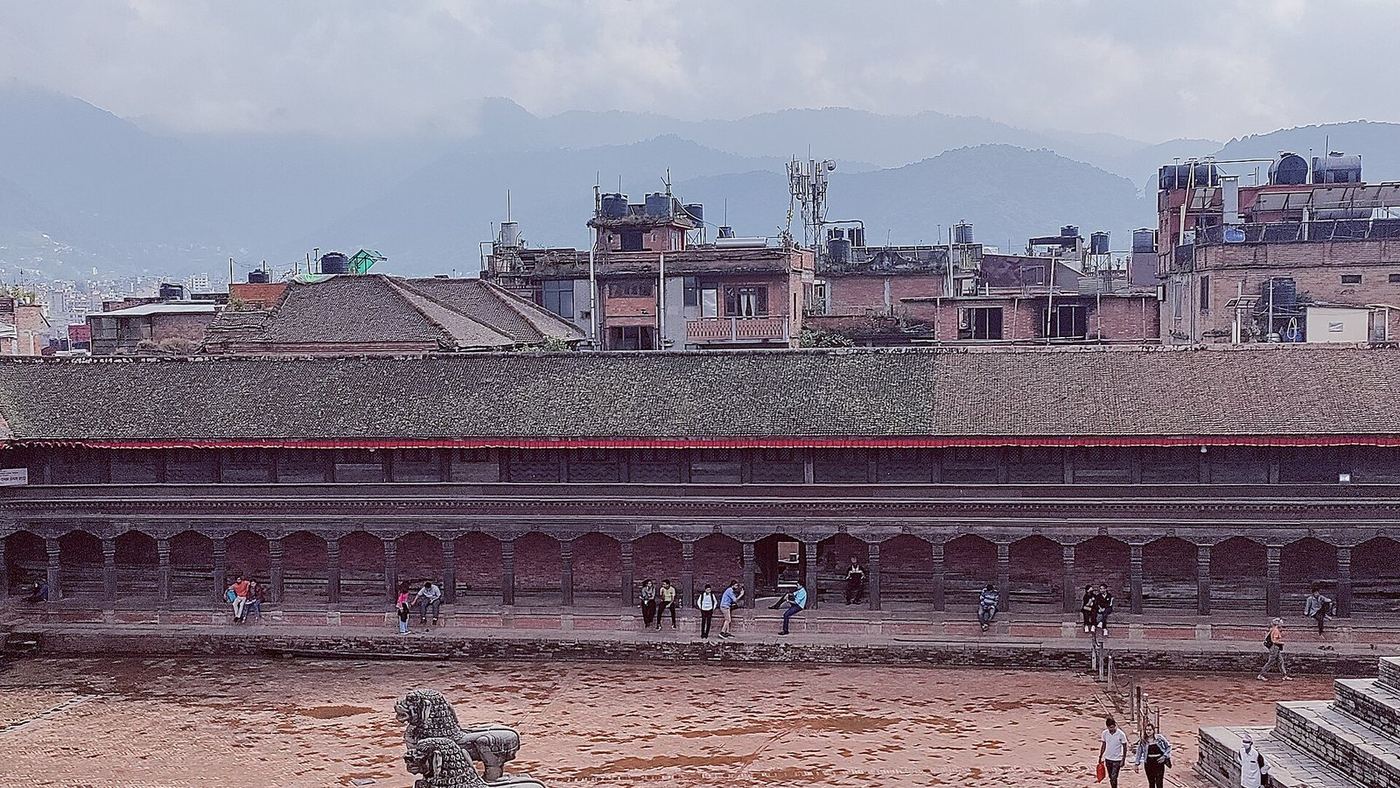
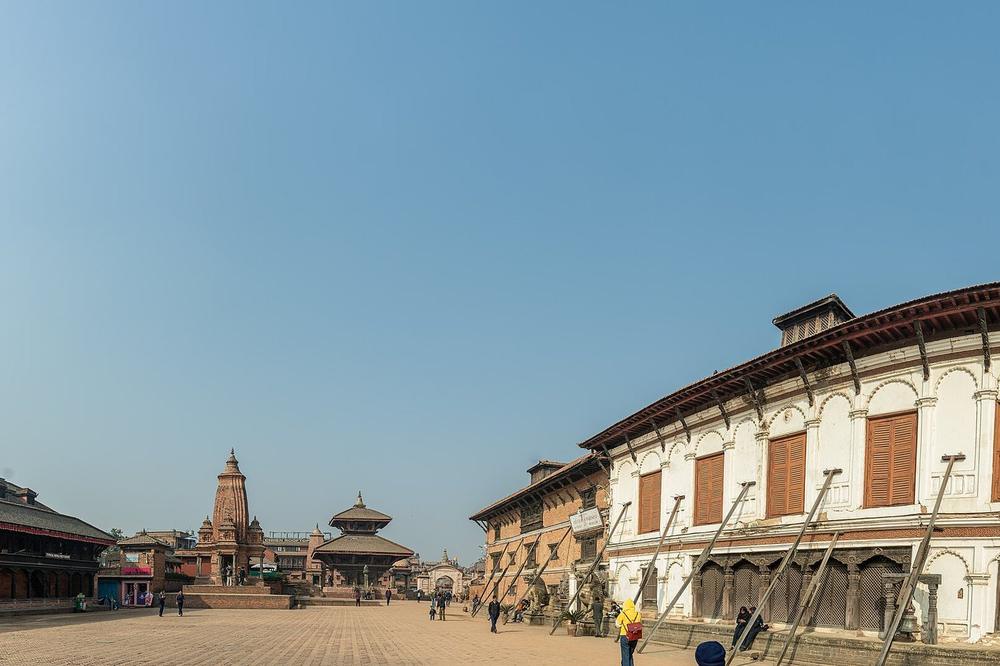
The Kathmandu valley is the fourth landscape and it is the one that surprises people. It holds three separate old royal capitals — Kathmandu, Patan and Bhaktapur — within about half an hour of one another, each with its own palace square, its own guild traditions and its own reconstruction programme still running after the 2015 earthquake. Some of that reconstruction is finished and looks four centuries old again. Some of it is scaffolding and numbered timber under a tarpaulin, and a page that shows you only the finished half is not being straight with you.
The valley also has an air problem in winter, for the same physical reason Delhi does: it is a bowl, and cold air sits in it. It is nowhere near Delhi’s scale, but a January morning in Kathmandu is often hazy at street level while the mountains an hour away are perfectly clear.
One thing Nepal is not, in September 2026, is unsettled. The Gen-Z protests of September 2025 cost the prime minister his job and produced an interim government under Sushila Karki, a former chief justice; the curfews came off inside a week, occupancy was reported back above 80 per cent by that October, and the vote held in March 2026 put much the same parties back. Nothing on the main tourist circuit was interrupted for longer than a few days. It goes on this page because people ask, not because it is a live risk.
How many nights, and what breaks if you take fewer
Eight to twelve nights is the honest band for Nepal without a long trek. Under eight, something structural comes out. Over twelve, you are either walking for several days or repeating yourself.
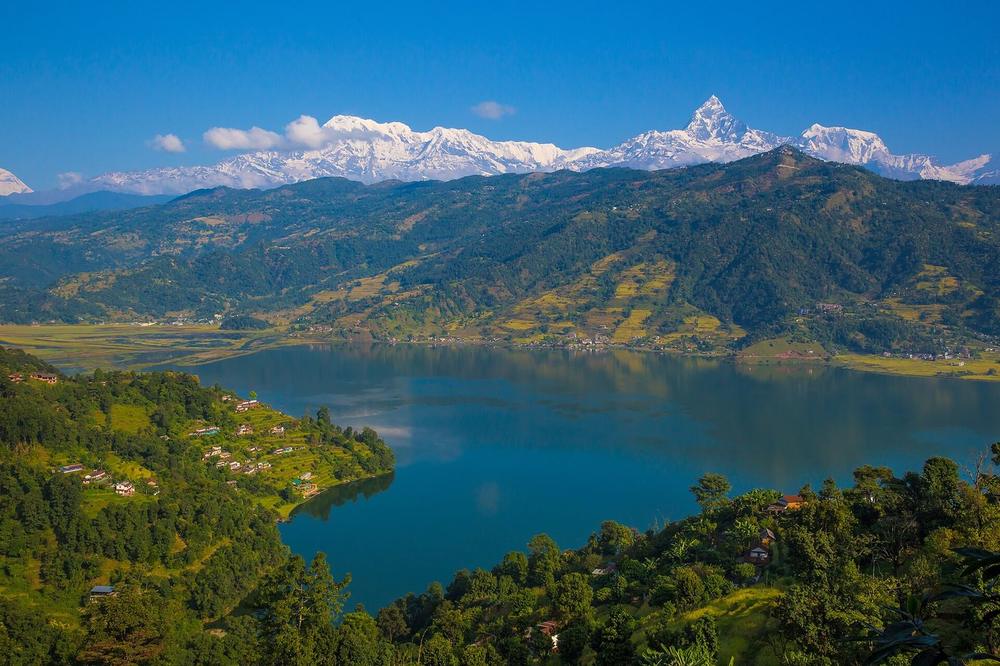
The three fixed costs on a Nepal itinerary are the valley, the west and the lowland. The valley needs three nights, because Bhaktapur alone deserves most of a day and Patan deserves a late afternoon rather than a stop. Pokhara and the Annapurna foothills need two to three, and a night spent on a ridge above the valley rather than in a hotel beside it is usually what people end up describing when they get home. Chitwan needs two, and not because anybody is trying to sell you a night. A lowland forest does its business in the first and the last hour of daylight; book one night and you have bought a single dawn with nothing to set it against.
That is seven nights before a single transfer day. Cut to six and the first thing to go is Chitwan, which turns Nepal into a mountains-only country and removes its most surprising day. Cut further and Bhaktapur becomes a two-hour stop, which is the classic mistake.
The other direction is the interesting one. Four more nights do not buy four more places — they buy walking, which is what the country is for. A real trek is a different order of commitment again: the Base Camp route alone needs twelve to sixteen days, its own stack of permits and its own acclimatisation, and any short itinerary with the word Everest in its title is selling you a seat by a window.
When to go, and what the wrong months give you back
| Months | What it is like | The trade |
|---|---|---|
| October and November | The clearest air of the year and mild temperatures. This is the season | The trails and the valley are at their busiest, and beds go early |
| December and January | Cold, often clear, and quiet. Early December can be the sharpest week of the winter | High passes may need technical skill and lodges close; valley mornings are hazy |
| February to April | The second window. Weather comparable to autumn with far fewer trekkers; rhododendron in the hills | Visibility drops below about 3,000 m as haze builds through the spring, and it gets worse the later you leave it |
| May to August | The monsoon: heat, cloud, haze, mud, leeches and road closures | Green, cheap and empty, and the rain-shadow country north of the main range stays open |
The rule of thumb is that autumn buys clarity and spring buys space. October and November give you the mountains sharp-edged from the ridge before breakfast and a teahouse full of other people who came for the same thing. March and early April give you the trails to yourself and a horizon that is often soft below the high peaks. Either is a good trip. Neither is the other one.
The monsoon has a genuine upside and it is not just price. The hills are as green as they ever get, the terraces are being worked, and the country is empty of visitors. What it costs is the view, the road surface and the domestic flight schedule — and on a route where the view is the product, that is usually too much to give up. If July or August is your only window, the better Himalayan answer is Ladakh, which sits north of the main range and is dry when Nepal is not.
Getting there, getting around, and the permits
Everything international arrives at Tribhuvan, in Kathmandu (KTM), which is inside the city rather than outside it — a transfer measured in a couple of kilometres and an unknown number of minutes. From Delhi the hop is about 819 km and somewhere between an hour and a half and an hour and fifty in the air, with IndiGo, Air India and Nepal Airlines all flying it daily. That is the whole reason India and Nepal sit so easily in one itinerary.
The visa is bought at the airport and priced by how long you intend to stay: fifteen days for USD 30, thirty for USD 50, ninety with multiple entry for USD 125, and USD 20 to upgrade a single-entry visa afterwards. Carry the money in US dollars. There are card machines, and there is a queue in front of them.
West of the capital there are two routes and the choice matters. By road it is some 200 km along the Prithvi Highway to Pokhara, a six-to-eight-hour day when conditions are good and eight or nine when they are not, with a gorge section in the middle that will not be hurried. By air it is a short domestic sector, faster and at the mercy of cloud. The workable arrangement is to hold a flight with the vehicle already in position, so that a cancelled departure takes a morning off you rather than a night off the trip.
Since 1 September 2023 nobody may trek in Nepal unaccompanied by a licensed guide, and the rule still stands in 2026 over Everest, Annapurna, Langtang, Manaslu, Upper Mustang, Gokyo, Kanchenjunga and Dolpo. This year the checking became real: a QR code is scanned at the checkpoint and matched against the registering agency’s manifest, with fines reported up to NPR 50,000 — roughly USD 375 — and any evacuation charged to the walker. The legal ratio is seven trekkers to one guide.
A widely-shared amendment from March 2026 touched only the thirteen restricted border districts. Previously a restricted-area permit required a party of at least two; now a lone foreigner may hold one. Nothing about the guide obligation changed, and helicopter rescue cover for anything above 4,000 m remains a legal requirement rather than a recommendation.
The permits are area-specific and, by regional standards, trivially cheap. TIMS runs NPR 1,000 through an agency and NPR 2,000 for a walker registered independently, and the Khumbu does not use it at all — local permits do the same job there. Park and conservation entry is USD 25 for Annapurna, Langtang and Manaslu, USD 28 for Sagarmatha and Shey-Phoksundo. Add the Khumbu rural municipality permit and a Base Camp walker is carrying about USD 63 of paper.
One number belongs on this page as context rather than as anything you can buy: the permit to climb Everest itself rose to USD 15,000 for the spring season on 1 September 2025, up 36 per cent from USD 11,000 and the first increase since 2015. We do not run expeditions. It is worth knowing because it explains why the mountain’s economics and the trekking economics are entirely separate conversations.
What it costs on the ground
Nepal shares India’s price band — somewhere around USD 190 to 300 for each traveller each day, land only, on a private trip — and no country in the Himalaya gives you more for that money. The comparison that matters is with Bhutan, where the daily figure is roughly double for structural reasons that have nothing to do with the hotel.
The permits barely move the number: USD 25 for an Annapurna permit and NPR 1,000 for a TIMS card are the same whether there are two of you or eight. What moves it is the vehicle, the guide and the porter, which are fixed costs divided by the party. Two travellers can pay a third more per head than a party of six on an identical itinerary.
The other thing worth saying is that money stops working above a certain altitude. A ridge teahouse in the Annapurna Conservation Area gives everybody the same plain room, the same dal bhat and the same uncertain hot water regardless of what the trip cost. No premium version of that night exists or is going to, and anybody implying otherwise is quietly moving you to a hotel further down the hill.
In pictures
When to skip it
- If your window is May to August. The monsoon takes the view, which on a Himalayan trip is most of the product, and it takes road reliability with it. Go to Ladakh, Central Asia or the eastern Indonesian islands instead.
- If the plan is to walk unaccompanied. That has been unlawful since September 2023, permits are now scanned and cross-checked on the trail, and the bill for being caught is around USD 375 before you pay for your own evacuation. No serious agency in Kathmandu will assemble the walking days without a licensed guide, and we will not either.
- If you want Base Camp and a cultural tour inside a fortnight. That walk needs twelve to sixteen days by itself, with its own permit stack and its own acclimatisation. Squeezed into ten it becomes an aeroplane window and a photograph taken through it.
- If nobody in the party can manage sustained descent on stone steps. Nepali hill paths go down as steeply as they go up, and the descent is the half that finds knees. This is a fitness question rather than an altitude one and it is worth answering honestly before booking.
- If you are looking for the kind of trip where a driver takes you to things. Nepal gives up its best hours to people on foot, at dawn, above where the road stops.
Journeys that go here
Nepal in ten days runs Kathmandu to Pokhara to Chitwan and back, with one night walked up to a ridge teahouse in the Annapurna foothills rather than a scenic mountain flight. It is the country journey this page is written alongside, and the permits and the licensed guide are inside its price.
For three weeks, India, Nepal and Bhutan in twenty-one days takes Delhi to Paro to Kathmandu and is the only route on this site that holds all three Himalayan propositions without becoming a transit schedule. If the valley itself is the draw rather than the mountains, the Kathmandu valley page covers the three cities, the restoration and the winter air in detail.
Tell us the month and the legs
Send your dates, the number of travellers and whether anyone has walked at altitude before. That is enough for us to say what is realistic before you commit to anything.
Questions travellers ask most
Do we need a licensed guide if we are only walking for a day or two?
On a trekking route, yes. What the September 2023 rule regulates is the ground you walk on rather than how long you spend on it, and Annapurna, Everest, Langtang, Manaslu, Upper Mustang, Gokyo, Kanchenjunga and Dolpo are all named in it. Since this year the checkpoints scan a QR code and match it to whichever agency registered you.
A walk in the Kathmandu valley is a different matter and needs nothing. The boundary is the conservation area or national park gate, and the honest test is simple: if there is a permit checkpoint on the path, there is a guide requirement behind it.
Which permits will we actually pay for?
Whichever area you walk in, and no others. Annapurna is a USD 25 conservation area permit; Langtang and Manaslu are USD 25 each; Sagarmatha, on the Everest side, is USD 28, as is Shey-Phoksundo. A TIMS card is NPR 1,000 for group trekkers and NPR 2,000 for independent ones, and it is not used in the Khumbu, where local permits take its place.
Everest Base Camp adds up to about USD 63 in permits once the Khumbu rural municipality fee is included. Restricted-area permits for the thirteen border districts are a separate and much larger category, and since March 2026 a single foreigner can apply for one where two people were previously required.
Has the country recovered from the unrest of 2025?
Yes, and quickly. The protests of September 2025 brought down the prime minister and put Sushila Karki, a former chief justice, at the head of an interim administration; curfews came off inside a week and occupancy was back above 80 per cent by the October. A national vote followed in March 2026 and returned broadly the same parties.
No restrictions apply to the main circuit and none have since that autumn. Demonstrations near Thamel or Lakeside are policed cautiously rather than being a sign of anything unresolved. We take countries off this site rather than manage around them, and Nepal is not one of them.
Should we take the flight or the road out to Pokhara?
Book the flight and keep the road as the reserve. Two hundred kilometres of Prithvi Highway is a six-to-eight-hour day at best and eight or nine when the weather or the traffic is against you, and the gorge section will not be hurried.
Nepali domestic schedules answer to cloud, and cancellations cluster in the early morning. A mid-morning departure with the car already waiting means a scrapped flight costs half a day of view instead of a night of the itinerary.
Read next
Tell us about the journey you have in mind
Dates, party size and the places you care about are enough to start. You get a draft route and an indicative price, not a brochure.