Petra: a city, not a facade, and the ticket that admits it
The Treasury is about twenty minutes inside the gate. The rest of Petra is a spread-out city that takes two days of walking, and the second day costs five dinars more than the first. Almost nobody buys it.
At a glance
The American rating for Jordan is Level 3, Reconsider Travel, last revised on 29 August 2026, and it gives two reasons: terrorism, and spillover from the fighting that started in the region on 28 February 2026. Four places carry the Level 4 label instead: Rusayfah City, the Baqa'a district of Ayn Basha, the camps holding Syrian refugees, and the frontier zones with Syria and Iraq. Ma'an Governorate is flagged one step below that, and Wadi Musa — the town at this gate — sits inside Ma'an. Petra is in none of the Level 4 areas.
London went the other way on 3 June 2026, ending a blanket warning against all but essential travel and narrowing it to a band 3 km deep along the frontier with Syria, which is at the far northern end of the country and roughly the length of Jordan from here. The FCDO still notes the risk of strikes across the wider region and the possibility of disrupted flights.
Those are the facts as they stand. We are not going to characterise them as overstated, and we are not going to tell you which risks to accept — that decision belongs to you and to your insurer, whose wording is worth reading, because some policies now respond differently while elevated official advice is in force. What we do is read both advisories and the airspace notices daily and put the current position in writing with any quote. How we read these documents across the region is on safety and advisories.
| Country | Jordan, West Asia |
| Nights that work | 2 to 3, in Wadi Musa at the gate |
| Best months | March to May, September to November |
| Worst window | July and August; the south sits around 34 degrees |
| Entry, accommodated rate | 50, 55 or 60 JOD for 1, 2 or 3 days |
| Entry if not staying in Jordan | 90 JOD |
| Jordan Pass | 70, 75 or 80 JOD, and it waives the visa fee only on a stay of three nights or more |
| Walking | 10 km or more on each full day, on sand, gravel and rock-cut stair |
| Next door | Wadi Rum, entry 5 JOD |
What this place actually is
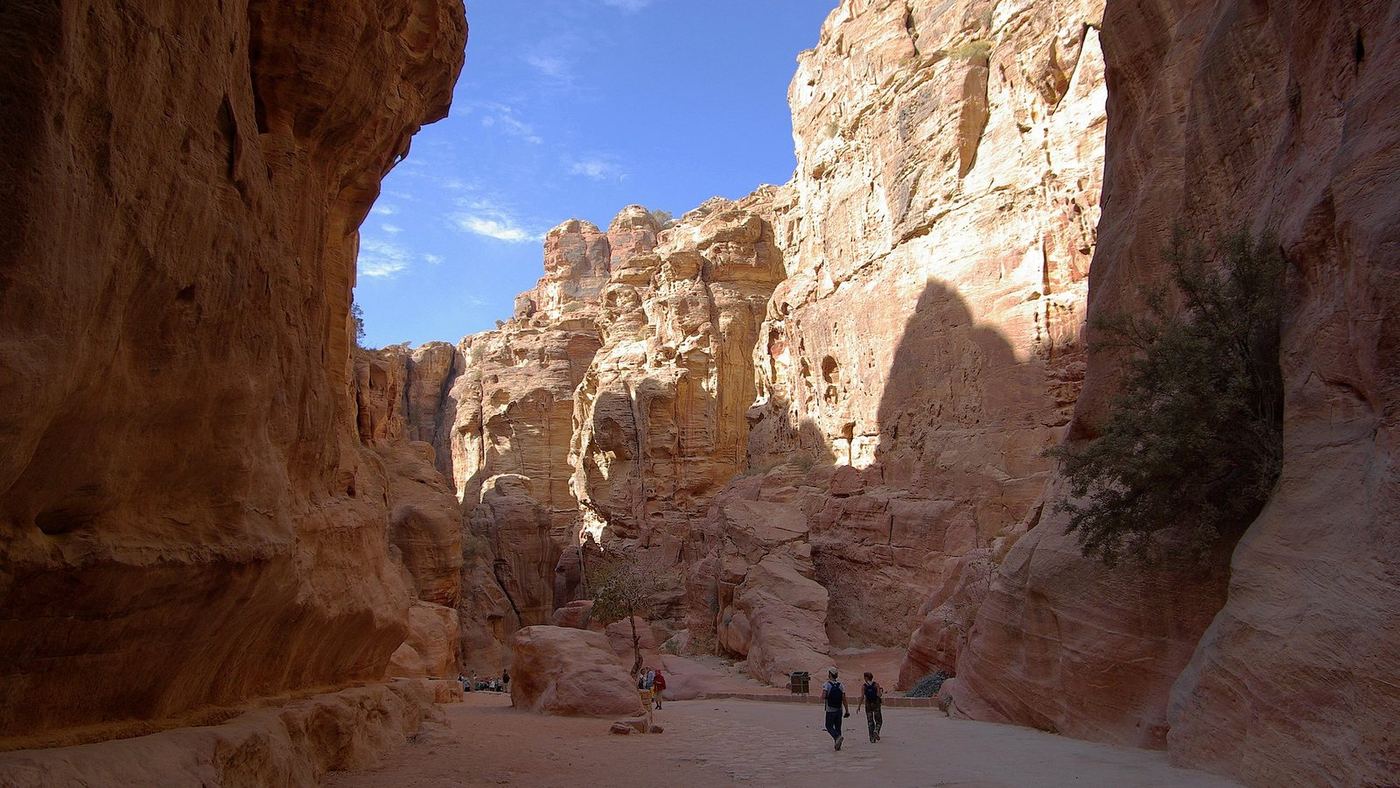
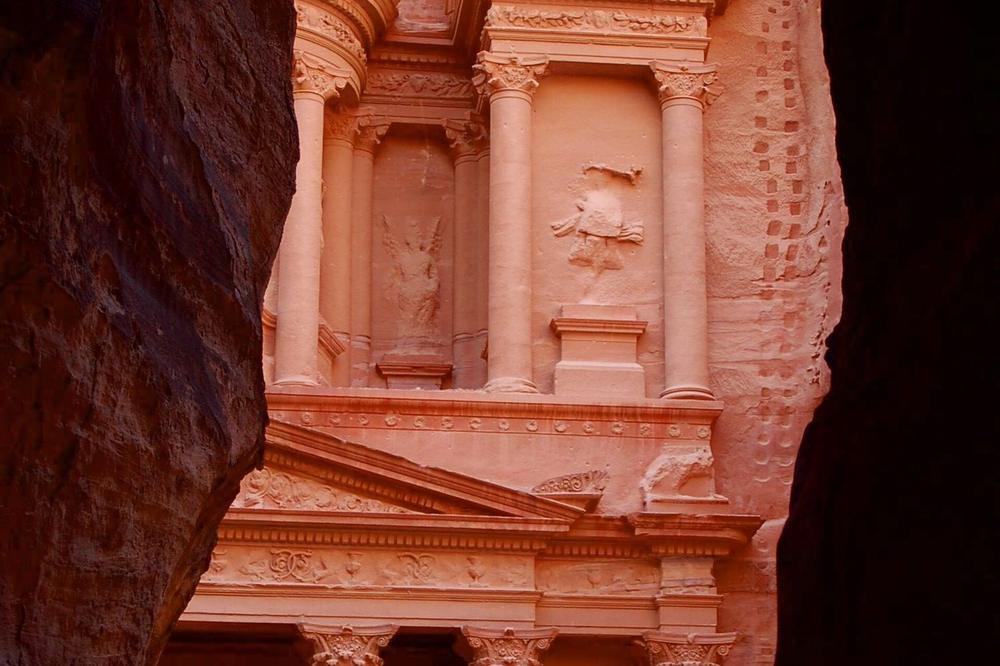
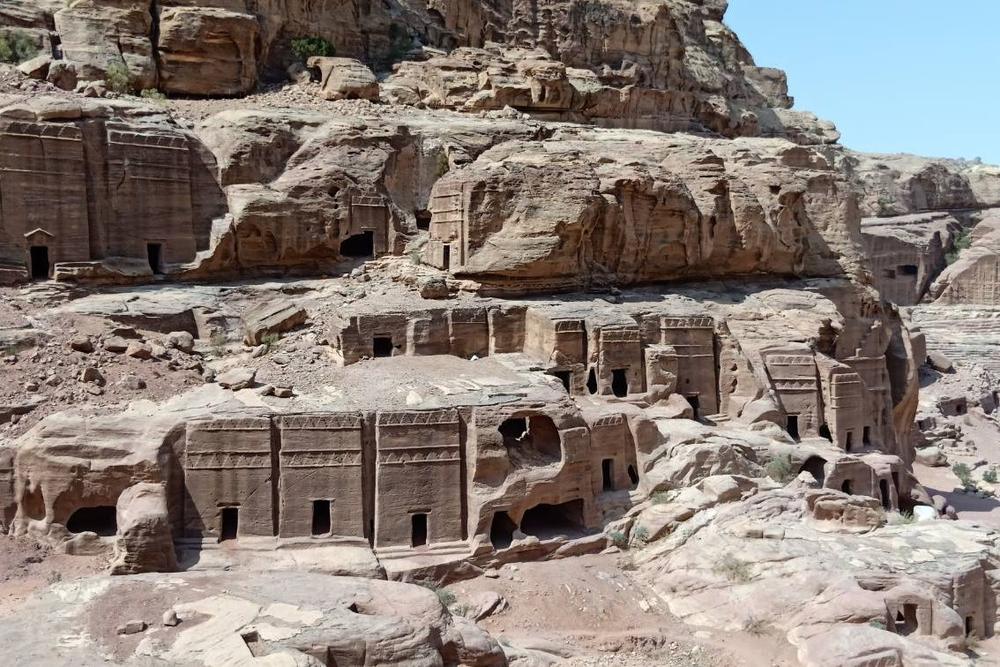
Petra is a city carved into and built against sandstone over several square kilometres, and the single image everybody carries of it — a facade seen through a slot in the rock — is roughly the first twenty minutes of it. The Nabataeans who cut it were traders who controlled the incense route, and what they left behind is not one monument but a whole settlement: tomb facades, a colonnaded street, a theatre cut out of the hillside, water channels running the length of the approach gorge, and religious platforms on the ridges above.
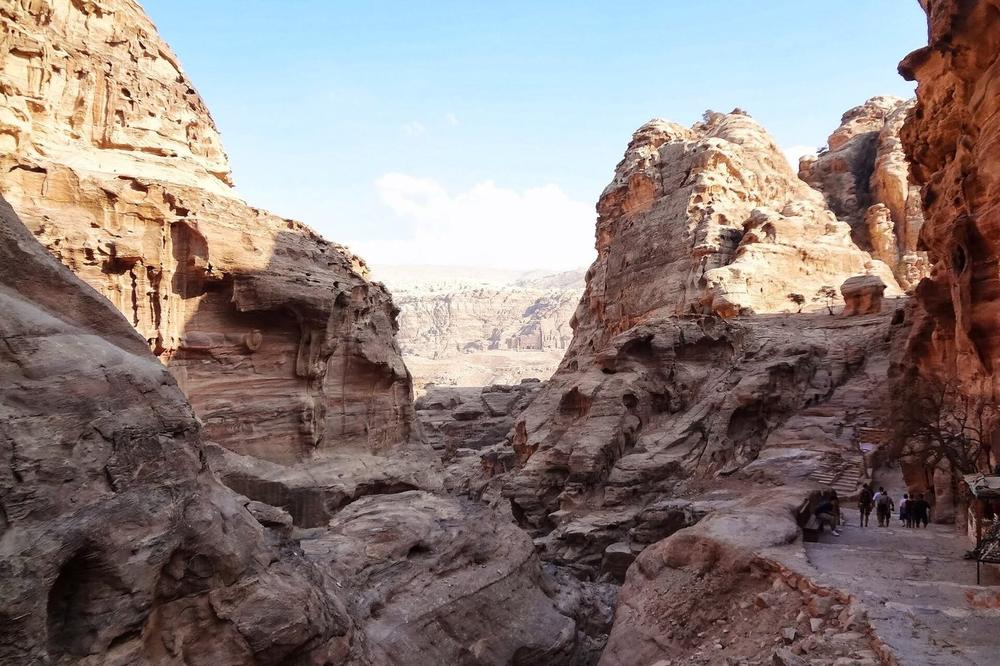
The geography is what decides your day. The Siq, the fault in the rock that forms the entrance, runs a little over a kilometre from the gate before it opens on the Treasury. Everything else lies beyond that, spreading away up a wide valley: the theatre, the royal tombs cut high into the cliff on the right, the colonnaded street, and then, at the far end, a rock-cut stair climbing several hundred steps to the Monastery. The distances are not extreme by themselves. They are extreme in combination with the surface, the heat and the fact that there is no way back except the way you came, on foot, at the end of the day.
That is why this page exists separately from the Jordan country page. Petra is not a stop on a route, it is a two-day walking site with a ticketing system attached, and treating it as an afternoon is the commonest and most expensive mistake made about Jordan.
Wadi Musa is the town outside the gate. It exists to serve the site, it climbs a hillside, and the practical thing about it is how much difference the position of a hotel makes: a bed within walking distance of the entrance is what allows you to be at the Siq when it opens rather than in a car queue.
How many nights, and what breaks if you take fewer
Two nights are the minimum that makes sense and three are what we build. The reason is not the site alone; it is that the second Petra day should not also be a driving day. Three nights means you sleep in Wadi Musa, walk, sleep again and leave the following morning with the legs recovered.
The ticket, which is the whole argument
A visitor staying overnight in Jordan pays 50 JOD to go in for a day. Two days are 55 and three are 60, as at September 2026, and under-twelves go free. Read those numbers again. The second day costs five dinars — about the price of lunch — and it roughly doubles what you see. A one-day ticket at 50 JOD is the single worst value in Jordanian tourism, and it is what most itineraries sell.
Anyone not staying overnight in the country pays 90 JOD instead. That is not an accident of pricing; it is policy, designed to stop the site being consumed as a day trip from across a border or off a ship at Aqaba. E-tickets are valid eight months from purchase and are not refundable.
What each day holds
- Day one, from opening. The Siq walked rather than ridden, the Treasury before the first coach groups are through, the theatre, the royal tombs and the colonnaded street. That is a full day and something under half the site.
- Day two. The stair to the Monastery, which is the walk that changes people's minds about Petra, plus the High Place of Sacrifice on the opposite ridge and the descent through Wadi Farasa, which returns you to the valley without retracing the morning.
- Petra by Night, on set evenings, which needs its own ticket even if you hold a Jordan Pass. It is candles in the Siq rather than access to the site, and it is a matter of taste rather than a thing to organise the trip around.
What breaks at one day is the far half of the site. Everything beyond the colonnaded street lies well past the point where a single-day visitor turns round, and a stair of that length taken at four in the afternoon on tired legs is why so many people describe the temperature rather than the architecture afterwards. What each country on this site is able to hold is worked out on how many days.
When to go
| Months | Conditions | What it means at the site |
|---|---|---|
| March to May | Roughly 18 to 28 degrees across the country | The spring window. Both full days are comfortable and the Monastery stair is a pleasure rather than a trial. |
| June to August | The south sits around 34 degrees in the daytime | The site becomes an endurance question. It is doable only by inverting the clock: in at opening, out by eleven, back in after four. |
| September to November | The strongest window of the year | October is what the trade itself picks. Low sun on sandstone, warm days, and the summer volume gone. |
| December to February | Cold; snow reaches Petra in some winters | Short daylight and a real chance of rain in the Siq, against the site without a queue and the lowest rates of the year. |
Two seasonal notes specific to this place rather than to the country. The first is that the Siq is a watercourse, and heavy rain closes it: flash flooding is the one thing that shuts Petra outright, it happens in the winter months, and it is managed by the site authority rather than negotiated by your guide. The second is that colour here is a function of angle. The famous facade faces so that it takes direct light for a limited part of the morning, and the Monastery is a late afternoon proposition. An itinerary that treats the two as interchangeable is working from a map rather than from the sun.
Ramadan in 2027 is calculated to open around 8 February, and Eid al-Fitr lands in the opening days of March. The site runs normally through both. What changes is that daytime eating outside hotels becomes conspicuous, some opening hours shift, and Eid puts Jordanian families on the roads and in the hotels. Which months suit which country is set out on when to go.
Getting there and getting around
Petra is reached by road and only by road. From Amman the two options are the desert motorway, which is quick and dull, or the King's Highway, which winds south through the Wadi Mujib canyon and past Crusader castles and costs a couple of extra hours that are worth spending on the way down rather than on the way back. From Aqaba on the Red Sea it is a shorter run north. The country is small enough that no internal flight is involved anywhere.
The normal arrangement in Jordan is a driver-guide rather than public transport, and day rates run roughly 57 to 106 JOD, or about 92 to 113 JOD a day for a multi-day southern circuit taking in Petra, Wadi Rum and Aqaba, varying with the vehicle, the season and the hours. That is the whole car, not a seat in it.
Inside the site there is no vehicle access past the gate. Horses, carriages, donkeys and camels are offered constantly and we would rather you walked: the animals work long days in heat, the carriage ride down the Siq is uncomfortable and removes the best part of the approach, and the donkey handlers on the Monastery stair are working a stone staircase that is dangerous under hooves. Where we stand on animal use across Asia is set out on responsible travel.
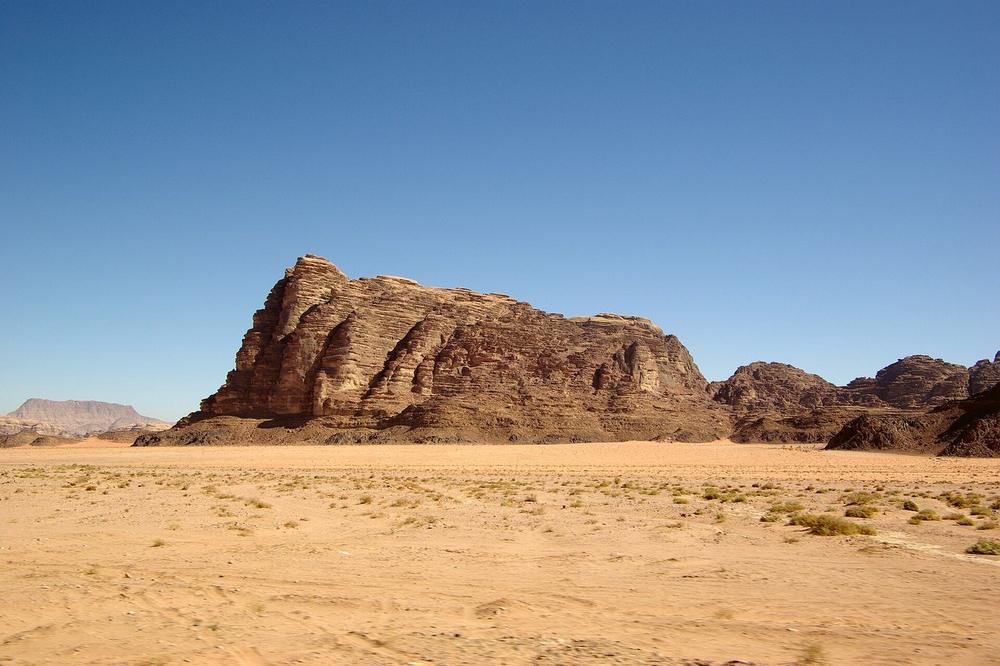
Wadi Rum is an hour and a half or so to the south and it is the natural pairing rather than a separate expedition. Entry to the protected area is 5 JOD; the 4x4 and the camp are separate, and the camps run from about USD 28 a person a night at the basic end to considerably more for the deluxe versions. One night there is enough. Two is for people who want the silence rather than the scenery.
What it costs on the ground
The country tier for Jordan is our third: roughly USD 250 to 360 a head for each day on the ground, party of four, land only. The charges set by government around Petra, dated September 2026 and quoted in Jordanian dinars, are these:
| Charge | JOD | Note |
|---|---|---|
| Petra, if you sleep a night in Jordan | 50 / 55 / 60 | One, two or three days; under-twelves free; e-tickets valid eight months and never refunded |
| Petra, if you sleep somewhere else | 90 | The day-tripper rate, set high on purpose |
| Jordan Pass, Wanderer | 70 | One Petra day, plus 40-odd other sites |
| Jordan Pass, Explorer | 75 | Two Petra days — the tier we normally buy |
| Jordan Pass, Expert | 80 | Three Petra days |
| Petra by Night | Separate ticket | Not covered by the Jordan Pass or by a standard day ticket |
| Wadi Rum protected area | 5 | Entry only |
| Jerash, on the way south from Amman | 12 | Covered by the pass |
| Vehicle with a driver | 57 – 113 a day | Depends on the route, the car and the hours; the southern circuit is at the top of the band |
The pass arithmetic is worth doing rather than assuming. Explorer at 75 JOD carries two Petra days, which alone are 55, and it also waives the tourist entry visa fee — but only if it is bought before you arrive and only if you stay three nights or more in the country. A two-night stop does not trigger the waiver, pays the visa separately, and turns the pass into an ordinary ticket bundle that roughly breaks even. Petra by Night sits outside the pass whichever tier you hold.
No hotel rate for Wadi Musa appears here. The honest spread is too wide to carry any information, and a quote from us names the building instead. Ground costs compared across the region, before margin, sit on cost by country.
In pictures
When to skip it
- Ten kilometres on foot, on two consecutive days, is beyond you. Nothing drives in past the gate, you are on sand, loose gravel and steps cut from rock, and what the ticket is worth lies at the far end. A single gentle day inside the Siq is a real option; it is simply not the visit this page describes.
- You are in Jordan for two nights on the way somewhere else. The pass will not waive the visa fee, one day at 50 JOD buys the near half of the site, and a long journey ends in a photograph of a facade.
- You are not staying in Jordan at all — a day trip from across a border or off a ship. The rate is 90 JOD, the hours left after the formalities cover the Siq and the Treasury, and we do not build these.
- The dates are July or August and cannot move. Around 34 degrees in the south, on unshaded rock, turns a considered visit into a search for shade.
- An elevated advisory is not something you are prepared to weigh. The American position in September 2026 is Level 3, and the British one, although eased in June, still flags regional risk and disrupted flights. Better to settle that now than at a check-in desk.
Journeys that come here
Jordan in nine days runs the country from Amman down to Aqaba and gives Petra three nights and two whole days on a 55 JOD ticket, with the King's Highway taken on the way south and a night in Wadi Rum after. It is the itinerary this page argues for, written the same week.
Jordan and Oman in sixteen days pairs the site with the country next door, where the interest is geological rather than archaeological. For the rest of Jordan — Jerash, the Dead Sea, the castles and the advisory position in full — the Jordan country page is the one to read next.
Ask for the two-day version
Send your dates and how many nights Jordan has in your plan. The reply will say plainly whether Petra gets the second day, and what it would cost to give it one.
Questions travellers ask most
One day or two at Petra?
Two, unless the trip genuinely cannot hold the night. The accommodated ticket is 50 JOD for a single day and 55 for two. Five dinars, in other words, buys the long stair, the ridge platform above the valley and the descent through Wadi Farasa — broadly the half of the site a one-day visitor never reaches.
A single day is not wasted. It covers the Siq, the Treasury, the theatre, the royal tombs and the colonnaded street, which is a good day by any standard. It is simply the near half, bought at almost the same price as the whole.
Is the Jordan Pass worth buying for a Petra visit?
Usually yes, and two conditions decide it. The pass has to be bought before you land, and the stay has to run to three nights or more, or the visa waiver — the part that makes the arithmetic work — never triggers. Explorer at 75 JOD is the tier we normally buy, because it carries two Petra days.
On a stop of two nights or fewer, buy the tickets separately and pay the visa on its own account. And whichever tier you hold, Petra by Night needs its own ticket: that catches somebody every week.
What does the Level 3 advisory mean in practice at Petra?
The American rating, revised on 29 August 2026, asks travellers to weigh up whether to go to Jordan at all, citing terrorism and the fighting that broke out across the region on 28 February 2026. Its Do Not Travel label belongs to four named places: Rusayfah City, Baqa'a in Ayn Basha, the Syrian refugee camps and the frontier zones with Syria and Iraq. Petra is in none of them. Wadi Musa is inside Ma'an Governorate, which is flagged one step lower.
Britain went in the opposite direction on 3 June 2026, dropping a blanket warning and keeping only a 3 km band along the Syrian frontier, at the other end of the country. Its notes on strikes elsewhere in the region and on disrupted flights still stand.
We will not tell you the advisory is overblown and we will not tell you what to accept. We read both documents and the airspace notices daily, we send the current position in writing with every quote, and we check your insurer's wording with you, because some policies now behave differently while elevated advice is in force.
How hard is the walk to the Monastery?
It is several hundred rock-cut steps, uneven, in the open, at the far end of the site — so you have already walked a few kilometres before it begins. Most reasonably fit people manage it without difficulty in spring or autumn by starting early and taking an hour over it.
The two things that make it hard are heat and timing. In summer it should not be attempted in the middle of the day at all. And it belongs on the second morning rather than at the end of the first afternoon, which is precisely the choice the two-day ticket exists to make possible. Donkeys are offered on the stair; we ask clients not to take them.
Read next
Tell us about the journey you have in mind
Dates, party size and the places you care about are enough to start. You get a draft route and an indicative price, not a brochure.